
Author: Andrew
An electrical engineer, amateur astronomer, and diver, living and working on the island of Hawaiʻi.
Shattering the Silence
It has been over three months since the protest began. Three months of standoff with the protesters who would not see another telescope built on Mauna Kea.
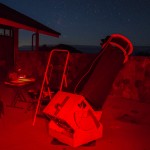
It is with my handmade 18 inch telescope that I can truly gaze into the depths of space. This simple device of plywood and glass allows me to see galaxies millions of light years into the past. With this telescope I have seen hundreds of galaxies, giving me a glimpse of the indescribable vastness of space.
Often I would set up in the patio right at the Mauna Kea Visitor Information Station. The first couple hours spent talking with visitors, showing them the wonders our universe has to offer. After the VIS closes the visitors depart, driven back to their hotels by the cold mountain air. I have a heavy winter jacket, ski-pants, a thermos of hot tea, everything I need to be comfortable under the night sky. I would have the rest of the night to myself, just me, the mountain and the stars.
Venus and Jupiter Reminder
A reminder that this evening will see the close approach of Venus and Jupiter. Watching over the last week we have seen these two bright planets growing ever closer in the evening sky.
The closest approach will be about 0.3° tonight, June 30th at 16:14HST. They will be slightly further apart several hours later at sunset.
This is the best opportunity to see the pair at their closest for observer in Hawaiʻi. If you want to see the closest approach you can also try to observe the conjunction in the late afternoon sky. Both planets are bright enough to see in the daytime.
After this the pair will separate slowly and disappear into the sunset glow together.
At their closest the two will be easily close enough to bee seen together in the low power view of amateur telescopes. It makes a fascinating sight to see the two planets together in the eyepiece.
An Extra Second
Today will be 86,401 seconds long. That number may seem odd, particularly when you consider that most days are 86,400 seconds long. The difference is a result of the leap second being added to our clocks at the end of June 30, 2015 at 23:59:59.
Since zero hours universal time occurs at 14:00 Hawaii Standard Time, this extra second will occur at 2pm in the afternoon for my readers in the islands. If you are watching a clock that can account for this leap second you will see this second appear. The clock can do a few things, it could simply stop for a second, holding at 23:59:59 for two seconds. The clock could also count the extra second, displaying 23:59:60.
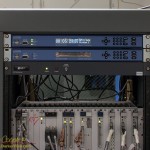
Update: A small group of true nerds gathered in the Keck 2 computer room at 0hUT today and watched our timeserver do leap second. The display notably remained at 23:59:59 for two seconds.
Generally only high precision time servers and GPS receivers will contain software to correctly implement the leap second. Most clocks do not correct for leap seconds, it is just not that important that this feature be implemented perfectly in most devices.
Network connected clocks will simply adjust the time on the next opportunity. Connected clocks routinely synchronize with an online time standard. Your computer requests the correct time via NTP protocol from an internet time server once each day, this is the usual default configuration for a net connected computer unless you have changed it. Cell phones get their time from the network and may receive their extra second more quickly, maybe within a few moments of the leap.
The rest of the clocks in your life are usually more than a few seconds off in any case.
Last time this occurred in 2012 there were some troubling software crashes around the world. Airline departures were delayed and some major websites went down. There is some concern that similar occurrences may occur this time. As a result some experts have argued to do away with leap seconds and just let the error accumulate. The argument rages and we may see leap-seconds abolished, in the meantime this one will occur.
Now that you know about it, enjoy your extra second today. Remember to watch that clock at zero hours universal time and see what happens.
Dark Secrets
Over the past months I have made a habit of reading opposition websites. Primarily in an effort to understand the cultural objections to astronomy on Mauna Kea. I have actually learned quite a bit, filling in my knowledge of Hawaiian culture and history. But I do learn other things, apparently this controversy has a very dark and secret element.
… was again soundly defeated atop the tallest mountain in the Pacific by native Hawaiians who understand that telescopes & astronomy have virtually nothing to do with the secret government’s attempt to take over the mountain. The secret government wants to use it for scalar military transmitters & to incorporate it into the Army’s Pohakuloa military base, scheduled eventually to become the largest military base in the Pacific. – Facebook posting by Krishna Davinci, chairman of the Bohemian Grove at Illuminati Network
Ummmm… OK.
Aside from some contradictory grammar, it seems that Mr Krishna has taken every conspiracy theory out there and combined them into a wild stew. This is actually quite common, once a person accepts one conspiracy theory, even wilder theories can easily take root. Take a look at his page, there is more, no theory too far fetched… Chemtrails? Check. Planet X Nibiru? Check. President Obama sacrificing babies at satanic ceremonies? Check. The entire page is so far out there I was first convinced it was all an elaborate satire. Does the Facebook feed need a Poe’s Law disclaimer? Unfortunately, the more I read the more I despaired that someone really believes it all.
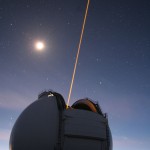
Scalar military transmitters? I am an electrical engineer and I have no idea what he is talking about. We do have lasers, and those are cool. In all my visits to the other facilities on the summit I have never seen a scalar transmitter.
I have met a few folks and read more than a few Facebook postings that make all sorts of wild accusations of military use of the summit of Mauna Kea. For most of the past decades the amount of military involvement in Mauna Kea astronomy has been pretty much zero. Since Lockheed Martin has joined the partnership running UKIRT this sort of accusation seems to have gained momentum. Never mind that their stated use of the telescope is to track orbital targets and debris. A use that makes complete sense given the capabilities of the telescope and the need for this effort.
Krishna goes on to explain further…
Furthermore, telescopes are now relatively obsolete & primitive … as are rockets. NASA (Never A Straight Answer) continues to publicly promote them to the sheeple with make-believe projects, because NASA is just a cover for the secret government’s REAL space program ~ which now has at least 10 fleets well outside our solar system using antigrav & antimatter propulsion technology ~ not to mention innumerable interplanetary bases on the moon, Mars, the moons of Jupiter & Saturn … plus several more outside of our solar system. This has been ongoing for over a half century … & publicly hidden from the dumbed-down zombied-out sheeple. – Krishna Davinci
I suppose I am not qualified to cast any judgement here, about a quarter of my salary does come from NASA. On the other hand… Fleets outside our solar system? Bases on the moons of Jupiter and Saturn? Where the hell do I sign up for a transfer to that assignment? I would love to see Saturn up close! Do you suppose that base is on Hyperion? I have always loved that wild little moon.
If we really had these things the US military would celebrate them… Loudly! Why would you need to keep this all secret? Imagine the PR possibilities. With that sort of military power the need for secrecy would simply become an unnecessary annoyance. Besides, that many fleets and bases would need people to man them, you need to recruit a lot of folks. I can imagine the recruiting posters now.
If I disappear in the next few weeks just assume I got my transfer to the Hyperion moon base. In the meantime I need to head to the summit in order to continue fixing the mind control machine. It has been down for a couple weeks and you can see the trouble that has caused.
Stock

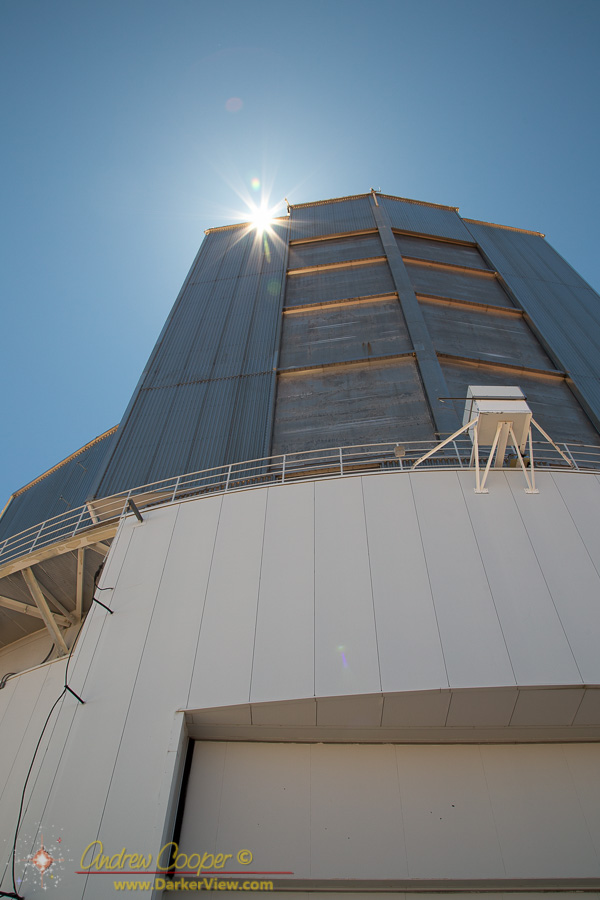
Subaru Enclosure
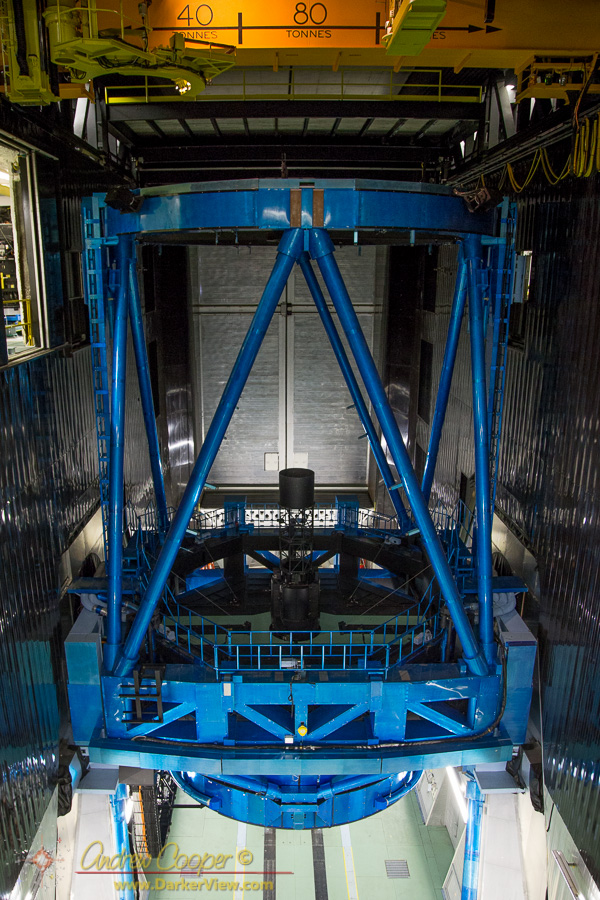
Subaru Telescope
A Day of Protest
From all accounts it was a bit of crazy on the mountain today. I did not attempt to go up, even though I had originally been scheduled to do some training today for the summit crew. I have spoken with guys at HP and gotten fragmentary information here and there.

This is also the day I got called in to our HR manager’s office to discuss my blogging. It seems someone, who I will not name but is probably reading this, was not happy with my getting quoted on the BIVN website. Not that I gave David Corrigan the quote, he simply lifted it out of my Monday post about the ahu being constructed at the TMT site. Which is interesting as I was only noting the blindingly obvious fact that the protesters had assembled the ahu in the middle of the road as a dare to the construction crews. In response I simply noted that I had complied with observatory policy.
Mercury at Maximum Elongation
Today Mercury will be at maximum western elongation, as high in the morning sky as it will appear for this current apparition. After today the planet will slide back into the dawn, passing through superior conjunction on July 23rd to reappear in the evening sky in mid-August.