Like any true nerd I love the webcomic XKCD, Randall somehow keeps me laughing! Today’s comic hits even closer to home… He does Keck!!
As a Keck engineer I can categorically state that we do not use tape to secure the domes… We use zip ties.

When you want to see the stars, find someplace dark

Like any true nerd I love the webcomic XKCD, Randall somehow keeps me laughing! Today’s comic hits even closer to home… He does Keck!!
As a Keck engineer I can categorically state that we do not use tape to secure the domes… We use zip ties.
It has been a while since the last good photographic comet. Since comet ISON disintegrated at perihelion a year ago, we have had few opportunities to get a really nice comet photo. It is the surprise of comet C/2014 Q2 Lovejoy that changed this.
Better yet… The comet is well placed for photography in the late evening and early morning sky. While fellow sky watchers on the south side of our planet have been enjoying the comet as it has brightened, for most northern hemisphere observers it is still rather low. In the past couple weeks it has moved far enough north that it is now nicely positioned to observe from Hawaiʻi. I have been following the comet for a while, catching it in binoculars from the house. We showed it to students of Paʻauilo Elementary in club telescopes as they camped out at the Kilohana Girl Scout Camp earlier this week.
Unfortunately it is still low enough that my neighbor’s trees prevent me from photographing it from the driveway. Thus I took the opportunity to pack up the ‘scope and head for Hale Pohaku and the Mauna Kea Visitor Information Station for a night of photography.
The Mauna Kea VIS is busier than ever, the numbers of tourists coming to this free show just continued to increase. Parking is now a major issue, with even the lower gravel lots full of visitor vehicles. Fortunately, with some discussion and name dropping, the rangers allowed me and my vehicle past the barricades into the main lot so I could set up just off the patio. I would be entertaining guests at the telescope and answering questions all evening, becoming part of the show.
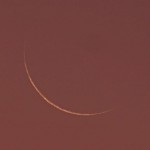
This evening, Dec 22nd, will see a brilliant Venus paired with a very thin crescent Moon. Look for the pair to appear just 12° above the setting Sun. Venus will set at 18:50HST, about one hour after sunset. A 1.8% illuminated Moon will be a nice match for Venus shining brilliantly at -3.9 magnitude. Separation will be just under 6°.
Winter solstice occurs today at 13:03HST. Today the Sun will occupy the most southerly position in the sky of the year. The term solstice comes from the Latin terms Sol (the Sun) and sistere (to stand still). On this day the Sun seems to stand still as it stops moving southwards each day and begins move to the north. This is the first day of winter as marked by many cultures in the northern hemisphere. Alternately, this is the first day of summer for those folks in the southern hemisphere.
| 2014 Solstices and Equinoxes | ||||
|---|---|---|---|---|
| UT | HST | |||
| Perihelion | Jan 4 | 05:59UT | Jan 3 | 19:59HST |
| Vernal Equinox | Mar 20 | 16:57UT | Mar 20 | 06:57HST |
| Summer Solstice | Jun 21 | 10:52UT | Jun 21 | 00:52HST |
| Apehelion | Jul 3 | 22:59UT | Jul 3 | 12:59HST |
| Autumnal Equinox | Sep 23 | 02:30UT | Sep 22 | 16:30HST |
| Winter Solstice | Dec 21 | 23:03UT | Dec 21 | 13:03HST |
| Source: NASA Sky Calendar | ||||
I did not know until I got message from a couple friends with my morning e-mail, including one from my Dad… The website is down. I go to look to find that DarkerView is down hard, 403 Error!!
I have changed nothing in the basic website for months, at least nothing on the configuration side. With WordPress installed all I generally do is post using the WP admin tools. Everything was there, I could FTP into the site, all the configurations stuff looked right, there was no response when HTTP protocol was used. I poked about a little at the problem, but could see no reason why the site would be down.
It was not until later, around lunch, that I was able to call GoDaddy tech support and see what they could make of the problem. I expected a quick fix, something that could be done in a couple minutes. This was not to be, they could not figure it out either. The gal I was speaking to kept bringing in even more senior techs to look at the problem. It was nearly 45 minutes on the phone, usually on hold, with nothing resolved. At least I could work on a document at my desk between answering questions about the site.
They finally just gave up. At least they would give up on my hosting account. The solution was to create a new hosting account and copy everything over. A little later that evening, on a friend’s iPad at the Keck public lecture, that I found that DarkerView was back online. Of course I find a slew of automatic emails in my inbox welcoming me to GoDaddy hosting.
GoDaddy has great tech support. I rarely need to use them, the service is very stable, but when you do call you get a human (who speaks English!) and they generally know what they are doing. One way or another they fix the problem.
Thanks for letting me know about the site crash… At least I know that someone reads my blog!

Yes, I meant to do that… Not.
Sometimes you download the SD card and find photos you had no idea you took, an accidental actuation of the shutter. Most of the time they totally worthless, a photo of blurred gravel, or a hand across the lens. But on occasion they are a bit more interesting, properly exposed and in focus…

Stayed up late tonight to check on a few things in the sky. Firstly the Geminid meteor shower, which is peaking nicely. At least 100ZHR and bright enough to be nicely visible, even against the light of a bright gibbous moon.
The second item I wanted to see was comet C/2014 Q2 Lovejoy, now climbing higher in the sky as it swings northwards. It is currently somewhat low in Puppis, but getting higher each night as it moves nearly due north against the constellations. Currently it is an easy binocular object at around 7th magnitude. A quick sweep with my 9×50’s picked it up without effort halfway between Adhara and Canopus.
It is forecast to reach around 5th magnitude over the next month. Peak magnitude should occur near the new year while the comet is in Lepus. We placed and quite bright, I will be arranging to get a few photos of this comet through the new year!
