The dawn is getting crowded. While three planets, Mercury, Mars and Jupiter have been dancing on the dawn stage for weeks now, tomorrow morning a thin crescent, waning Moon will join in. Tomorrow morning the Moon will be 10% illuminated and 4.5° south of Jupiter.
Over the next couple mornings the Moon will continue to wane and slide along the line of planets in the dawn. On the morning of the 4th it will be 5% illuminated and between Mercury and Mars. On the 5th it will be lower than all three and only 1.6% illuminated.
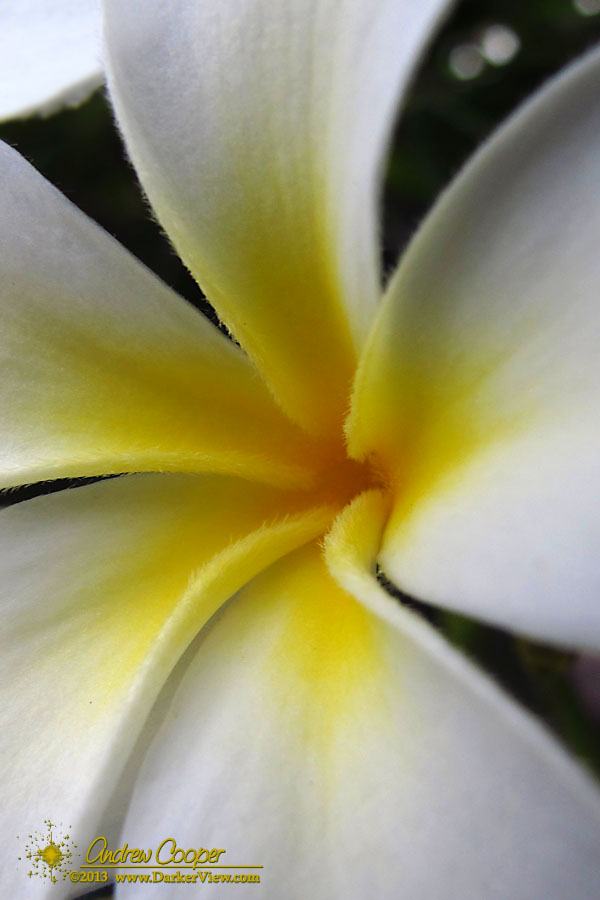
Sometimes I just take a few photos of the flowers found out the front door. My plumeria are in bloom, a pleasant bit of the tropics available for everyday enjoyment, even if just heading to the vehicle and work…
Access is through the Hualalai Resort. You must check in at the security shack just off the highway at the southern entrance, just 1/4 mile south of the main entrance to the resort. There you get a beach pass from the guard and head down to the public parking area. Get directions from security, you have to double back and take a right. There are only so many public parking spaces available, to ensure entry just get there early, arrival before 8am is pretty much guaranteed access.
The entry point for diving at Kakapa BayFrom the parking area a nice concrete path leads to the Kukio Bay beach, a few hundred yards further north along the shoreline. The beach is not where you want to go! The beach is on Kukio Bay, we want Kakapa on the south side of the point. Divers only need walk a short distance to the dive entry into Kakapa bay, a good thing when weighed down by tanks, weights, and in a wetsuit.
A small sign noting the presence of public restrooms at the beach is the marker to turn off the path and head straight to the water. Head to the little inlet where a small point of rock creates a protected pool where you can finish gearing up and swim. The pool is deeper towards to the right and the small rocky point.
Tropical storm? What storm, it was one of the prettiest days on the water we have ever seen. Apparently everyone thought so, the water was busy with dive and tour boats everywhere. The sky was clear blue, the water a blue crystal. No wind and just a bit of south swell. The day seemed at complete odds to the dire storm watch messages on the radio. We will do the storm thing tomorrow, today we dive…
Manta ray (Manta birostris) cruises the reef at Garden Eel CoveWith a storm watch out we did not go far from harbor. For both dives we used one of the moorings at Garden Eel Cove, the same moorings used for the famous Kona Manta Dives. These moorings also offer decent daytime diving, with rich coral and one of the shallowest places you can visit garden eels.
At one point I filmed a manta cruising the reef right below me. Just after it passed by the manta swung about and came right at me. I continued to film and the manta bumped the camera. Yes, it was that kind of day. The mantas were coming in close. These manta are familiar with the idea that divers mean food. During the night manta dives the dive lights attract plankton, creating a buffet for the mantas. The behavior seems to spill over into the daytime, with the mantas coming very close to divers.
Garden eels (Gorgasia hawaiiensis ) at Garden Eel CoveOn the second dive Deb and I wandered in the other direction from the rest of the group. Crossing under another dive boat we dropped to the sand in the corner of the cove. Here is one of the shallowest places you can visit a garden eel colony. Usually you must drop to the sand at the base of the reef to visit the eels, 70-100ft down. Lying on the sand my gauge read 57 feet as I waited for the eels to poke back out of their burrows. A little patience rewarded Deb and I, as the eels re-emerged and allowed us to get a few decent photos.
After the last dive we often head for harbor. Today we just hung out at the mooring for a while, it was such a nice day. Out of air? Not problem, a mask and fins is enough, just take another swim.
Today Mercury reaches maximum elongation, the furthest point it will reach from the Sun in the sky and the highest it will be above the sunrise for this morning apparition. The planet is easily visible as a bright, starlike object about 19° above the rising Sun as the twilight begins. Over the next couple weeks Mercury will slide back into the sunrise, heading for superior conjunction on August 24th.
As Mercury passes through maximum elongation it is part of a trio of bright planets in the morning sky. Higher in the sky you will also see Jupiter and Mars dancing in the dawn.
Almost all the photos shown here on Darker View are cropped at a 2:3 ratio. The reason for this? I like it. And perhaps I am used to this ratio. It is very traditional, having been used for many applications for decades, including the venerable 35mm photographic film.
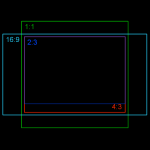
Common cropping ratiosA cropping ratio is simply the ratio of the dimensions in the image, height and width. if the print on the wall is 24 x 36 inches, it has a ratio of 2:3. This is calculated using the smallest common denominator… Remember that term from learning fractions in grade school? The images here on Darker View are usually 600 x 900 pixels, also a 2:3 ratio.
Any number of cameras produce images with a 2:3 ratio, including APS-C sensor DLSR’s like my Canon 60D. The ratio is by no means universal. Many cameras use a 4:3 ratio, most compacts do, including my Canon G12. Other ratios are popular, HD video is 16:9, spurring a rise in popularity of this wider format.
I have read a little about the choice in cropping, the argument regular rages in photographic circles. One article in particular got my attention, the author extolling the virtues of a square crop, a 1:1 ratio. Perhaps I am in a rut, and need to explore the use of other cropping ratios. I use 1:1 on occasion, usually for astrophotos. Perhaps I should experiment with other ratios more often.
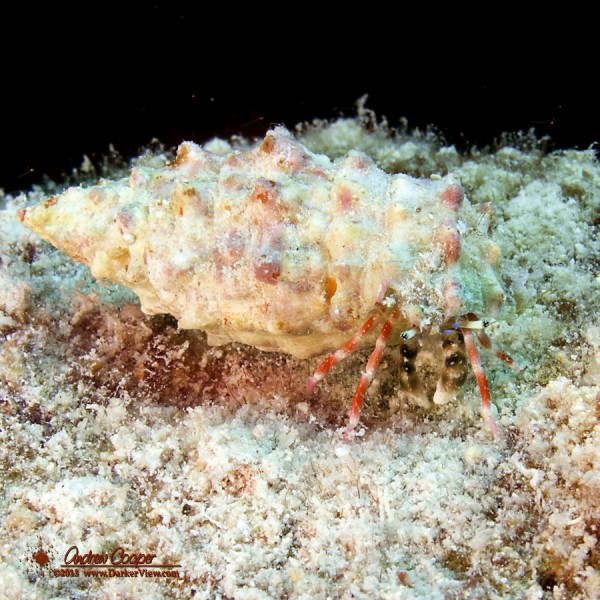
Laurent’s hermit crab (Calcinus laurentae) peers out from under a shell
I dove with the usual crew the day before, but I did not go out with them Sunday. Now I am wonder if I should have. They came back with a fish tale and the video to prove it…
Lavern is a well known fixture around the entrance to Honokohau Harbor. She is big and easily identified through the messed up dorsal fin. She has not eaten any divers… yet.
As I came clear of the sea cave I knew I was right under the surf crashing on the rocks. Not truly dangerous, we would not have been out in a really big swell, bad enough if I had decided to go right into it. Kicking out a bit further I surfaced, into a swarm of needlefish hunting along the edge of the foamy water. These little predators appeared to be taking advantage of the reduced visibility and noise of the waves and bubbles to hunt. As they darted through the intense blue water, I attempted to take a few photos. First, get the camera out of macro, turn off the strobe, daylight color balance, anything else?
A school of keeltail needleflish (Platybelone argalus) hunt along a the edge of a surf zone.