
Mercury will exit the evening sky this week. Currently about 10° above the setting Sun, it will quickly orbit back into the Sun’s glare. It will pass through inferior conjunction on July 9th to reappear in the dawn around July 17th.
Author: Andrew
An electrical engineer, amateur astronomer, and diver, living and working on the island of Hawaiʻi.
Deleting Revisions in WordPress
I tend to revise my posts… A lot.
This is particularly true for my essays. I will stew on the text for several days, often saving very minor revisions. As a result there may be 20-30 revisions in the database. I also tend to find a few errors during proofreading that require another save or three. All this editing does add a bit of a clutter.
I do like the WordPress revision feature, it has saved the day more than once. The ability to recover the text from previous versions is simply invaluable.

WordPress does have some tools for dealing with the revisions. Even if you have to know about some of the behind-the-scenes stuff to make changes to revision handling.
Finding how to do this is done through the usual learning materials… A Google search for something like “WordPress limit revisions” provides all you need to know. The information was out there, but I will repeat it here. If nothing more this post can serve as notes for when I next need to purge the database.
Banded Urchin

Scientists Discover System with Three Planets in Habitable Zone
W. M. Keck Observatory press release…
A team of scientists recently confirmed six, and possibly seven, planets orbiting a star system a mere 22 light-years from Earth. More importantly, three of those planets are super-Earths, lying in the Goldilocks Zone where liquid water could exist, making them possible candidates for the presence of life. This is the first system found with a fully-packed habitable zone. The findings will be published in the journal Astronomy & Astrophysics on June 26.
Previous studies of the triple star system called Gliese 667C showed the star hosts three planets with one of them in the habitable zone. Now, a team of astronomers has reexamined the system by re-mining existing European Southern Observatory’s HARPS data and combining it with data collected from the W. M. Keck Observatory and the Magellan Telescope to find evidence for up to seven planets around the star. These planets orbit the third faintest star of a triple star system. The two other suns would look like a pair of very bright stars visible in the daytime and at night they would provide as much illumination as the full Moon.
Continue reading “Scientists Discover System with Three Planets in Habitable Zone”
Postcard from the Universe – Scutum & M11

Postcard from the Reef
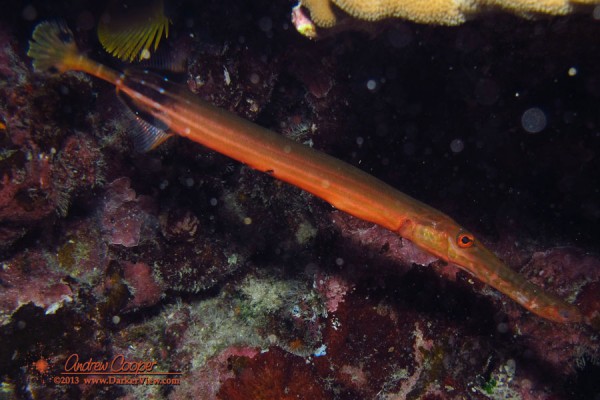
NPR Segment on Keck Adaptive Optics
A nice NPR piece on Keck AO today. A decent discussion of the history and advantages of adaptive optics.
For Sharpest Views, Scope The Sky With Quick-Change Mirrors
It used to be that if astronomers wanted to get rid of the blurring effects of the atmosphere, they had to put their telescopes in space. But a technology called adaptive optics has changed all that.
Always a good thing when a system I put so much of my life into receives some good press!

Night Diving under a Supermoon
The term supermoon may be a bit of over-the-top hype, it was still nice to dive under the light of a bright full moon. The plan is simple, meet at 4pm for a late afternoon dive, followed by a night dive. Gear and dinner loaded we quickly slip the lines and head out in a smoothly practiced routine. Where is the boat going, I really do not care, wherever we dive it is going to be good.

I love the late afternoon light on the reef. As the light dims the shades become more blue. The lower intensity allows me to control the light better, the strobe overpowering the ambient light on the target of interest. The background becomes an attractive blue, open water photos loose the odd green cast that is difficult or impossible to fix in Photoshop. The fish are less flighty as well, beginning to shift from daytime routine to finding a place in the coral for the night.
Full Moon
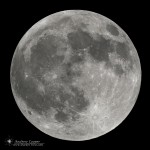
This full Moon will be a perigee full Moon, with the Moon appearing a bit larger and brighter. Today lunar perigee occurs within minutes of full, producing a full moon that is about 12% larger and 30% brighter than if full occurs while the Moon is at apogee.
The Portents of ISON
Comets have long been regarded as omens of extraordinary portent. Novae, eclipses, conjunctions, anything seen in the sky can serve in this role, but bright comets have always held a special awe.
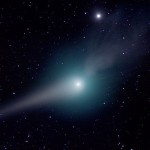
Bright comets are invariably seen as omens by some. History is littered with stories of comets and prophesies. This has not changed, there are many recent examples… Hale-Bopp, Hyakutake, Elenin, each has been used to make all manner of wild predictions. Comet C/2012 S1 ISON certainly fits the role. It will most likely be quite bright, easily visible without optical aid. It may even be visible in the daytime.