
Belt of Venus
When you want to see the stars, find someplace dark

Günther Hasinger
University of Hawai’i
Black Holes and the Fate of the Universe
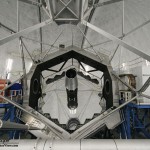
The character and distribution of stellar and supermassive black holes is a fascinating and rapidly changing area of astronomy research. Recently, the W. M. Keck Observatory has confirmed supermassive black holes are in the centers of most nearby galaxies, including our own Milky Way. A tight relationship exists between black hole mass and the properties of their host galaxies. New instrument capabilities, like those planned at Keck, will reveal even more about the nature of black holes and how they play a role in the ongoing evolution of the universe and everything in it.
7:00 PM
Gates Performing Arts Center Auditorium
Hawaii Preparatory Academy
65-1692 Kohala Mtn. Rd., Waimea
Seating is limited to first come, first served.
Doors Open at 6:30 PM
Free and Open to the Public
Why are so many things I shoot determined to hide in a crevice. I may be big and noisy, but I just want to take your picture, not eat you. Maybe if I hold the camera upside down, twist the strobe to the side, maybe I can get a decent photo…

To quote Douglas Adams… “Space is big. You just won’t believe how vastly, hugely, mind-bogglingly big it is.”
We are accustomed to using miles or kilometers when considering distance. These are the distances that we experience in our everyday lives. Driving to work or the supermarket, we do not travel very far compared to the distances faced by those who study the stars. Those wanting to discuss distances beyond our little planet, the distances to the stars and galaxies face a quandary… The universe is just too big, when using these familiar units the number of zeros become impractical and the numbers cease to be convenient, or even understandable. To express distances in the cosmos, astronomers just need a bigger tape measure.

In a few minutes light travels across our solar system, in a few years it can reach the nearby stars. Thus a distance unit that makes sense in astronomy… The light-year, the distance light travels in a single year. With this we have a convenient unit of distance, one that links the concepts of distance and time. A simple bit of math converts the light-year into familiar units… 9.45 trillion kilometers or 5.86 trillion miles.
Continue reading “Light-years, Light-minutes and Light-seconds”
Today the planet Mercury passes through inferior conjunction, passing between the Sun and the Earth. In a week or so the planet will again be visible in the dawn sky, climbing higher each day. Maximum elongation will occur December 4th.
W. M. Keck Observatory press release…
Lowell astronomer Evgenya Shkolnik and her collaborators have published a set of directions for searching out exoplanets, using W. M. Keck Observatory spectroscopy.
Their paper, recently published in The Astrophysical Journal, examined new and existing data from stars and brown dwarfs that are less than 300 million years old, as determined from strong X-ray emission readings. In all, the authors identified 144 young targets for exoplanet searches, with 20 very strong candidates, according to Dr. Shkolnik. This candidate list is being searched for planets with Gemini’s NICI Planet-Finding Campaign and the Planets Around Low-Mass Stars survey, led by astronomer Michael Liu and graduate student Brendan Bowler, respectively, both at the Institute for Astronomy, University of Hawai‘i.
Continue reading “Lowell Astronomer Prints Roadmap for Planet Hunters”
Günther Hasinger
University of Hawai’i
Black Holes and the Fate of the Universe
The character and distribution of stellar and supermassive black holes is a fascinating and rapidly changing area of astronomy research. Recently, the W. M. Keck Observatory has confirmed supermassive black holes are in the centers of most nearby galaxies, including our own Milky Way. A tight relationship exists between black hole mass and the properties of their host galaxies. New instrument capabilities, like those planned at Keck, will reveal even more about the nature of black holes and how they play a role in the ongoing evolution of the universe and everything in it.
7:00 PM
Gates Performing Arts Center Auditorium
Hawaii Preparatory Academy
65-1692 Kohala Mtn. Rd., Waimea
Seating is limited to first come, first served.
Doors Open at 6:30 PM
Free and Open to the Public
A thin crescent Moon will be about 5.5° from Mars tonight. The Moon will be a thin crescent, only 8% illuminated. The pair will be about the same elevation, 25° above the horizon at sunset.

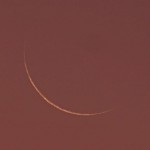
During this new moon a total solar eclipse will sweep across Northern Australia and the South Pacific, ending before reaching the west coast of South America. None of this eclipse will be visible from Hawai’i.