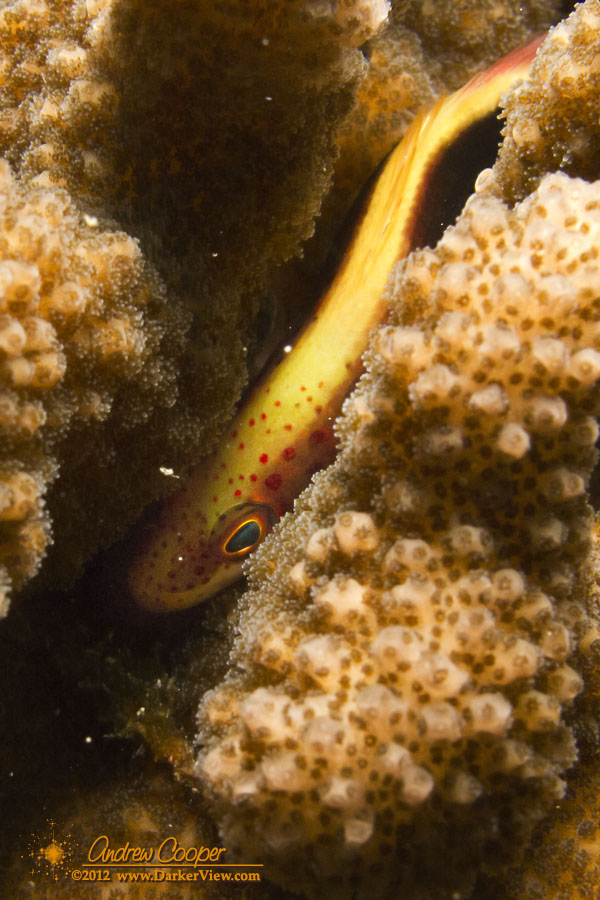
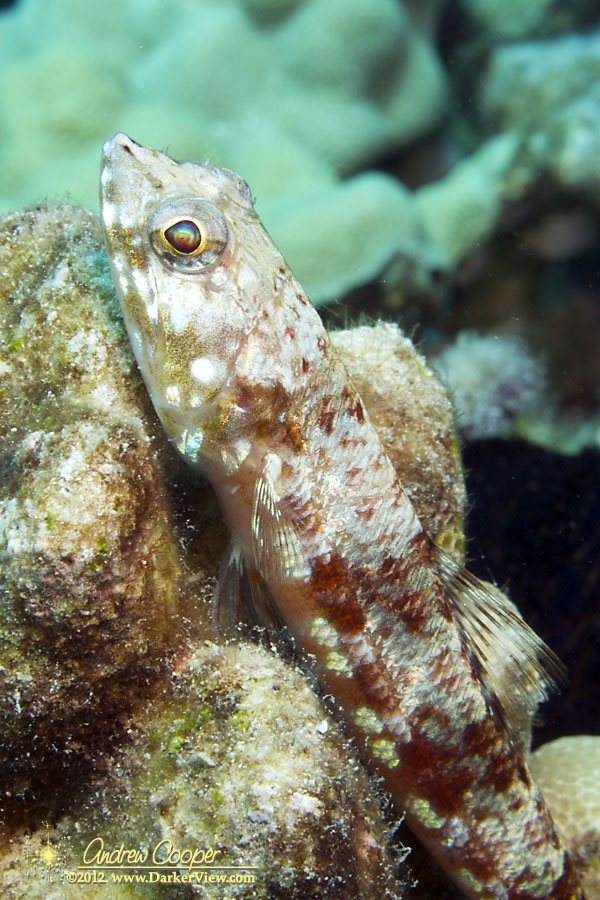
These fellows are fairly common along the Kohala Coast. They are also quite pretty, always worth a couple exposures…

When you want to see the stars, find someplace dark

A sampling of what lives beneath the waves
These fellows are fairly common along the Kohala Coast. They are also quite pretty, always worth a couple exposures…
A close relative of seahorses, pipefish are usually found sheltering in crevices or small caves. They are not uncommon sights for anyone who makes a habit of investigating the nooks and crannies of the reef…

A nice day for a dive, and a new species of nudibrach for me. At first I thought it might simply be a juvenile P. varicosa, but there were no yellow pertuberances. Getting back I hit the books, no doubt, P. rosans. New species! This fellow was in a cave at Puako I have entered a dozen times. Even in a place I have often explored I can find something new…

What is that? That is too big to be a nudibranch, but that is what it looked like. I could only see part of the beast looking into the cave crevice. Fortunately it turned out to be somewhat photophobic, the bright light flushed it out of the crevice into the cave…

I make a point to look for nudibranchs, pretty critters that are wonderfully photogenic. Looking into the nooks and crannies of the reef for nudibranchs also tends to turn up other tiny surprises.
This was not small!
While the typical nudibranch is one or two inches long, this fellow was the size of a dinnerplate! Adding to the wonder was the dance. As soon as the animal left the crevice it swam across the cave. I flashed Mark to get his attention, he was ready to leave the cave. I suspect he is glad he came back. Deb also wondered what we were still doing in the cave and came in to check on us. Thus we all got a good look at the dance.
After a few photos… OK, a lot of photos, I shepherded the fellow back into his crevice. Once I withdrew the light he settled down to stay in the darkness.


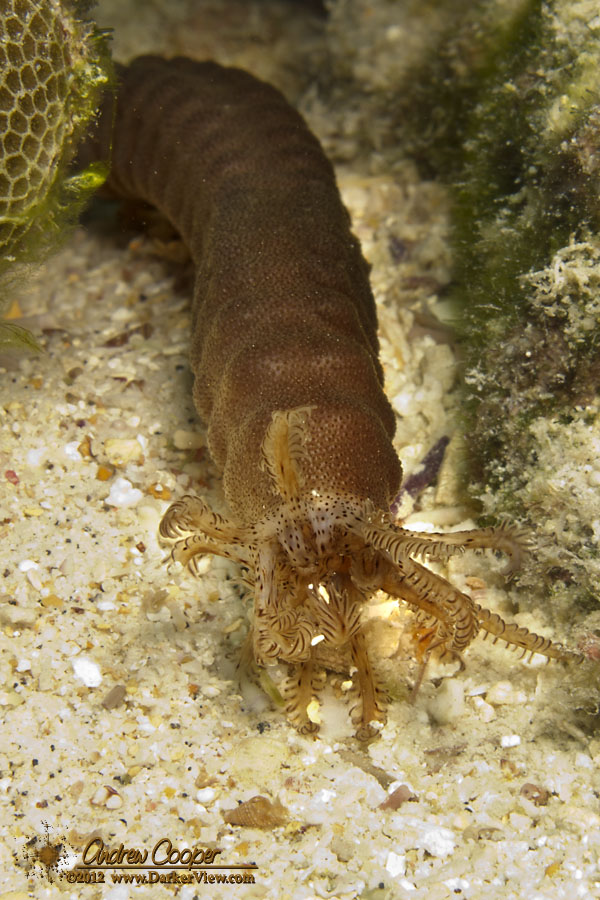
As I have discussed before, there are some weird critters on the reef. Some of the more alien appearing creatures are the sea cucumbers of the family Synaptidae, the thin-walled sea cucumbers. These look like large worms, moving across the reef by expanding and contracting their bodies. At the front end are a set of feeding tentacles, sweeping out in slow motion to move food to the mouth at the center. The body is flaccid, supported and given shape through an internal hydraulic system.
The small brown Keferstein’s sea cucumber is surprising sticky, with small hook-like spicules on its outer skin. It sticks readily to dive gear, twice now I have seen these critters stuck to a diver without the diver knowing. Carefully peeling them off they make a nice photographic subject before allowing these normally nocturnal critters to escape back into a crevice in the coral.