Josh, Thanks for sending me the photo!
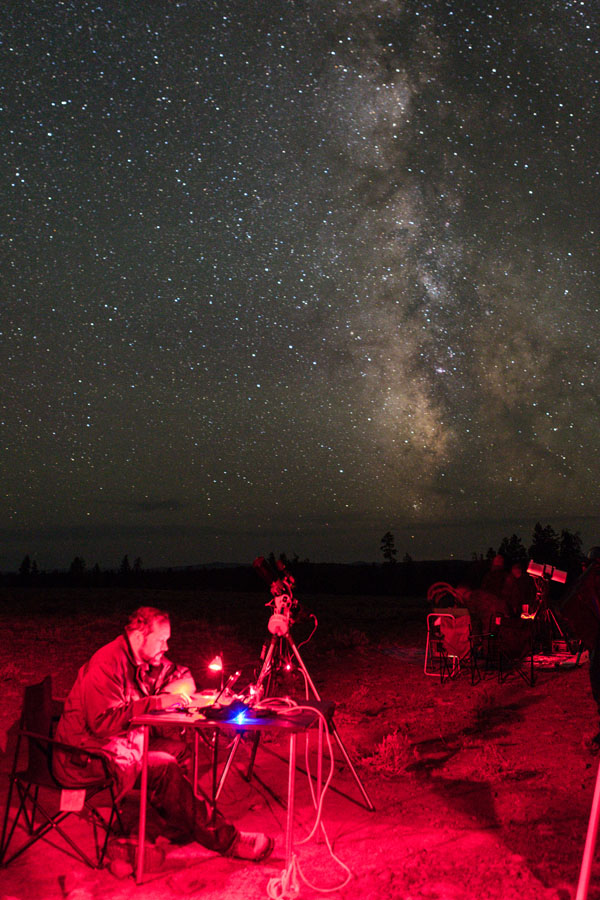
When you want to see the stars, find someplace dark

Exploring the cosmos
Josh, Thanks for sending me the photo!

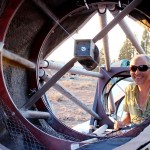
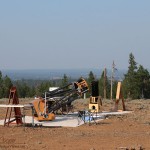
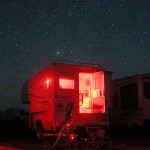
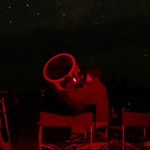
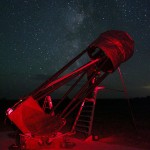
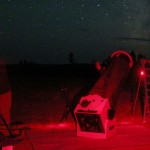

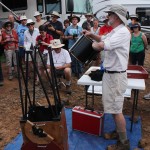
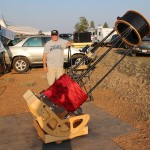
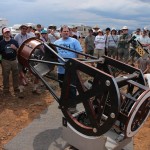
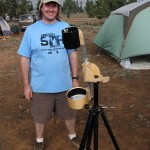



The plan is simple, a vacation combining a visit to my family and a run to Oregon Star Party. I miss doing the larger regional star parties, six telescopes is a big star party on the island. OSP would feature hundreds of telescopes, speakers, and hopefully dark skies. I also volunteered as a speaker, may as well bring and share little Keck experience.
The site is quite remote, no nearby hardware store to replace a missing bolt, no internet connection to allow download of a missing driver. The setup would have to work with what was packed to start with. Several iterations of packing showed that two cases would be required to carry the setup. An ancient hard suitcase I have had since my Air Force days, and a hard equipment case purchased years ago for a portable telescope I have yet to build. At least both had wheels and could be hauled by one person through an airport terminal.
After a few very nice days visiting with my parents I steal away in the camper for the drive to OSP. Four hours sees me over the Cascades, into the Ochoco Mountains east of Prineville. It is a very pleasant drive, a beautiful day, open roads, Mt. Hood soaring over the trees that line the highway. The sort of driving you just can not do on the island, the sort of vacation I grew up with.
Mercury is sliding into the light of dawn this week. Currently about 10° elevation at sunrise, the planet will disappear into the Sun’s glare over the next few days. It will pass through superior conjunction on August 24th, to reappear for an evening apparition around September 8th.

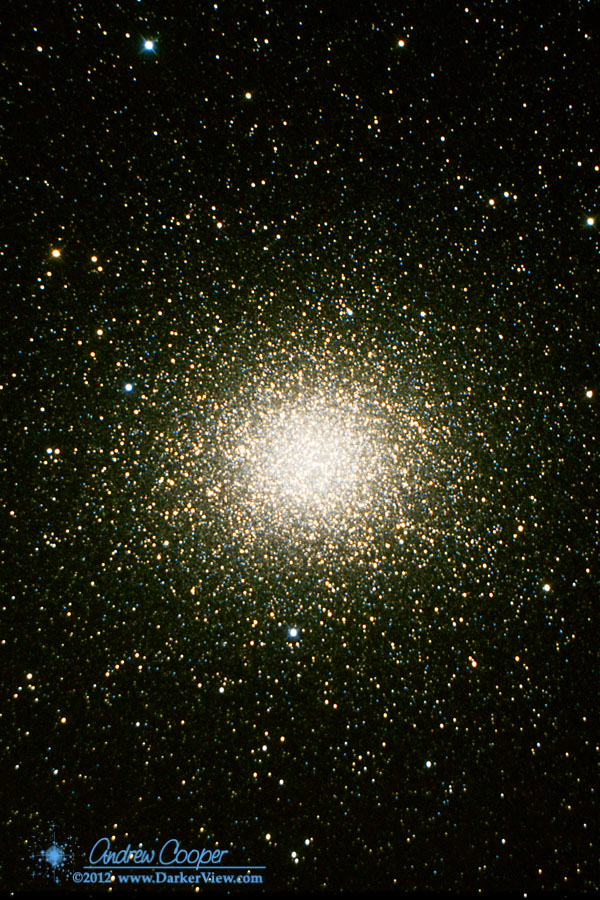
The Perseids are one of the most watched meteor showers. Occurring during northern hemisphere summer, the shower can be appreciated on a summer night. Quite a difference from the other reliable showers such as the Leonids and Quadrantids, that occur in November and January. Consider a warm summer night under a dark sky full of stars, a picnic blanket, relaxing while shooting stars streak across the sky. What could be better?
The Perseid meteor shower occurs when the Earth passes through a stream of debris along the orbit of Comet Swift-Tuttle. This shower has been consistent throughout recorded history, mentioned in Chinese, Japanese and Korean records as early as the 1st century. Active from July 17th to August 24th, the shower will build slowly for weeks before the peak. A week before or after peak the shower can still be seen with around 20 meteors each hour. The shower is a northern hemisphere event, for southern observers the radiant never rises above the horizon.
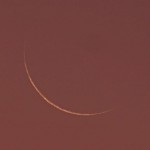
The dawn is getting crowded. While three planets, Mercury, Mars and Jupiter have been dancing on the dawn stage for weeks now, tomorrow morning a thin crescent, waning Moon will join in. Tomorrow morning the Moon will be 10% illuminated and 4.5° south of Jupiter.
Over the next couple mornings the Moon will continue to wane and slide along the line of planets in the dawn. On the morning of the 4th it will be 5% illuminated and between Mercury and Mars. On the 5th it will be lower than all three and only 1.6% illuminated.
Today Mercury reaches maximum elongation, the furthest point it will reach from the Sun in the sky and the highest it will be above the sunrise for this morning apparition. The planet is easily visible as a bright, starlike object about 19° above the rising Sun as the twilight begins. Over the next couple weeks Mercury will slide back into the sunrise, heading for superior conjunction on August 24th.
As Mercury passes through maximum elongation it is part of a trio of bright planets in the morning sky. Higher in the sky you will also see Jupiter and Mars dancing in the dawn.