Up top giving some family a tour of the telescopes. We stayed for sunset, it was worth the wait…

When you want to see the stars, find someplace dark

Exploring the cosmos
Up top giving some family a tour of the telescopes. We stayed for sunset, it was worth the wait…
Visiting the summit of Mauna Kea is high on many visitor’s to-do list when coming to the island. The summit region is spectacularly beautiful, even after six years of visiting several times a week I still find it so. My habit is to drive, or to ride shotgun in order to enjoy the view. I keep a camera at hand, ready for the inevitable situations where beautiful is transformed to spectacular with a well placed cloud or shaft of sunlight.

Continue reading “Visiting the Summit of Mauna Kea”
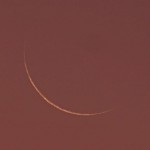
Tomorrow morning, December 11th, a nice trio will see three bright objects create a close 6° triangle. Lowest of the three will be Mercury, shining brightly at -0.6 magnitude, at about 18° elevation at sunrise. About 4° above Mercury will be a nice 4% illuminated crescent Moon. Above the Moon will be Venus, shining at -3.9 magnitude it will be very hard to miss. About 16° above the trio you can find Saturn, making three bright planets in the dawn. This conjunction should be worth setting the alarm clock early for.
Tomorrow morning, December 10th, you will find a nice lineup of planets in the dawn sky. Mercury, Venus and Saturn will be in a line about 20° long. Adding to the lineup will be a nice crescent Moon, a bit over 10° higher in the sky than Saturn.
The view at 06:00HST will find a 19% illuminated Moon at 38° elevation. Working down the line you will see Saturn at 29° elevation, Venus at 15° elevation and Mercury at 9° elevation. With sunrise not until 06:46HST this will give plenty of time to view, and perhaps photograph, a line of planets in the dawn.
Over the next few days the view will be much the same, with the Moon lower each morning. On December 11th the Moon will sit between Venus and Mercury creating a nice trio.
The original NexStar telescopes are great instruments. Ours has seen many uses, from dark skies to not so dark skies as it has been set up in the Arizona Desert, the summit of Mauna Kea, or various school yards and resorts for public viewing. It has been used as a visual instrument, a photographic ‘scope, even done a little real work.
For the most part the scope has worked well, and has been well maintained, even updated with the latest hand pad controller. But on occasion there is a problem… connection issues would crop up. The dreaded “No Response 16” or “No Response 17” errors would appear, indicating that the motor control board is not talking. This would result in having to power cycle and realign the telescope.
Lately the errors have become more problematic. The last straw was a public event I recently used the telescope for, setting up the telescope for Halloween. Continual errors plagued the evening, a constant struggle. While the scope usually tracked, I could not use GOTO as each alignment was quickly off by just enough to be useless.
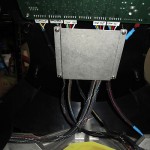
I have had the telescope apart too often in attempts to fix this, inspecting and re-seating the cables. This usually works, the problem will go away, for a while.
In general I like what I see inside the telescope. A well designed piece of kit with good components. Decades of taking gear apart have provided me so many examples of poor or good design. Inside the NexStar I just like what I see. The telescope is easy to get apart, just a few screws to remove each cover, exposing everything you might need to work on. The designers of this telescope obviously took pride in their work, it shows.
The exception to this is the wiring. There are a number of issues that can create trouble. Or rather there were a few issues, I just took care of that…
Continue reading “Rewiring a Celestron NexStar Telescope”The annual Geminid meteor shower has become one of the most reliable annual meteor showers. Known for bright and slow moving fireballs the Geminids can provide a good reason to spend a few hours outside on a December night. This shower has routinely provided rates above 100 meteors per hours in past years, this year should be no exception.

Here on the Big Island the single best place to stargaze is the Mauna Kea VIS. The dark skies are usually free of clouds and are well away from the lights of Hilo and Kona. After dark use for stargazing is not only permitted, but encouraged. It can be cold at 9,200ft, bring warm clothes and blankets
The peak is expected to occur around December 13, 07h to December 14, 04h UT. For viewers here in Hawai’i this occurs on the night of December 12th. The Geminids feature a broad peak, with high rates for nearly 24 hours, thus allowing the all time zones a decent chance to enjoy the show.
There should be no substantial moonlight to drown out this years showing, dark skies to allow even the faintest meteors to be seen. The Moon is a thin waxing crescent, 1% illuminated on the morning of the 13th, essentially new.
The Geminid radiant rises round 8pm, thus meteors should be visible all night long. You can stay up late or set the alarm early, your preference. Southern viewers will have to wait until around midnight for the constellation Gemini to rise, making this a morning shower.
Watching meteors requires no more equipment than your eyes and a dark sky, and can be enjoyable for just about anyone. Well? It is December, you should probably add a warm coat to the equipment list.
W. M. Keck Observatory press release…
A group of astronomers from the University of Hawaii at Manoa, the U.S. Mainland, Canada, and Europe recently used the twin telescopes of the W. M. Keck Observatory on Mauna Kea, Hawaii, to conduct a census of the brightest, but until now unseen, galaxies in the distant Universe, bringing astronomers one step closer to understanding how galaxies form and evolve.

While it’s not clear what gives these galaxies their intense luminosity, it could be the result of a collision between two spiral-type galaxies, similar to the Milky Way and Andromeda Galaxies. Or they could be in a particularly gas-rich region of space, where galaxies form stars quickly due to constant bombardment from gas and dust.
Continue reading “Astronomers Go Infrared to Map Brightest Galaxies in Universe”
Today Mercury reaches maximum elongation, the furthest point it will reach from the Sun in the sky and the highest it will be above the sunrise for this morning apparition. The planet is easily visible as a bright, starlike object about 15° above the rising Sun as the twilight begins. Over the next couple weeks Mercury will slide back into the sunrise, heading for superior conjunction on February 16th.
The West Hawai’i Astronomy Club will hold its December Meeting as usual on the second Tuesday of the month, December 11th at 7pm. We will be unable to have the meeting at CFHT due to conflict with another event, thus we will be meeting at Keck Observatory HQ in Waimea.
As many of our members traveled to observe the recent total solar eclipse in Australia we expect to be treated to photos and travelogues of their expedition. Join us for eclipse photos and more.