
Jupiter will pass through opposition at 14:43 today. The planet will rise at sunset and transit at midnight, available for observation for the entire night. For the remainder of the year and much of the spring, the planet will shine brightly in the evening sky.
Category: Astronomy
Exploring the cosmos
TMT Permit Approved
The Conservation District Use Permit (CDUP) for the Thirty Meter Telescope has been granted. The Hearing Officer’s report is published and available for reading. And it is interesting reading! Quite oddly I do enjoy reading these legal documents, I have learned much about the summit through the various documents like this.
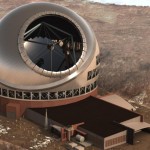
There are numerous claims that seem quite odd to anyone familiar with the summit, claims that were easily disproved during the investigative process. An “extensive fencing network”? What fences? Anyone who has visited the summit knows that there are no fences around the observatories at the summit. There are some small enclosures necessary to keep people safe around storage tanks and such. Well below the summit the VLBA antenna is enclosed for safety reasons, as is an electrical substation at Hale Pohaku.
49. Petitioners contend that a purported “subdivision” of land among the various existing observatories is evidenced by an “extensive fencing network.” Exhibit A-202 at 22. As was plain during the site visit, there is no “fencing network,” much less an “extensive” one, in the summit region of Mauna Kea.
Claims that the TMT would negatively impact the waters of Lake Waiau? The TMT is not located anywhere near the lake’s watershed. The petitioners engaged in legal mudslinging, throwing as many claims as possible at the case to see what would stick, a legal tactic I dislike immensely. Making such unfounded claims merely serves to discredit the petitioners, distracting the conversation away from the real issues involved in sharing the summit region.
466. Considering all of the evidence, including but not limited to the testimonies of Drs. Liu and Kauanui, and giving such evidence due weight, Petitioners have not offered reliable, probative, substantial, or credible evidence, scientific or otherwise, to suggest that the Project will be harmful to the health, safety, and welfare of native Hawaiians or anyone else.
There are reasonable cultural objections to the use of the mountain for astronomy. These are what must be addressed in this process. Can use of the summit be shared among the various parties? The report clearly comes to the conclusion that we can share the summit and that the presence of the new telescope can be minimized through proper measures.
101. Petitioners did not offer reliable, probative, substantial, and credible evidence, whether from expert or lay witnesses, that would support the conclusion that the TMT Project would cause substantial adverse impact to plants, aquatic life and wildlife, cultural, historic, and archaeological sites, minerals, recreational sites, geologic sites, scenic areas, ecologically significant areas, or watersheds.
There is a list of conditions, which seem quite reasonable… The staff must receive cultural and environmental education on the special nature of the summit of Mauna Kea. We do this at Keck, something I usually find quite interesting. They must use a completely enclosed waste water system. There must be an invasive species plan. Conditions around the construction site must be monitored, including arthropod populations, during construction and for two years afterwards. There is an extensive list that goes on from here…
e. The proposed land use, including buildings, structures, and
facilities, will be compatible with the locality and surrounding areas, appropriate
to the physical conditions and capabilities of the specific parcel or parcels
Will this be the end of the legal process? No. There is an additional hearing for the petitioners to take place before the Hearings Officer so that both sides may review the findings. It is also likely that at least one lawsuit will be filed in reaction to issuance of the CDUP. Unless there is some new legal issue these are unlikely to progress very far. The process so far has been quite exhaustive, any further legal action would simply be a rehashing of what we have already heard.
Postcard from the Universe – Orion Nebula with the EOS-M
The first astrophoto taken with the EOS-M. Considering the trouble it is to manually trigger the exposures without proper camera control, I am surprised I stuck it out to take 40+ subs. Since 30 seconds was the longest I could program the camera for I simply maxed out the ISO and took a lot of subs plus a dozen darks. There is still way too much noise in the resulting frame. Still, the ISO 12,800 frames are not all that bad, better than I expected. If this camera had remote control it would be a decent little astro camera. Longer subs and a lower ISO would deliver decent results.

Full Moon
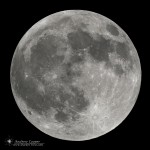
A penumbral lunar eclipse will be visible from western North America, across the Pacific to much of Asia. This is a fairly minor eclipse, with the Moon passing through the outer penumbral shadow of the Earth. A careful observer will note the light of the full Moon dimmed. As the Moon will not enter the darker umbral shadow the effects of this eclipse will not be obvious.
The Moon and Jupiter
Tonight the Moon will be about 7° away from Jupiter, a bright pair rising together in the eastern sky after sunset. Tomorrow, November 28th, will see the Moon east of Jupiter, but even closer, just under 5° away.
Astrophotography with the EOS-M
In the few days I had the camera I was determined to acquire some astrophotography test shots with the EOS-M camera. Even if it meant getting up at 3am to have some dark sky after moonset. It would have been easier a few days before, but a Pacific storm system had provided several days of overcast with occasional rain. This particular morning was just about perfect, clear skies, decent seeing and no wind to bounce the telescope around.

The result is an f/7 optical system with 1080mm focal length. This gives a field of view of about 72×48 arc-minutes (1.2 x 0.8 degrees) on the sky when using a camera with an APS-C sensor.
Venus and Saturn
Tomorrow morning, November 26th, will see a very close rendezvous of Venus and Saturn in the dawn. The two will be less than a degree apart, with a separation of only 40 arc-minutes. This will put both planets in the same low power telescopic view. The pair will rise about 04:30HST and be well up, nearly 30° above the horizon, at sunrise.
This is a mismatched pair, with Venus dominating the view at a brilliant -4.0 magnitude. Saturn will be far dimmer at 0.6 magnitude.
Venus and Saturn
Over the coming days, Venus and Saturn will rendezvous in the dawn. Already drawing close, the pair is separated by less than 4° this morning. Close approach will be on the morning of the 26th when the separation will be only 40 arc-minutes. The two will remain close for about a week, the separation having grown to over 4° on the morning of the 30th.
This is a mismatched pair, with Venus dominating the view at a brilliant -4.0 magnitude. Saturn will be far dimmer at 0.6 magnitude.
Mercury in the Dawn
Mercury is beginning its third and final dawn apparition of the year. Today the planet will be over 10° from the Sun, rising a little further each day until maximum elongation on December 4th. There will be a nice trio with the Moon and Venus around December 11th.
Keck Lecture Reminder
Günther Hasinger
University of Hawai’i
Black Holes and the Fate of the Universe
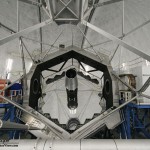
The character and distribution of stellar and supermassive black holes is a fascinating and rapidly changing area of astronomy research. Recently, the W. M. Keck Observatory has confirmed supermassive black holes are in the centers of most nearby galaxies, including our own Milky Way. A tight relationship exists between black hole mass and the properties of their host galaxies. New instrument capabilities, like those planned at Keck, will reveal even more about the nature of black holes and how they play a role in the ongoing evolution of the universe and everything in it.
7:00 PM
Gates Performing Arts Center Auditorium
Hawaii Preparatory Academy
65-1692 Kohala Mtn. Rd., Waimea
Seating is limited to first come, first served.
Doors Open at 6:30 PM
Free and Open to the Public