This evening look for the Moon rising in the east just as the Sun sets in the west. Across the Big Island this can often lead to moonbows as the low elevation moonlight interacts with fog and clouds.
It was a clear predawn sky that greeted Waimea this morning, perfect to watch the transit of Mercury across the Sun.
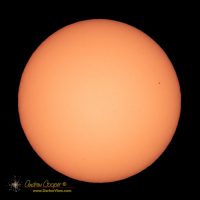
The transit of Mercury on the morning of Nov 11, 2019
An alarm set for o-dark-thirty and a drive to Waimea with the first glow of dawn behind the mauna. I did not have to pack a ‘scope as I would be using an observatory outreach telescope, just make sure I have camera gear ready.
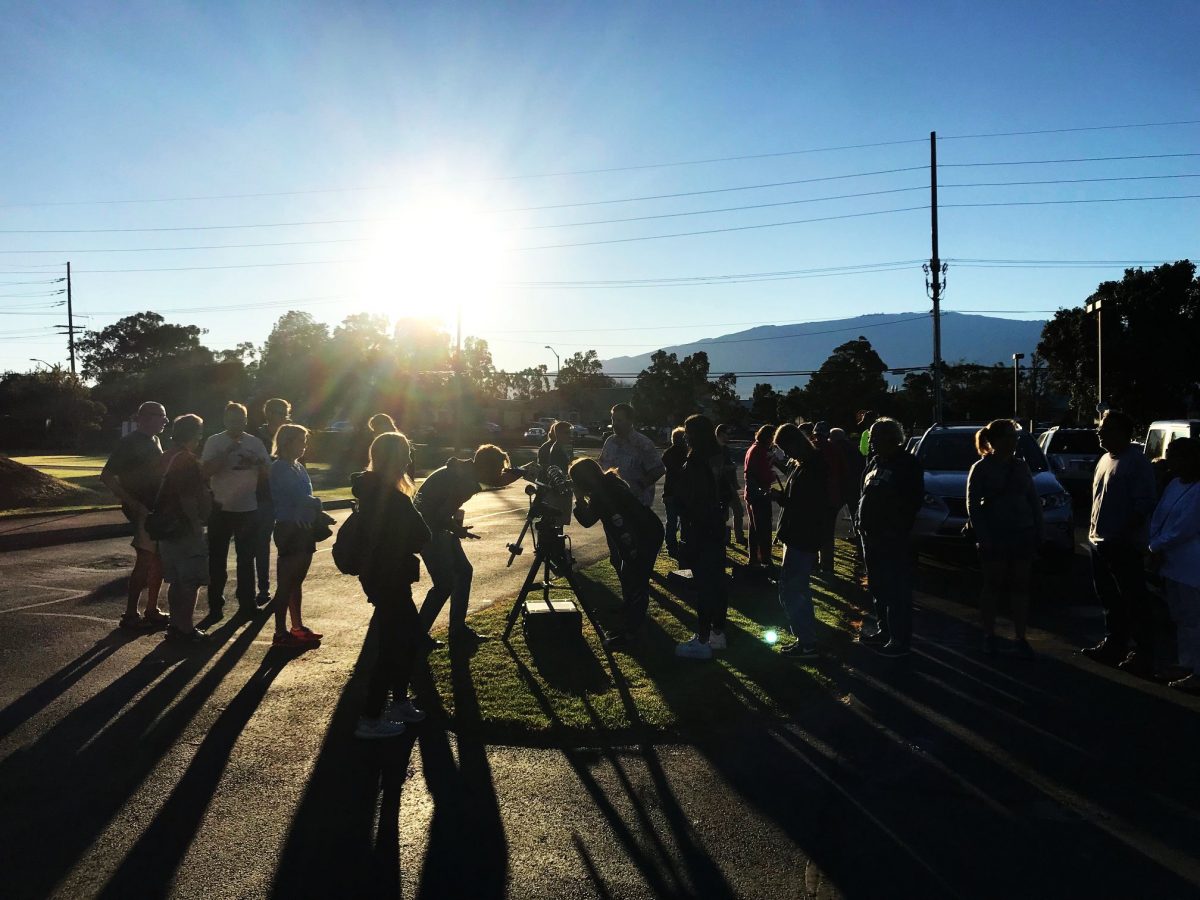
Realistically I was expecting only a few folks in addition to the club members I knew were coming. A light crowd maybe? Thus I was rather surprised to find the parking lot filling quickly and our big conference room buzzing at 6am.
It was quite the crowd considering the Sun had not yet appeared over the shoulder of the mauna!
Today Mercury is passing through inferior conjunction, passing between the Sun and the Earth. This fast moving planet will reappear above the dawn in about a week, rising towards maximum elongation on November 28th.
On this particular conjunction the planet will transit the Sun.
This will be a modest apparition, with the planet reaching only 20° away from the Sun.
Tomorrow morning, November 11th, there is a transit of Mercury. For observers here in the islands the event will be in progress when the sun rises, only the last hour and a half of the even visible.
The Leonids are one of the better known annual meteor showers. Some years see high Leonid activity, with amazing numbers of meteors. This shower has occasionally created true meteor storms. Unfortunately 2019 is not predicted to be one of those years, with very modest numbers expected.
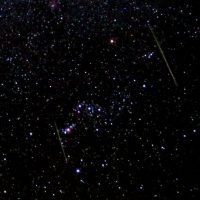
A pair of Leonid meteors streak through Orion
Due to the gravitational influence of Jupiter, the Leonids are not expected to produce any exceptional showers for some decades. We are unlikely to see any repeats of the early 21st century storms anytime soon.
The shower will peak on November 17, with an expected ZHR of around 15 meteors per hour. The Leonids exhibit a broad peak allowing viewing for days before and after maximum. Moonlight is a bit of an issue with a waning gibbous Moon 5 days after full on the 17th.
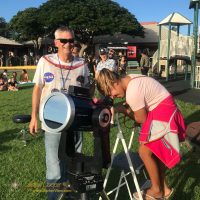
Scott showing folks the Sun with a white light solar filter
Since Mercury is quite small you will want a bit of magnification to view the event properly. If you do not have a good solar filter for your telescope come to a local event where telescopes are available.
On Hawaiʻi island you can either go to the W. M. Keck Observatory HQ in Waimea or Subaru Observatory HQ in Hilo. Both observatories are hosting transit events at dawn Monday morning 11 Nov, 2019.
These events start at 6am with webcasts of the transit from other observatories further east, with the Sun rising far enough to see the transit from 7-8am.