Earthquakes have been a hot subject over the last couple months around here.
A seismic sensor made from three Honeywell QA-1400 accelerometersWe live on an island that regularly shakes a bit, the consequence of living with active volcanoes. Obviously this has implications for the great telescopes atop Mauna Kea, every once in a while we experience an earthquake with the potential to cause damage.
The ongoing collapse of the summit caldera on Kilauea has been generating a daily five point something earthquake. While not powerful enough to damage the facility, these events do show up in the data each night, bumping the telescope, disturbing the tracking, and occasionally ruining an exposure.
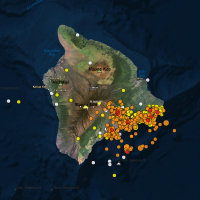
USGS Earthquake Map for May 6, 2018Along with at least one strong earthquake, there are well over five hundred small quakes occurring daily as the eruption continues and Kilauea Caldera continues to subside.
A very young moon over WaikoloaNew Moon will occur today at 16:48HST.
During this new Moon a partial solar eclipse will sweep across the Southern Sea south of Australia. At maximum the Moon will cover about 33% of the Sun.
This phone call had a number I knew all too well, even without the caller ID showing the name… K1 Remote Operations. A this time of night it would be a problem, a serious problem. This particular problem would have me on the road back to the summit an hour later.
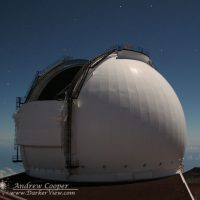
Looking towards the Keck 2 dome on a moonlit night
Midnight runs to the summit are not common, but they do occur in my life. Usually we can work remotely, the night attendant serving as our remote eyes and hands. Just press the right button, flip the correct switch, done. Not this time. We tried, for over an hour we tried.
I really did not want to head back up. I had just gotten down a few hours ago, having spent the day on the summit working on the usual long list of things that need to get done. Days on the summit, in the thin air of nearly 14,000ft elevation are physically draining.
The irony of this malfunction is that I had seen it before. The dome had tripped out inexplicably on previous occasions. The problem would occur then disappear. Once it vanished you could not troubleshoot it. Unlike most of our other systems there are no logs from the shutter drive, nothing records what was going wrong.
The Friday before this it had happened to me again. But this time was different, I had a maintenance computer attached to the PLC serial port. This time I saw the error, something in the code labeled speed mismatch. No idea what this was, or how it worked. Again the error disappeared, and I could not troubleshoot further as the weather was getting worse. No opening the shutters again.
I needed a chance to figure out what this fault was… Later that day I read through the code, figured out this feature was a speed check to insure that both sides of the shutter are driven evenly. A check to compare the right and left sides of the shutter and to fault if the difference is too large. Two words of memory were compared, if the difference was too large it faulted the shutter drive.
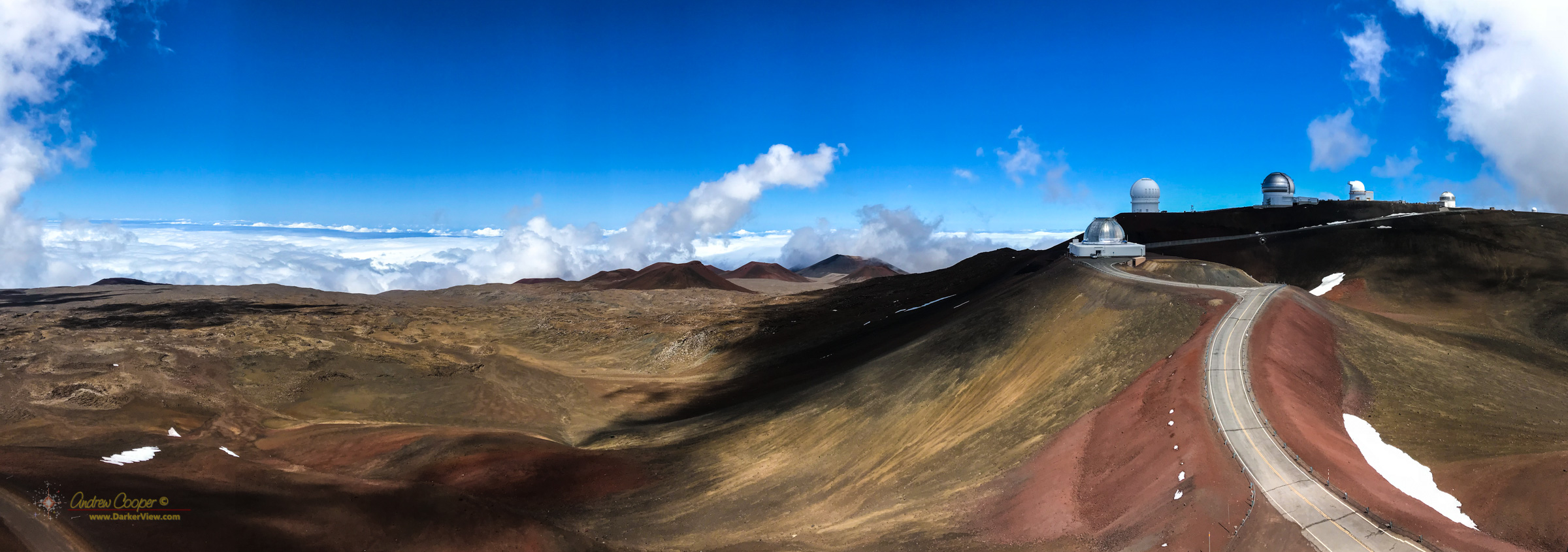
Not a good glow when you consider that glow is from a raging river of lava between fissure 8 and the sea at Kapoho. Still it can be pretty under the rising Milky Way. I stayed late at work and took a few photos on the way down the mauna. Click on the image for full scale goodness…
The glow of lava in the clouds and vog over Puna. Five image panorama with a 14mm lens from the summit of Mauna Kea.