Often you just need to take note of the small scenes that make up daily life. Over the years I have made an effort to photograph these scenes, there is so much richness in our everyday existence that too many do not notice…















When you want to see the stars, find someplace dark

Exploring the cosmos
Often you just need to take note of the small scenes that make up daily life. Over the years I have made an effort to photograph these scenes, there is so much richness in our everyday existence that too many do not notice…
The bright planet Venus will appear in the dawn sky over the next couple weeks, climbing higher to become the morning star for the remainder of 2017. It is currently 15° from the Sun and shining at magnitude -4.3, bright enough to be seen against the dawn sky. It will reach maximum elongation on June 3rd, 46° ahead of the rising Sun.
Venus Events for 2017 |
||||
|---|---|---|---|---|
| Date UT | Separation | Mag | ||
| Maximum Elongation | Jan 12 | 47.1°E | -4.4 | |
| Inferior Conjunction | Mar 25 | |||
| Maximum Elongation | Jun 3 | 45.9°W | -4.3 | |
| Source: NASA Sky Calendar | ||||
Today Mercury will be at maximum eastern elongation, as high in the evening sky as it will appear for this current apparition. After today the planet will slide back into the sunset, passing through inferior conjunction on April 19th to reappear in the morning sky around the end of the month.
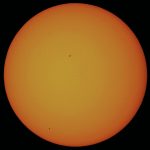
There are no transits of Mercury in 2017, the next will be Nov 11, 2019.
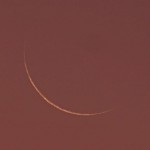

Today Venus is at inferior conjunction, passing between the Earth and Sun. It will reappear in the dawn sky early next month to become the morning star for the remainder of 2017. The planet will reach maximum elongation on June 3rd at 46° from the Sun.

Across the room from my desk is a large cabinet full of blueprints and sepia prints. Stacks of large prints that represent the original drawings from which the W. M. Keck Observatory was constructed. Floor plans, foundation plans, the structural steel of the telescope itself.


The vernal or spring equinox occurs today at 00:29HST. Today there will be little difference between the length of the night when counted against the number of daylight hours. This is the first day of spring as marked by many cultures in the northern hemisphere.
| 2017 Solstices and Equinoxes | ||||
|---|---|---|---|---|
| UT | HST | |||
| Perihelion | Jan 4 | 14:18UT | Jan 4 | 04:18HST |
| Vernal Equinox | Mar 20 | 10:29UT | Mar 20 | 00:29HST |
| Summer Solstice | Jun 21 | 04:24UT | Jun 20 | 18:24HST |
| Apehelion | Jul 3 | 20:11UT | Jul 3 | 10:11HST |
| Autumnal Equinox | Sep 22 | 20:02UT | Sep 22 | 10:02HST |
| Winter Solstice | Dec 21 | 16:28UT | Dec 21 | 06:28HST |
| Source: USNO data Services | ||||
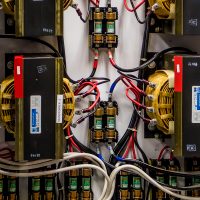
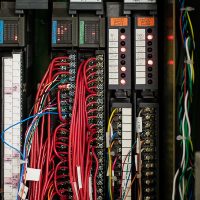
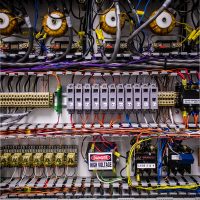
When 700 tons of steel and aluminum just keeps going when it is commanded to stop people tend to notice. When you let up on the switch it is supposed to stop, when that something is the Keck 1 telescope dome it gets interesting.
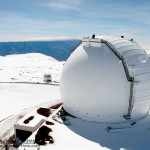
Three people describing a problem on the phone is a bit confusing, it takes a few minutes, and a few questions before I have a clear idea of what happened. Basically the dome did not stop when commanded to while they were operating with the radio controller, a bit of kit we call Capt. Marvel.
Of course a few minutes later our safety officer walks into my office… I wonder what she wants to talk about?
Yeah, I probably need to figure this out.