
Power is On
When you want to see the stars, find someplace dark

Exploring the cosmos
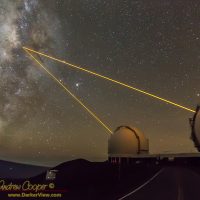
W. M. Keck Observatory press release…
A trip past the sun may have selectively altered the production of one form of water in a comet – an effect not seen by astronomers before, a new NASA study suggests.

Scientists from NASA’s Goddard Center for Astrobiology observed the comet C/2014 Q2 – also called Lovejoy – and made simultaneous measurements of the output of H2O and HDO, a variant form of water. This image of Lovejoy was taken on Feb. 4, 2015 – the same day the team made their observations and just a few days after the comet passed its perihelion, or closest point to the sun.
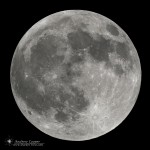
Over the next week Venus will be lost to the Sun’s glare. It is currently about 15° east of the Sun, but getting closer quite quickly now and becoming tough to spot in the sunset. The planet will pass through inferior conjunction on March 25th. The planet will appear in the dawn sky around mid April. When it does appear, it will spend the remainder of 2017 as the morning star.

Venus Events for 2017 |
||||
|---|---|---|---|---|
| Date UT | Separation | Mag | ||
| Maximum Elongation | Jan 12 | 47.1°E | -4.4 | |
| Inferior Conjunction | Mar 25 | |||
| Maximum Elongation | Jun 3 | 45.9°W | -4.3 | |
| Source: NASA Sky Calendar | ||||
Today Mercury will be at superior conjunction. After today the planet will reappear in the evening sky, rising high enough from the Sun’s glow to be seen around the end of the month.
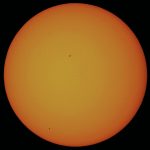
As Mercury is on an orbit inside that of Earth’s it will see both inferior and superior conjunctions as it passes from the evening sky to the dawn sky and back again.






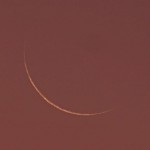
An annular solar eclipse will occur on the southern tip of South America, across the Atlantic Ocean, and into southern Africa.
