The new year is upon us. Of course that means plenty of fireworks here in the village. It will be a noisy night!

When you want to see the stars, find someplace dark

Exploring the cosmos
The new year is upon us. Of course that means plenty of fireworks here in the village. It will be a noisy night!

A gorgeous image released by NASA’s Earth Observatory this week. it features the recent snowfall atop our island’s summits. I suggest you go to the link above, download the 6k x 6k version, then just zoom in and enjoy the detail! (Sorry the full image is bigger than the WordPress size limit to post here)

Calls from the summit facility are not exactly what I want to see on my phone display on Christmas Eve. Heather was very apologetic about calling, but she had no choice, the Keck 2 dome would not rotate.

It was just before sunrise that we drove up the mountain from Waikoloa, the sun rising over the shoulder of Mauna Kea, casting long crepuscular rays into the sky. It is a beautiful Christmas morning, a clear sky, the snow capped summits of two volcanoes looming overhead. Heading to work on this morning is a bit surreal, while at the same time seeming a bit more festive for the snow.
The first meteor shower of 2017 is the annual Quadrantid meteor shower. The Quadrantids are a reliable shower, producing 60-120 ZHR, one to two meteors per minute. The Quadrantids are named for the obsolete constellation Quadrans Muralis, now part of the constellation Boötes.

This year’s peak is calculated for January 3rd at 14:00UT, this would be January 3rd at 04:00HST, well timed for observers in the islands. For northern observers the radiant is circumpolar, thus the shower is observable all night long. Given our 20° latitude here in Hawaii the radiant does not rise until 01:30HST, thus observations must wait until well into the morning hours. As this perfectly corresponds with the peak this looks to be an ideal meteor shower for island observers. Further, a first quarter moon will have long set leaving a perfectly dark morning sky for observing meteors.
A first quarter Moon on January 5 creates favourable viewing conditions for the predicted Quadrantid maximum on January 3. For many northern hemisphere sites, the shower’s radiant is circumpolar, in northern Boötes, from where it first attains a useful elevation after local mid-night, steadily improving through till dawn. The 14h UT timing for the peak is favourable for observers in the west of North America. Observers in the north of Asia will find the radiant close to the horizon in their evening skies. The λ⊙ = 283.15◦ maximum timing is based on the best-observed return of the shower ever analysed (IMO data from 1992), and has been confirmed by optical and radio results in most years since. Typically, the peak is short-lived, so can be easily missed in just a few hours of poor northern-winter weather, which may be why the ZHR level apparently fluctuates from year to year. A – IMO 2017 Meteor Shower Calendar
Watching meteors requires no more equipment than your eyes and a dark sky, and can be enjoyable for just about anyone. While most observers in the northern hemisphere must endure winter conditions to observe this shower, in the islands we have the option of observing from somewhat warmer locations. I think this year’s Quadrantids deserve an early wake-up and a trip into the dark!


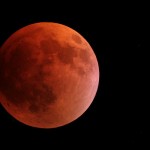


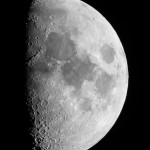


Catching the moonrise in just the right spot and with just the right foreground takes planning and perseverance by the photographer. Sometimes things go right and you catch the shot, but you really do not know what you will catch in the final version until you see the final video…
Moon Muncher from Aaron Kupferman on Vimeo.
Winter solstice occurs today at 00:44HST. Today the Sun will occupy the most southerly position in the sky of the year. The term solstice comes from the Latin terms Sol (the Sun) and sistere (to stand still). On this day the Sun seems to stand still as it stops moving southwards each day and begins move to the north. This is the first day of winter as marked by many cultures in the northern hemisphere. Alternately, this is the first day of summer for those folks in the southern hemisphere.
| 2016 Solstices and Equinoxes | ||||
|---|---|---|---|---|
| UT | HST | |||
| Perihelion | Jan 2 | 22:49UT | Jan 2 | 12:49HST |
| Vernal Equinox | Mar 20 | 04:30UT | Mar 19 | 18:30HST |
| Summer Solstice | Jun 20 | 22:34UT | Jun 20 | 12:34HST |
| Apehelion | Jul 4 | 16:24UT | Jul 4 | 06:24HST |
| Autumnal Equinox | Sep 22 | 14:21UT | Sep 22 | 04:21HST |
| Winter Solstice | Dec 21 | 10:44UT | Dec 21 | 00:44HST |
| Source: USNO data Services | ||||
We did make it up.

It was simply gorgeous at the summit, sunny and clear with no sign of the winds that had raged across the summit all week. The evidence of those winds was all to apparent, they had left a landscape of sculpted drifts. While the actual snowfall had not been that much, maybe a foot, the drifts were impressive.