
The planet Mercury is starting an evening apparition. The planet should become visible this week just above the fading glow of the setting Sun as a magnitude -1 object. The planet is moving about 1° further from the Sun and higher in the sunset each day, reaching a maximum elongation of 20° on December 28th.
Category: Astronomy
Exploring the cosmos
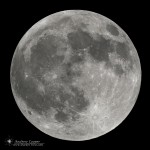
Full Moon
Hawaii Discovers: The World’s Leading Observatory Was Born in Hawaii 25 Years Ago
W. M. Keck Observatory press release…
Twenty-five years ago in 1990, the average US house cost $123,000, the Dow Jones averaged 2633 and gasoline cost a little more than a dollar-thirty a gallon. Saturn wasn’t just a planet: it was now a newly launched car company from GM, The Simpsons was aired for the first time and the Space Shuttle Discovery placed the Hubble Space Telescope into orbit.

Want Of Light
Before the W. M. Keck Observatory was built, the 200-inch Hale Telescope at Palomar Observatory reigned supreme. It was the largest telescope in the world, but after 50 years, progress in astronomy was flattening out because the instruments needed more photons than the 5-meter mirror could provide.
The biggest hindrance to an explosion of discoveries was a want of light and the telescopes themselves were the problem. Mirrors larger than Palomar’s could not be made and supported at the exacting levels needed for astronomy.
Continue reading “Hawaii Discovers: The World’s Leading Observatory Was Born in Hawaii 25 Years Ago”
Keck Celebrates 25 years Since First Light
W. M. Keck Observatory press release by Sean Adkins…
Every night, all over the world, people look up at the sky and wonder about the distant stars. Here in Hawaii we have the privilege of looking up at a very dark sky, but even here with the naked eye we can only see a few thousand stars. This is mainly because of the small size of the lens in our eye, which limits the amount of light it can gather, and also limits the detail we can see for those incredibly distant objects.

First light, the first time light from the night sky is focused into an image by a telescope, is a very special event for the community of people required to build and use them, accompanied by a nearly mystical sensation as it culminates years of dedication to completing the project and bringing the Universe a little closer to all humankind.
Since the invention of the telescope 400 years ago, we have been looking at the sky in with much bigger manmade eyes, seeking to learn more and more about our Universe. This has been possible because we have been able to build larger and larger telescopes. For a time telescopes were developed with either lenses or mirrors, but the understanding of telescope design improved, telescopes using mirrors became the choice for larger telescopes. In 1977 the largest telescope on earth was the Hale telescope at Mount Palomar, with a mirror 5 meters in diameter. Astronomers at the University of California knew that their research was reaching the limit of what could be done with the Hale and smaller telescopes, and so they started a project to design and build a 10 meter telescope. This was a very ambitious goal, since even the Hale was known to have limited performance because of the tendency of its mirror to change shape as the telescope was pointed at different places in the sky.
Continue reading “Keck Celebrates 25 years Since First Light”
Mercury at Superior Conjunction
Today Mercury passes through superior conjunction, passing behind the Sun as seen from the Earth. The planet will appear in the sunset in ten days or so, reaching maximum elongation on Dec 29th.
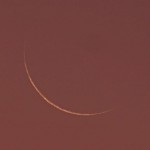
New Moon
Full Moon
Venus at Maximum Elongation
Today Venus is at maximum elongation, as high in the dawn sky as it will get for this morning apparition, about 46°. After today the planet will begin its long slide back into the glare of dawn. It will disappear from view around the beginning of May, 2016 and reach superior conjunction on June 6th, 2016.
Kamaʻāina Observatory Experience
One of the things the recent controversy has starkly revealed is the lack of understanding of what we do on the mountain. Myths and misunderstandings pepper the comment sections of local newspapers and echo on Facebook.

Rumor has it that Hawaii Forest and Trail will be providing the transport, a comfortable service with knowledgable guides.
Surprisingly this was announced by President Obama at the White House Star Party this week. A rather high profile announcement for a local effort.
I will probably volunteer to help out and be a tour guide when it comes Keck’s turn to host the tour.
Information can be found on the website http://www.kamaainaobservatoryexperience.org
Mercury at Maximum Elongation
Today Mercury will be at maximum western elongation, as high in the morning sky as it will appear for this current apparition. After today the planet will slide back into the dawn, passing through superior conjunction on November 17th to reappear in the evening sky around the end of November.