Reasons to Carry a Camera

I work at the summit of a nearly 14,000ft mountain that sits atop a pretty tropical island. That alone is good enough reason to carry a camera at all times. You never know when you will need that camera, beauty appears when you least expect it.

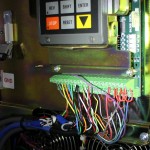
Dome Motor Controller
The control wiring for a Keck 1 dome VFD motor controller
There are other reasons to carry a camera in my life. I often use the camera to document my work. There is a camera, the little EOS-M, in my backpack alongside the rest of my tools. Wire cutters, screwdrivers, allen wrenches, a multimeter, all the useful tools I need every day, along with a camera, memory cards and spare batteries.

The advent of digital cameras where the cost of each photo is negligible has made this possible. This would not have been practical in the days of film. Yes, I remember those days, counting out every frame of a 36 exposure roll, deciding if the shot was worth it. In this digital age I usually have a dedicated camera along and never worry about shooting. If that camera is out of reach there is always the iPhone in my pocket.

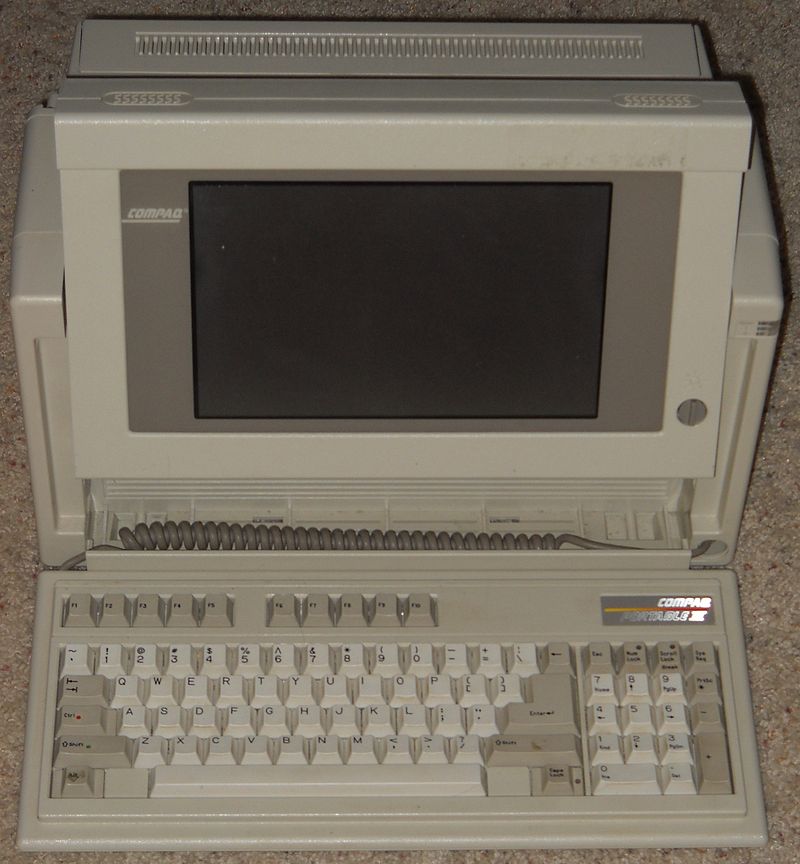
The equipment I work on is often unique, there may be only one copy in the world. Two if we have one installed on both Keck 1 and Keck 2. The documentation can be of varying quality, some is good, some is abysmal, some is just plain wrong. Some of this gear was professionally built by engineers, some of it was built by graduate students who would never need to fix it years later.

Continue reading “Reasons to Carry a Camera”

A Very Short Eclipse

We have been lucky in the islands lately when it comes to total lunar eclipses. A series of total eclipses have been visible from start to end from our vantage point in the middle of the Pacific. There is an average of one eclipse visible per year from any given place, but that is an average, you can go several years without an opportunity. Both 2012 and 2014 have given us two good eclipses and 2015 provides one.

Total Lunar Eclipse 4Apr2015
The sum of 699 exposures taken through the lunar eclipse of Apr 4, 2015
This eclipse would be a bit different however… Overall the eclipse lasted as long as is normal for a lunar eclipse, about three and a half hours. It was the total phase that was unusually short for this particular eclipse. It was only about four minutes that the moon would be entirely within the umbra, the darkest part of the Earth’s shadow. This usually lasts about an hour. The umbral magnitude of this eclipse was 1.0008, just barely over the threshold of one that designates a total lunar eclipse.

On Friday I did a quick interview with a reporter from the West Hawaii, Today, our local newspaper. He was looking for a little more information on the eclipse and a somewhat more local angle than a wire article on this eclipse. I chatted for a while, and got written up in the article…

Continue reading “A Very Short Eclipse”

Mauna Kea Starscape

With all of the emotion being expressed over telescopes on the mountain this week, just a reminder of why Mauna Kea is the perfect place from which to look to the heavens…

Mauna Loa and Meteor
Looking over a snow covered Puʻu Hau Kea to Mauna Loa, a bright meteor is visible, as is the GMD laser, Canon 6D and Samyang 14mm f/2.8 lens, 30s at ISO6400

Total Lunar Eclipse Reminder

Total Lunar Eclipse 14Apr2014
The total lunar eclipse on Apr 14, 2014, Canon 6D on 90mm f/12 APO
Early tomorrow morning a total lunar eclipse will be visible across the Pacific. Sky watchers in Hawaiʻi will be able to observe this event from beginning to end.

Penumbral Eclipse Begins  11:01 HST   09:01 UT
Partial Eclipse Begins   00:15 HST   10:15 UT
Total Eclipse Begins   01:57 HST   11:57 UT
Greatest Eclipse   02:01 HST   12:01 UT
Total Eclipse Ends   02:02 HST   12:02 UT
Partial Eclipse Ends   03:44 HST   13:44 UT
Penumbral Eclipse Ends   04:58 HST   14:58 UT

Timing for the 4Apr2015 total lunar eclipse

Total Lunar Eclipse

Early on the morning of April 4th a total lunar eclipse will be visible across the Pacific. Sky watchers in Hawaiʻi will be able to observe this event from beginning to end.

Total Lunar Eclipse 14Apr2014
The total lunar eclipse on Apr 14, 2014, Canon 6D on 90mm f/12 APO
This eclipse is just barely total with an umbral magnitude of 1.0008. The northern edge of the Moon will be barely inside the umbra and probably much brighter than the south hemisphere. The eclipse is also quite short, with a total phase lasting only four minutes. Compare this to the next total eclipse of 2015 where totality lasts over an hour.

Maximum totality will occur at 12:02UT or about 02:02HST. First contact will occur at 11:01HST on the evening of the 3rd, with umbral first contact a little after midnight at 00:15HST. It is this umbral contact that will be the first obvious effect of the eclipse to a visual observer, a notable notch out of the Moon.

Observing a total lunar eclipse requires no special equipment, simply the desire to look up. The most useful piece of equipment will be a reclining chair or some other method of staying comfortable while watching the sky. A pair of binoculars or small telescope can provide beautiful views of the Moon during an eclipse. Photography is somewhat more challenging, but not that difficult. Focal lengths of around 1000mm will fill the field of most DSLR cameras allowing photos like that shown here.

Penumbral Eclipse Begins  11:01 HST   09:01 UT
Partial Eclipse Begins   00:15 HST   10:15 UT
Total Eclipse Begins   01:57 HST   11:57 UT
Greatest Eclipse   02:01 HST   12:01 UT
Total Eclipse Ends   02:02 HST   12:02 UT
Partial Eclipse Ends   03:44 HST   13:44 UT
Penumbral Eclipse Ends   04:58 HST   14:58 UT

Timing for the 4Apr2015 total lunar eclipse
The entire eclipse will be visible during the night, quite convenient for amateur and casual sky-watchers.

The Moon and Venus

Mercury, Venus and Jupiter
An evening conjunction of Mercury, Venus and Jupiter on 30 May, 2013
A very nice evening conjunction between a crescent Moon and Venus will occur this evening, March 22. The pair will be just under 5° apart and will grace the sunset until well after dark, setting after 9pm. Venus is currently shining brightly at -4.0 magnitude, a nice match for a 10% illuminated waxing Moon.

A Fogbow, A Glory and the Spectre of the Brocken

When doing a dawn hike on Mauna Kea it is important to choose your altitude with care. You really want to be right at the top of the cloud layer. There, where the fog drifts over in alternating shifts with the sunlight, there is where the magic happens. Mamane in the fog, puʻu appearing and disappearing, and fogbows. Add fog and you have all the ingredients for some good photography.

The plan had been to spend the morning on the summit doing some testing. When that got cancelled I quickly dropped into plan B… Go hiking. I got the altitude right.

The spectre of the brocken was a nice treat. At the center of the fogbow you can see a glory, and in the center of the glory is my shadow looming large in the mist. That is the spectre.

A beautiful fogbow, a glory and the spectre of the brocken on Puʻu Palaolelo

Unusual Asteroid Suspected of Spinning to Explosion

W. M Keck Observatory press release

A team led by astronomers from the Jagiellonian University in Krakow, Poland, recently used the W. M. Keck Observatory in Hawaii to observe and measure a rare class of “active asteroids” that spontaneously emit dust and have been confounding scientists for years. The team was able to measure the rotational speed of one of these objects, suggesting the asteroid spun so fast it burst, ejecting dust and newly discovered fragments in a trail behind it. The findings are being published in Astrophysical Journal Letters on March 20, 2015.

P/2012 F5
Active asteroid P/2012 F5 captured by Keck II/DEIMOS in mid-2014. Credit: M. Drahaus, W. Waniak (OAUJ) / W. M. Keck Observatory
Unlike the hundreds of thousands of asteroids in the main belt of our solar system, which move cleanly along their orbits, active asteroids were discovered several years ago mimicking comets with their tails formed by calm, long lasting ice sublimation.

Then in 2010 a new type of active asteroid was discovered, which ejected dust like a shot without an obvious reason. Scientist gravitated around two possible hypotheses. One states the explosion is a result of a hypervelocity collision with another minor object. The second popular explanation describes it as a consequence of “rotational disruption”, a process of launching dust and fragments by spinning so fast, the large centrifugal forces produced exceed the object’s own gravity, causing it to break apart. Rotational disruption is the expected final state of what is called the YORP effect – a slow evolution of the rotation rate due to asymmetric emission of heat.

Continue reading “Unusual Asteroid Suspected of Spinning to Explosion”