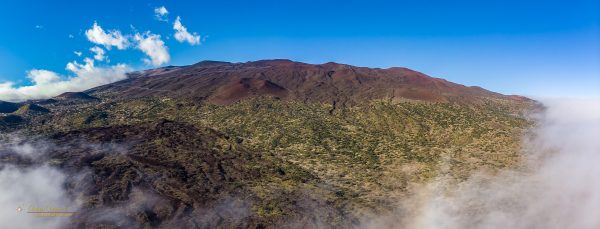
Mauna Kea
When you want to see the stars, find someplace dark

Exploring the cosmos
The snow from this weekend was still visible this morning, but was gone by late afternoon when we were coming down, at least from the south face. The air was very clear all day, details often lost in the haze standing out clearly.
Even more dramatic when the late afternoon light emphasized the rugged terrain. Even those of us who have seen it so many times had to stop for the photo.

UCLA scientist and Keck Observatory user Andrea Ghez has been awarded the Nobel Prize in physics. She shares the prize with two other researchers; Roger Penrose, a British mathematical physicist and German astrophysicist Reinhard Genzel, for work in black holes and galaxies.
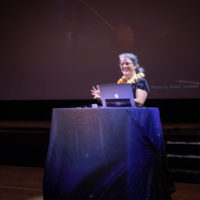
There is no Nobel prize in astronomy and the Nobel in physics has traditionally gone to scientists involved in hard physics for discoveries of some new theory or subatomic particle. It is only in recent years that we have seen a few Nobel prizes awarded to astronomers.
Andrea is the only Nobel recipient I have known personally. I can say one thing, she completely deserves it. While her scientific achievements may justify the award, her activities beyond the science are just as commendable.
Continue reading “Andrea Ghez awarded the Nobel Prize in Physics”I have been observing a lot of stars during my driveway sessions at the telescope lately. Some of these are new to me, will have to look them up and hunt them down…
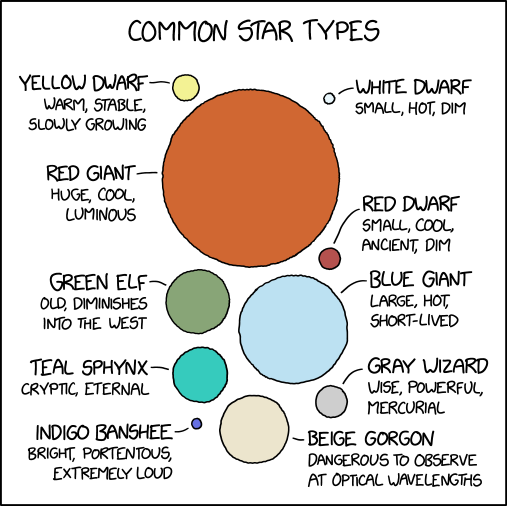
As I worked my way through the evening’s observing list I came to an entry for the asterism ‘Hot Air Balloon’
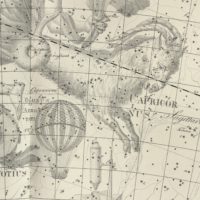
This asterism found its way into my personal observing catalog from the one of the Saguaro Astronomy Club observing lists. These lists are an excellent resource for those who roam the starry sky, sort of an ultimate best-of list. These lists are one of the many sources I pulled together when creating my own giant list of where to aim my telescope.
So often I find surprises in my own database among the thousands of objects that I have dumped in there over the years.
Asterisms are simply odd patterns of stars that form memorable groups, but are not necessarily real clusters or other stars that are physically associated with each other. Many of these are well known such as The Coathanger, the Diamond Ring around Polaris, or The Stargate.
When I wandered through the coordinates listed from the Balloon I found a pretty starfield, but nothing that stood out as a recognizable shape, much less a balloon. I wrote down a few comments on the area and a note to myself to look this up later. What is The Balloon?
Continue reading “Globus Aerostaticus”Today the planet Neptune will pass through opposition, directly opposite the Sun in our sky. The planet will be well placed for observation all night long, rising at sunset, transiting at midnight, and setting at sunrise. If you are looking to observe Neptune, it is currently shining at magnitude 7.8 in eastern Aquarius.
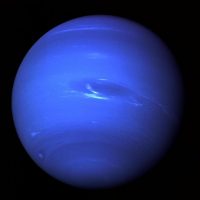
As the outer planets Uranus and Neptune move so slowly across the sky, the timing of oppositions is driven by the Earth’s orbit and occur each year at nearly the same time. Neptune’s orbital period is 164.8 years, taking over a century and a half to circle the celestial globe once. As Neptune was discovered in 1846, it has completed a little over one orbit since discovery.


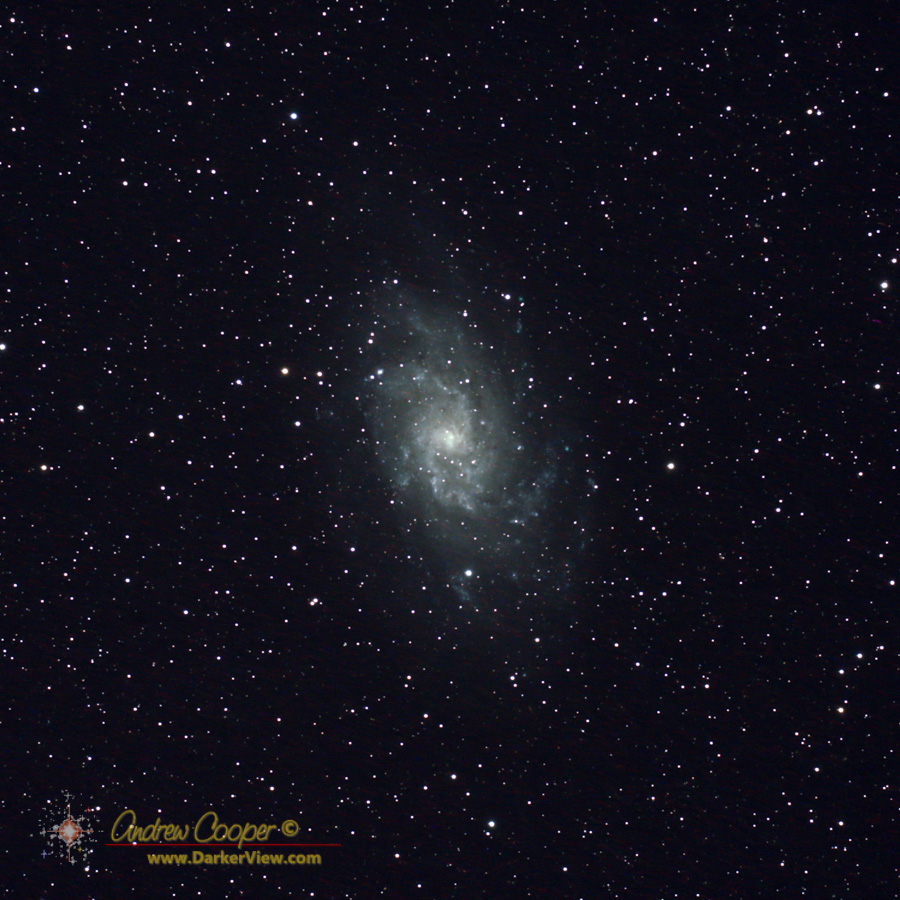
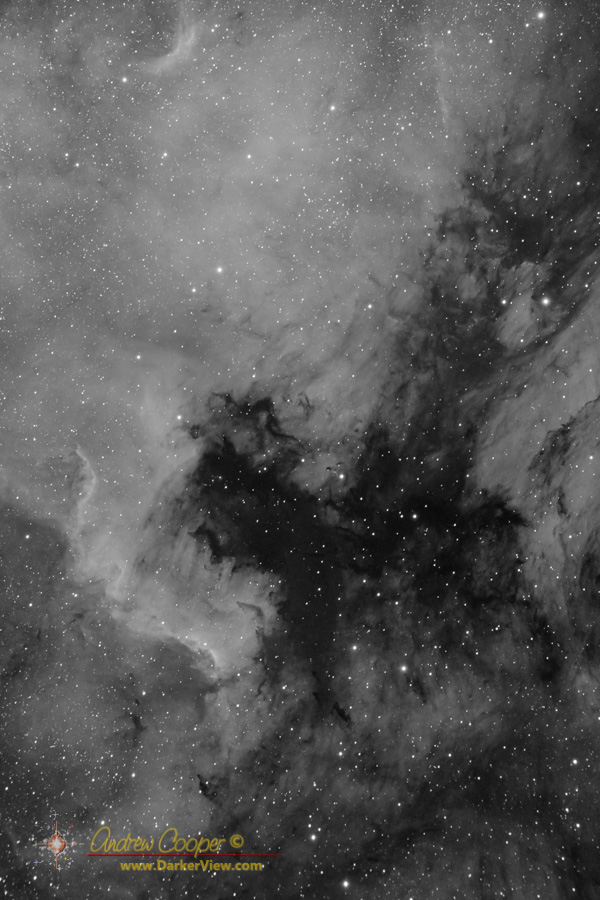
NGC7000 or The North American Nebula is found in Cygnus, just northwest of the bright star Deneb. A huge complex of glowing gas and dark dust the nebula covers and area several times larger than the full moon.
The image here is the sum of 60 individual frames, 30 at 1 minute and 30 more at 5 minutes of exposure taken with a TeleVue 76mm scope and a ZWO ASI1600mm Pro camera through a hydrogen alpha filter.