4WD and Washboard on Mauna Kea

It has long been policy on the Mauna Kea summit road to use four wheel drive while ascending the mountain. One of the reasons given is to slow the formation of washboard, the annoying ripples that inevitably form on gravel roads.

Convoy
A convoy of observatory vehicles heads up the summit access road

On Mauna Kea an oft cited mantra is that the use of four wheel drive when ascending the mountain reduces the formation of washboard. I have always suspected this is a mountain myth with no substance. Where does this belief come from? Is there any real information on this?

The Manuals

There are a great many references that detail the practical details of maintaining gravel roads. Generations of highway engineers have spent a lot of time studying and writing about how to best maintain gravel roads at the least cost.

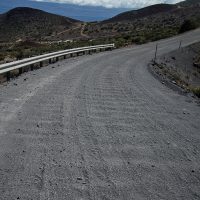
Washboard
Typical washboard on the Mauna Kea access road

The US Department of Transportation highway Administration has published a lengthy guide to the problems and solutions of gravel roads. This guide dedicates a dozen pages to the issue of corrugation or washboarding. While multiple factors in the formation and prevention of washboarding are discussed there is no mention of 4WD vehicles being a factor.

Continue reading “4WD and Washboard on Mauna Kea”

Memories of Snow

All of the snow on Mauna Kea is gone again, the last forlorn patches disappearing in the last weeks of May. The glistening white has surrendered to the rich browns and reds of the cinder.

It was a bit of a bet among the crew as to whether the last patches would last until June 1st. Considering much of the snow in question fell just before Christmas, this was quite the run. Alas, the last bits were gone just before the 1st.

While we may get a light dusting or two over the summer anything heavier is unlikely. We had a fairly snowy winter over the 2016-2017 season. I wonder what next winter will bring?

Mauna Kea Snow Panorama
A modest snowfall in February, 2017 covers the southern plateau of Mauna Kea

Morning Fogbow

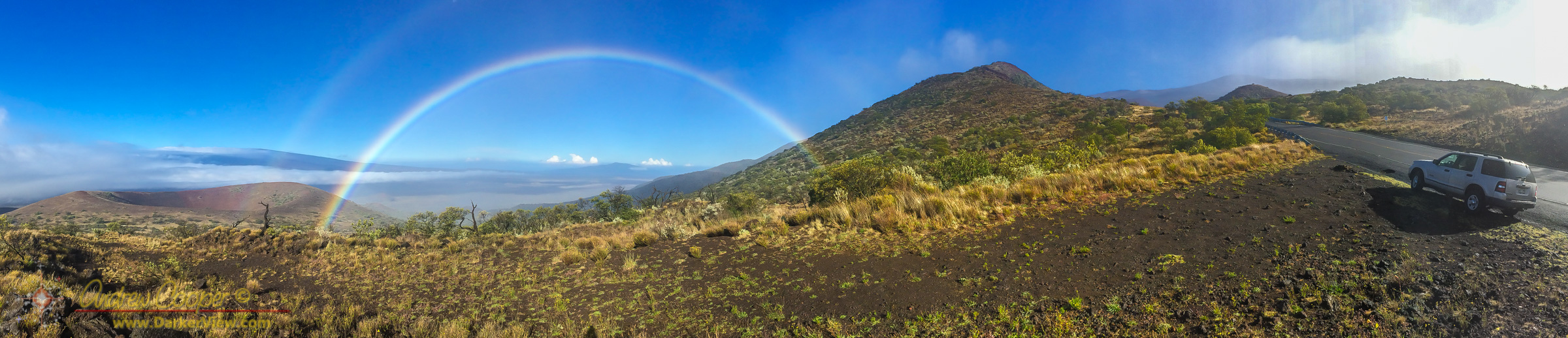
As you drive to the top of the cloud layer you hit a point where the fog and the sunlight mingle. This is often between 7,000 to 9,000 feet, a mile or three below Hale Pōhaku. Passing through this zone is often a beautiful event in the day, rainbows, fogbows and misty shadows fill the mountain air…

A fogbow formed from drifting fog blowing across the Mauna Kea access road. Click on the image to peruse the panorama properly.

First Fish

Among the tribes of the coastal northwest there is a ceremony that surrounds the first fish of the season. These ceremonies might vary from tribe to tribe, from family to family, but every tribe had such a ceremony.

Black Bear Fishing
A black bear (Ursus americanus) fishing at the Anan Wildlife Observatory

Life once depended on the yearly return of salmon to the rivers and streams each summer. For bears, eagles, and humans the annual bounty of salmon provided the nourishment that would see them through the long winter. The forest itself benefits from the nutrients carried from distant seas into the trees where the salmon would spawn and die.

Upon catching the first salmon of the season the tribe will stop and celebrate. They celebrate the life of the fish, they celebrate the cycles of the natural world, they celebrate their connection with nature. Some protocols insist that the first fish be released, to continue upriver to spawn, to ensure the salmon continue to return each summer.

That one idea is the critical bit, our connection with nature. Any fisherman understands that he takes from the natural world. A good fisherman stops and considers what he takes. He takes only what he needs to feed his family. This is the entire point of the first fish ceremony, it serves to educate the community in the act of taking, to limit what you take to what the environment can provide.

I grew up in a hunting and fishing family, where a considerable portion of our food came from what my father caught or shot. Be it elk, deer, ducks, razor clams, or smelt, so many of my childhood memories center around the capture, preparation and storage of food… Chopping, packaging and freezing an elk was a serious amount of labor for the entire family.

Continue reading “First Fish”