
Moon Over Keck 2
When you want to see the stars, find someplace dark

Our front lanai pineapple currently has three fruit and half a dozen geckos in residence. A busy plant…

Both of the planets that orbit closer to the Sun, Mercury and Venus, can be seen to cross the face of the Sun if everything lines up just right. The last transit of Venus was in 2012. It has been much longer since a transit of Mercury, that last occurred in 2006.

In comparison the the rare transits of Venus, transits of Mercury are fairly common. There are 13 or 14 transits of Mercury each century, meaning there is a transit on average every seven years. On May 9th this year we have another chance to observe a Mercury Transit.

Mercury is quite small with respect to the Sun. During the transit the planet will be a mere 12-13 arcsec across. Considering the Sun is about 1920 arcsec across, the planet will be a fairly small dot on the face of the Sun.
In some respects a transit is the clearest view of Mercury small telescope users are able to view. Normally observed low on the horizon, the innermost planet never gets far from the Sun. During transit a fairly sharp disk can be seen, far better then the mushy view offered near the horizon at sunset and dawn.
| First Contact | 11:12 UT | 1:12 HST |
| Second Contact | 11:15 UT | 1:15 HST |
| Mid-Transit | 14:57 UT | 4:57 HST |
| Third Contact | 18:39 UT | 8:39 HST |
| Last Contact | 18:42 UT | 8:42 HST |
Please exercise caution when viewing the Sun! Use appropriate eye protection or indirect observing techniques to project an image of the Sun. The link at the start of this paragraph leads to a great discussion on viewing the Sun safely. As always the single best source on the web (or anywhere) for eclipse and transit information is Fred Espenak’s eclipse website at NASA. Stop by whenever you have a question on upcoming events as well as viewing and photography tips.
The next Mercury transit will occur November 11, 2019. This next transit also favors Europe as mid transit occurs at 15:20UT. For the next Venus transit? You are out of luck as it occurs in 2117, over a century away.

One of the fun features offered by the new theme is randomized header images. I have recycled a few of my back catalog of images to create a new look for the site. I am rather pleased with the effect. Sometimes this website/blog stuff is just fun.
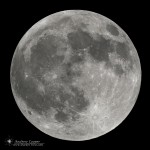
In case you are wondering what they are, here is the cheat sheet, if you want it. I may add more images to the header over time.


W. M. Keck Observatory press release…
A team of astronomers at the Friedrich Alexander University led by Péter Németh has discovered a binary star moving nearly at the escape velocity of our galaxy. There are about two dozen so-called hypervelocity stars known to be escaping the galaxy. While all of them are single stars, PB3877 is the first wide binary star found to travel at such a high speed. Additionally, the results of the new study challenge the commonly accepted scenario that hypervelocity stars are accelerated by the supermassive black hole at the galactic center. The findings are being published in the Astrophysical Journal Letters today.

PB3877 was first reported to be a hyper-velocity, hot compact star, when it was discovered form the Sloan Digital Sky-Survey (SDSS) data in 2011. New spectroscopic observations were done with the 10 meter Keck II telescope at W. M. Keck Observatory on Maunakea, Hawaii and with the 8.2 meter Very Large Telescope (VLT) of the European Southern Observatory (ESO) in Chile.Caltech astronomers Thomas Kupfer and Felix Fürst observed PB3877 with the ESI Instrument fitted on the Keck II telescope.
“When we looked at the new data, much to our surprise, we found weak absorption lines that could not come from the hot star,” Kupfer said. “The cool companion, just like the hot primary, shows a high radial velocity. Hence, the two stars form a binary system, which is the first hyper-velocity wide binary candidate.”
Continue reading “New Hypervelocity Binary Star Challenges Dark Matter, Stellar Acceleration Models”
It was a rainbow sort of day.

After a spell of Kona weather the trades were back with a vengeance, blowing hard. This moved the Waimea mist wall halfway to Waikoloa. The result? Rainbows around every corner.
The first in sunrise light over the Kohala, the second in the mist as the sunlight pierced the low clouds near the airport, more of a fogbow actually. Another in the mist at Puhakuloa along Saddle Road, another on the summit road where heavier raindrops produced a brilliant bow. That was just the morning drive to work, the afternoon produced another set of rainbows for a total of seven, not counting the one I saw twice I as I drove into and out of Waimea.
Yeah, it was a rainbow sort of day.