New Record: Keck Observatory Measures Most Distant Galaxy

W. M. Keck Observatory press release…

A team of astrophysicists using the W. M. Keck Observatory in Hawaii has successfully measured the farthest galaxy ever recorded and more interestingly, captured its hydrogen emission as seen when the Universe was less than 600 million years old. Additionally, the method in which the galaxy called EGSY8p7 was detected gives important insight into how the very first stars in the Universe lit-up after the Big Bang. The paper will be published shortly in the Astrophysical Journal Letters.

Galaxy EGSY8p7
EGSY8p7 is the most distant confirmed galaxy whose spectrum obtained with the W. M. Keck Observatory places it at a redshift of 8.68 at a time when the Universe was less than 600 million years old. Credit: Adi Zitrin, California Institute of Technology
Using Keck Observatory’s powerful infrared spectrograph called MOSFIRE, the team dated the galaxy by detecting its Lyman-alpha emission line – a signature of hot hydrogen gas heated by strong ultraviolet emission from newly born stars. Although this is a frequently detected signature in galaxies close to Earth, the detection of Lyman-alpha emission at such a great distance is unexpected as it is easily absorbed by the numerous hydrogen atoms thought to pervade the space between galaxies at the dawn of the Universe. The result gives new insight into cosmic reionization’, the process by which dark clouds of hydrogen were split into their constituent protons and electrons by the first generation of galaxies.

“We frequently see the Lyman-alpha emission line of hydrogen in nearby objects as it is one of most reliable tracers of star-formation,” said California Institute of Technology (Caltech) astronomer, Adi Zitrin, lead author of the discovery paper. “However, as we penetrate deeper into the Universe, and hence back to earlier times, the space between galaxies contains an increasing number of dark clouds of hydrogen which absorb this signal.”

Recent work has found the fraction of galaxies showing this prominent line declines markedly after when the Universe was about a billion years old, which is equivalent to a redshift of about 6. Redshift is a measure of how much the Universe has expanded since the light left a distant source and can only be determined for faint objects with a spectrograph on a powerful large telescope such as the Keck Observatory’s twin 10-meter telescopes, the largest on Earth.

Continue reading "New Record: Keck Observatory Measures Most Distant Galaxy"

Keck Observatory Astronomer Wins Major Prize

W. M. Keck Observatory press release

UCLA professor and longtime W. M. Keck Observatory astronomer, Andrea Ghez will be awarded the 2015 Bakerian Medal, the Royal Society’s premiere prize lecture in the physical sciences, the organization announced this week.

Andrea Ghez
Andrea Ghez, Keck Observatory astronomer and UCLA’s Lauren B. Leichtman and Arthur E. Levine Professor of Astrophysics. Credit: Christopher Dibble
“I’m thrilled to receive the Bakerian Medal from the Royal Society,” said Ghez, who is UCLA’s Lauren B. Leichtman and Arthur E. Levine Professor of Astrophysics. “The research that is being recognized is the product of a wonderful collaboration among the scientists in the UCLA Galactic Center Group and the University of California’s tremendous investment in the W. M. Keck Observatory. Having cutting-edge tools and a great team makes discovery easy.”

The medal is accompanied by a cash prize of 10,000 pounds (approximately $15,500), and Ghez will deliver the Bakerian Lecture in London in November. The organization, the oldest scientific academy in continuous existence, cited Ghez’s “acclaimed discoveries using the techniques of optical astronomy, especially her sustained work on the motions and nature of the stars orbiting the black hole in the centre of our Galaxy.”

“All the data for this project came from Keck Observatory,” Ghez said. “We were able to launch this project 20 years ago because of the unique way that Keck Observatory works. We were able to modify instrumentation and try new approaches to data collection in a way that simply isn’t possible at other observatories. Working at Keck Observatory and with the staff there has been an amazing experience.”

Continue reading “Keck Observatory Astronomer Wins Major Prize”

Telescopes Team Up to Find Distant Uranus-Sized Planet Through Microlensing

W. M. Keck Observatory press release

The W. M. Keck Observatory in Hawaii and NASA’s Hubble Space Telescope have made independent confirmations of an exoplanet orbiting far from its central star. The planet was discovered through a technique called gravitational microlensing. This finding opens a new piece of discovery space in the extrasolar planet hunt: to uncover planets as far from their central stars as Jupiter and Saturn are from our sun. The Hubble and Keck Observatory results will appear in two papers in the July 30 edition of The Astrophysical Journal.

OGLE-2005-BLG-169 Microlensing
A graphic explanation of the microlensing study of OGLE-2005-BLG-169. Credit: NASA, ESA, and A. Feild (STSCI)
The large majority of exoplanets cataloged so far are very close to their host stars because several current planet-hunting techniques favor finding planets in short-period orbits. But this is not the case with the microlensing technique, which can find more distant and colder planets in long-period orbits that other methods cannot detect.

Microlensing occurs when a foreground star amplifies the light of a background star that momentarily aligns with it. If the foreground star has planets, then the planets may also amplify the light of the background star, but for a much shorter period of time than their host star. The exact timing and amount of light amplification can reveal clues to the nature of the foreground star and its accompanying planets.

“Microlensing is currently the only method to detect the planets close to their birth place,” said team member, Jean-Philippe Beaulieu, Institut d’Astrophysique de Paris. “Indeed, planets are being mostly formed at a certain distance from the central star where it is cold enough for volatile compounds to condense into solid ice grains. These grains will then aggregate and will ultimately evolve into planets.”

The system, cataloged as OGLE-2005-BLG-169, was discovered in 2005 by the Optical Gravitational Lensing Experiment (OGLE), the Microlensing Follow-Up Network (MicroFUN), and members of the Microlensing Observations in Astrophysics (MOA) collaborations—groups that search for extrasolar planets through gravitational microlensing.

Continue reading “Telescopes Team Up to Find Distant Uranus-Sized Planet Through Microlensing”

Fossil Star Clusters Reveal Their Age

W. M. Keck Observatory press release

Using a new age-dating method and the W. M. Keck Observatory on Maunakea, an international team of astronomers have determined that ancient star clusters formed in two distinct epochs – the first 12.5 billion years ago and the second 11.5 billion years ago. These results are being published in Monthly Notices of the Royal Astronomical Society.

Cosmic Timeline of Globular Clusters
A cosmic timeline showing the birth of the Universe in a Big Bang 13.7 billion years ago to the present day. Credit: NASA/CXC/SAO and A. Romanowsky
Although the clusters are almost as old as the Universe itself, these age measurements show the star clusters – called globular clusters – are actually slightly younger than previously thought.

“We now think that globular clusters formed alongside galaxies rather than significantly before them,” research team leader, Professor Duncan Forbes of Swinburne University of Technology said.

The new estimates of the star cluster average ages were made possible using data obtained from the SAGES Legacy Unifying Globulars and GalaxieS (SLUGGS) survey, which was carried out on Keck Observatory’s 10-meter, Keck II telescope. Observations were carried out over years using the powerful DEIMOS multi-object spectrograph fitted on Keck II, which is capable of obtaining spectra of one hundred globular clusters in a single exposure.

DEIMOS breaks the visible wavelengths of objects into spectra, which the team used to reverse-engineer the ages of the globular clusters by comparing the chemical composition of the globular clusters with the chemical composition of the Universe as it changes with time.

Continue reading “Fossil Star Clusters Reveal Their Age”

Found: Earth’s Closest Cousin Yet

W. M. Keck Observatory press release

The W. M. Keck Observatory has confirmed the first near-Earth-size planet in the “habitable zone” around a sun-like star. This discovery and the introduction of 11 other new small habitable zone candidate planets were originally made by NASA’s Kepler space telescopes and mark another milestone in the journey to finding another “Earth.”

Kepler 452b
This artist’s concept compares Earth (left) to the new planet, called Kepler-452b, which is about 60 percent larger in diameter. Credit: NASA/JPL-Caltech/T. Pyle
“We can think of Kepler-452b as bigger, older cousin to Earth, providing an opportunity to understand and reflect upon Earth’s evolving environment,” said Jon Jenkins, Kepler data analysis lead at NASA’s Ames Research Center in Moffett Field, California, who led the team that discovered Kepler-452b. “It’s awe-inspiring to consider that this planet has spent 6 billion years in the habitable zone of its star; about 1.5 billion years longer than Earth. That’s substantial opportunity for life to arise, should all the necessary ingredients and conditions for life exist on this planet.”

The data from Kepler suggested to the team there was a planet causing the light from it’s host star to dim as is orbited around it. The team then turned to ground-based observatories including the University of Texas at Austin’s McDonald Observatory, the Fred Lawrence Whipple Observatory on Mt. Hopkins, Arizona, and the world’s largest telescopes at Keck Observatory on Maunakea, Hawaii for confirmation.

Specifically, the ten-meter Keck I telescope, fitted with the HIRES instrument was used to confirm the Kepler data as well as to more precisely determine the properties of the star, specifically its temperature, surface gravity and metallicity.

Continue reading “Found: Earth’s Closest Cousin Yet”

New Horizons Lecture at Keck

To celebrate the arrival of the new Horizons Probe at Pluto next week the W. M. Keck Observatory is holding a special lecture.

Tantalizing signs of geology on Pluto are revealed in this image from New Horizons taken on July 9, 2015 from 3.3 million miles (5.4 million kilometers) away.  Credit: NASA/Johns Hopkins University Applied Physics Laboratory/Southwest Research Institute
Tantalizing signs of geology on Pluto are revealed in this image from New Horizons taken on July 9, 2015 from 3.3 million miles (5.4 million kilometers) away. Credit: NASA/Johns Hopkins University Applied Physics Laboratory/Southwest Research Institute
NASA Spacecraft New Horizons Pluto Flyby:
Special Talk by NASA Scientist Eliot Young

Just hours before their observing run at Keck Observatory will start, NASA scientists Eliot Young and his team will give a talk in the Hualalai Conference room at Keck Observatory’s headquarters in Waimea. Join us at 7:00p to learn about the science of Pluto, the Kuiper belt, dwarf planets and more.

At 1:49am the next morning, the NASA New Horizons spacecraft is scheduled to make its closest approach to Pluto, and Young’s team will be collecting close-up data on the dwarf planet and other distant solar system objects for the first time ever.

Young is the principal scientist from the Southwest Research Institute, one of the partners involved in the building of the New Horizons craft.

No Trouble

The new dome and shutter control PLC finally had it’s first night on-sky. The result? No fuss, no trouble, it just worked as designed. To have everything go so smoothly was very satisfying. So much work and trouble, so much worry on my part. Yes, I had performed two days of testing, but this would be on-sky, at night, the final test.

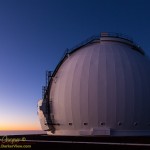
Keck 2 Dome
The Keck 2 dome in the glow of sunset
I arrived on the summit after lunch to convert the system, removing the old PLC and connecting the new controller. A few tests, moving the dome and shutters showed that everything seemed to be working. The plan was to stay into the night to insure that if there was trouble I was on hand to fix it, or convert back to the older system.

As the last rays of sunset gleamed I took Capt. Marvel (the radio controller for the dome) and went up onto the roof. From there I commanded the shutters to open, watching with satisfaction as the giant assemblies smoothly opened to the night.

Better yet, the night was partially used for testing the new telescope control system, the TCSU project. Thus the new PLC was tested with both the old system and the new telescope control system.

The result of all my worry was a simple one line write-up from the telescope operator in the logs the next morning… “New dome PLC operations successful. No issues.”

Conjunction

I missed the closest approach of Venus and Jupiter. Not for lack of trying. I had set up the telescope and camera in the driveway. A clear afternoon clouded over at sunset, leaving me only glimpses of the planets through a fleeting gap in the clouds. I had time to focus enough to see the crescent of Venus, which promptly faded from sight.

The next evening I am on the summit. No small telescope available, but I did have the camera to record a stunningly beautiful evening atop the mountain.

Conjunction
Venus and Jupiter over the Keck 1 dome