Hawaiʻi is not known for the soft corals that make other tropical reef so spectacular. The soft corals here are more understated. There are some, the cup corals and the endemic octocorals are fairly common if one is observant…

When you want to see the stars, find someplace dark

Hawaiʻi is not known for the soft corals that make other tropical reef so spectacular. The soft corals here are more understated. There are some, the cup corals and the endemic octocorals are fairly common if one is observant…
Today Mercury passes through superior conjunction, passing behind the Sun as seen from the Earth. The planet will appear in the sunset in ten days or so, reaching maximum elongation on January 14th.
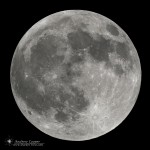

W. M. Keck Observatory press release…
A new study from the Keck Interferometer, a former NASA project that combined the power of the twin W. M. Keck Observatory telescopes atop Mauna Kea, Hawaii, has brought exciting news to planet hunters. After surveying nearly 50 stars from 2008 to 2011, scientists have been able to determine with remarkable precision how much dust is around distant stars – a big step closer into finding planets than might harbor life. The discovery is being published in the Astrophysical Journal online, on December 8th.

The Keck Interferometer was built to seek out this dust, and to ultimately help select targets for future NASA Earth-like planet-finding missions.
Like planets, dust near a star is hard to see. Interferometry is a high-resolution imaging technique that can be used to block out a star’s light, making the region easier to observe. Light waves from the precise location of a star, collected separately by the twin 10-meter Keck Observatory telescopes, are combined and canceled out in a process called nulling.
“If you don’t turn off the star, you are blinded and can’t see dust or planets,” said co-author Rafael Millan-Gabet of NASA’s exoplanet Science Institute at the California Institute of Technology in Pasadena, California, who led the Keck Interferometer’s science operations system.
Continue reading “Scientists Accurately Quantify Dust Around Planets in Search for Life”


On the 22nd Venus will joined by a thin crescent Moon. Only 1.8% illuminated the Moon will be a beautiful pair with the planet, only 6° away.
Internet wins again.
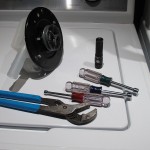
The problem… A washing machine that will not spin, making a horrible racket instead. The pump bearing was shot, shutting down the whole drive system.
These days the parts game has been broken open by website based suppliers that will sell just about anything. Parts are still an interesting game, if not nearly as bad as before. Making sure you get decent parts from a website supplier. A bit of online research shows who has been around for a while and is recognized by the major online services. I bought the parts from AppliancePartsPros.com. Nice website, complete mechanical diagrams of the washer with cross indexed part numbers, no fuss, no muss. Real Whirlpool parts show up in the box.
Consider that the cost of getting an appliance repairman here in Waikoloa is hundreds of dollars. And that is just for the visit, the parts would have been additional. My total cost for this repair? $80.45 after I added a new belt and shipping to Hawaiʻi.
It did take five days for the part to show up, FedEx home delivery. Fortunately we had enough clean clothes to get by without a trip to the laundromat. Meanwhile the machine was shoved back into the puka on its front and a sheet of cardboard, feet stuck out past the door, a pile of tools on the back. The cats though this was quite interesting and investigated thoroughly.
The most difficult part of the job? Disassembly? Diagnosis? Those were quite easy, it took about 15 minutes to get the washer out of its home, turned over and find the problem. The most onerous part was cleaning up the pile of lint, dust and cat-hair found behind that machine when I pulled it out of the closet.

