Due to a plan that failed I ended up with a borrowed astro camera for a couple weeks. Since I have it I may as well play with it a bit.
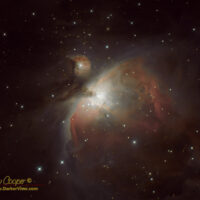
The Orion Nebula M42
The camera is the ZWO ASI2600MC Pro, a one-shot color camera specificaly for astrophotography. I have the ASI1600MM Pro a monochrome camera set up with a filter wheel, but have never really had a chance to use one of the modern one shot color cameras.
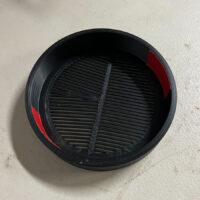
A 3D printed Bahtinov focusing mask for a Televue 76mm telescope
For this mask I used a public bit of OpenSCAD code from Jens Scheidtmann to generate the mask pattern, just tuning it for the correct sizing and performance with the TV-76. I added my own version of the support collar, making it a bit neater with fillets and properly sized to slip over the TV-76 glare shield.
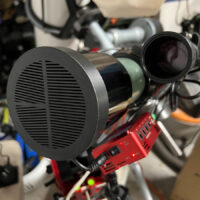
The part is one of a half dozen parts I have designed and printed over the last few weeks to reassemble the photo rig. A new guide camera mount, a mount for the ASI Air computer, a new glare shield for the guider, etc., etc… The utility of 3D printing a game changer for me.
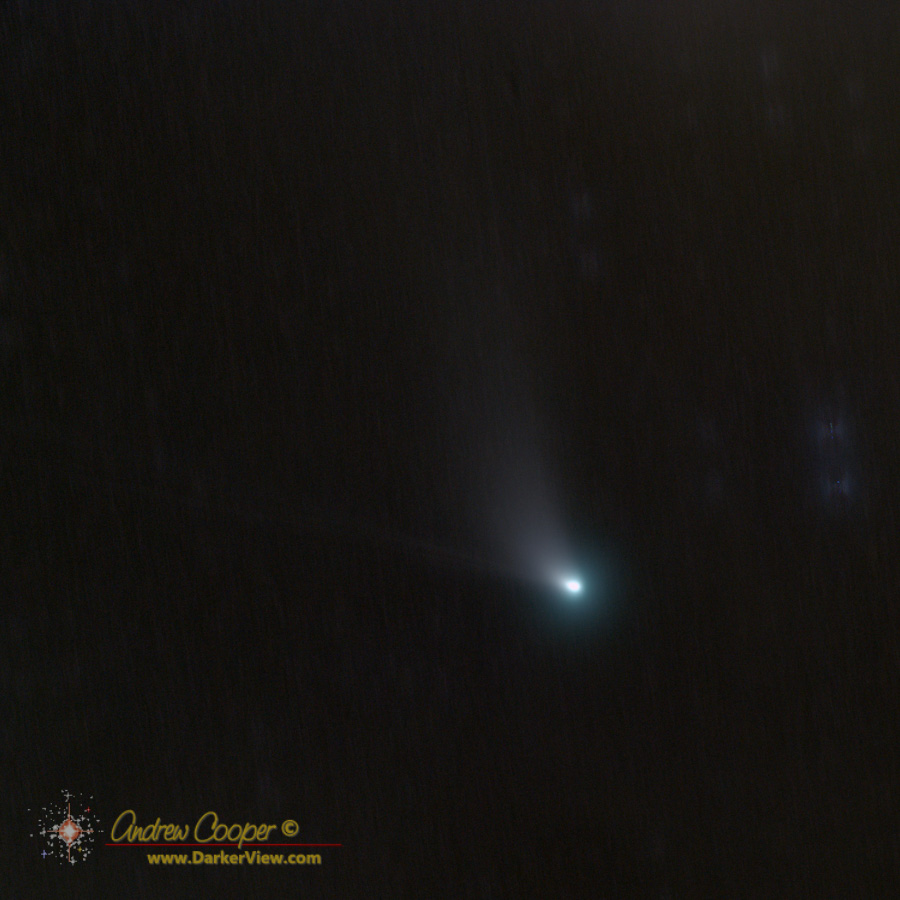
A spate of bad weather followed by the bright moon kept me from imaging the comet until this week. A little late to the game and a fading comet. Still, I did get an image.
The comet is currently high in the evening sky, an easy target. An now that the bright Moon has left the evening sky this week and next represent a last chance to see the comet before it truly begins to fade.
Comet ZTF has faded below 6th magnitude according to recent estimates, too faint for the unaided eye, but still spottable in binoculars and fairly easy to catch in a small telescope. The comet remain well placed to spot for some time to come but will slowly fade, dropping to about 8th magnitude by the end of the month.
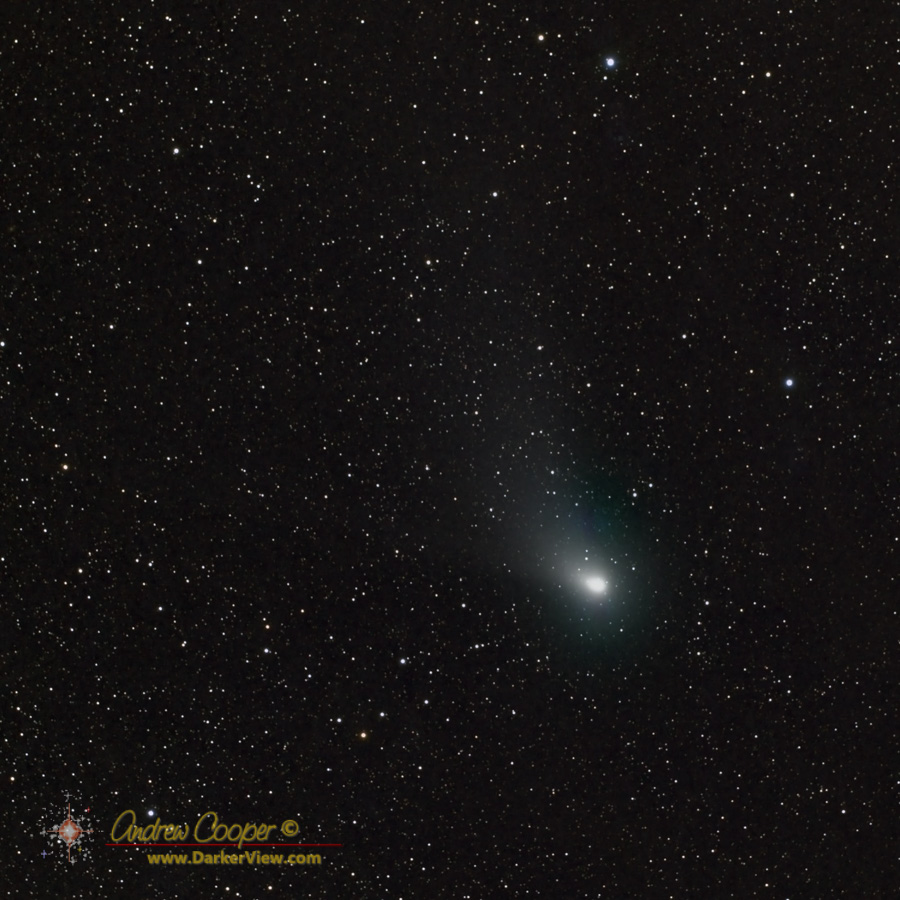
Comet C/2022 E3 ZTF
Canon 6D with a TeleVue 76mm scope riding on an ZWO AM5 mount. 30 x 180s images processed in DSS. A version processed to remove stars does show a trace of the ion tail.
To allow a wider field of view requires changing optics. In this case putting away the TV-76mm telescope and mounting a vintage Nikkor 180mm f/2.8 ED camera lens.
The Nikkor 180mm is a classic lens, once a favorite of professional film photographers for news and portrait work. Now the lens is out of date, not autofocus, or image stabilized, a bit of very good optics left behind by technology.
Of course, autofocus or image stabilization are useless for astrophotography. With a simple adapter the lens can be mounted to a modern system and used as a fully manual lens in an application where the excellent optical quality can still be appreciated.
The Hercules Cluster is one of the best known, and as you would expect, one of the most beautiful clusters to be seen in a small telescope. Also known as M13 this is a rich globular cluster with several hundred thousand stars it lies about 25,000 light years away in the constellation Hercules.
The cluster is always worth stopping by, whatever size telescope you are using. If I am using a larger ‘scope I might try to locate the small galaxy NGC6207 located about ½° to the northeast (upper left). If I am using an even larger ‘scope like my 18″ I can also try for the challenging IC4617 that lies halfway between NGC6207 and the cluster.
The image here is a luminance image only, taken through a filter that blocks IR and allows the remainder of the visible spectrum through to the detector. To get allow capture of the fainter stars while not overexposing the core a range of exposures from 10 seconds to five minutes were combined to create the image seen here…
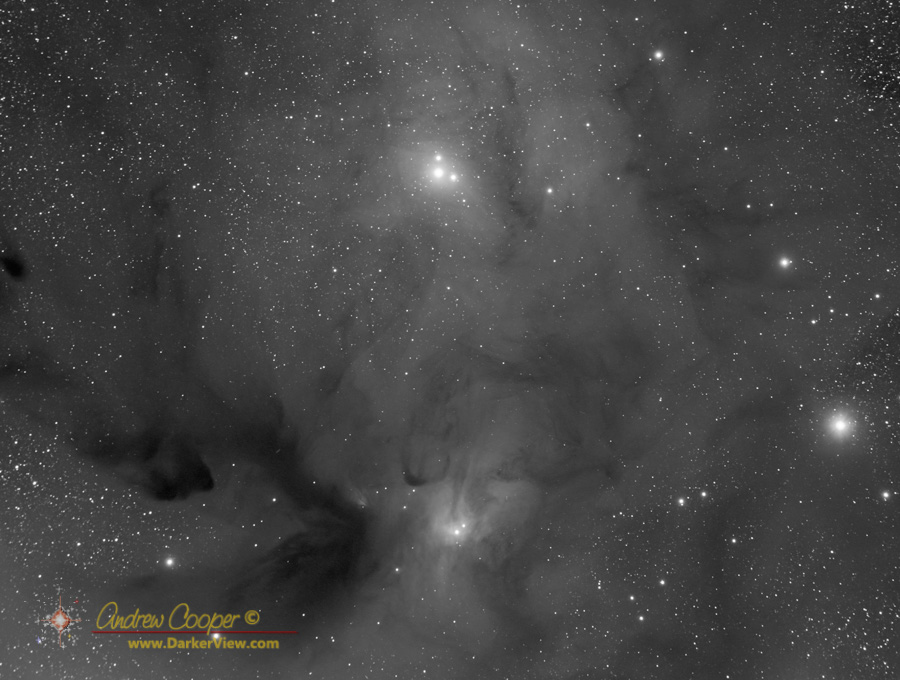
The Rho Ophiuchi region is a confused mass of gas and dust just above Antares and the head of Scorpio. This extensive nebula complex is far larger than the single frame shown here, extending far to the east into Sagittarius.
Rho Ophiuchi itself is the triple star seen here at the top center of the image, at the center of a bright reflection nebula. The double at lower center is Iota Scorpii and the star Al Niyat is on the right side. Also notable are the dark clouds of dust and gas that block the light of the stars and nebula behind creating black voids in the starfield.
This area is quite colorful, with both the blues of reflection nebulae and the reds of emission nebulae. I have gathered some color data but need more before assembling a proper color image of this region.
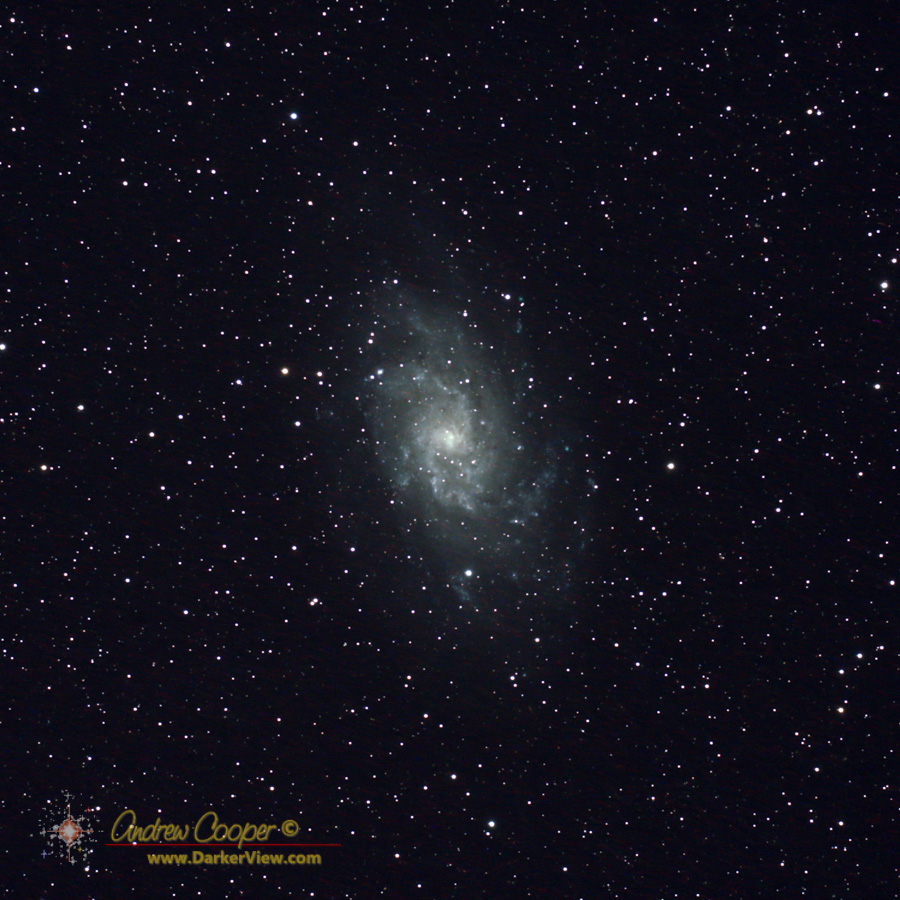
Just killing some time while I wait for the Milky Way to rise and to shoot my primary targets for the night. Maybe some galaxies in Leo? There are a lot to choose from, but I am setup for wide field using the TV-76mm with only 389mm of focal length. Too wide to make individual galaxies interesting, maybe a galaxy group?
The group around M95/M96/M105 should be good, it fits in the field nicely. Just shoot for about an hour before moving on the the main targets of the night. With any luck those wisps of evening clouds hanging about will go away as well.
There are a number of nice groupings of galaxies in Leo… The Leo Trio (M65, M66, and NGC3628), and this group around M95 and M96, and a number of fainter galaxy pairs and clusters to chose from.
A group of galaxies in Leo including M95, M96, and M105
I have been processing more images from this last week. This one is another classic nebula, the Eagle. The nebula, also known as M16 or NGC 6611 can be found in thick regions of of our galactic core towards the constellation of Serpens.
The eponymous eagle can be seen near the center of the brightest region, a structure of darker material likely held together by the gravity of objects inside it. In this case those objects would be forming stars, or protostars, the result of the dust and gas being drawn together under the influence of gravity.
I have a full set of color filters, once I have had fun re-doing many of these classic nebulae in hydrogen alpha I will probably begin doing full color versions. Color takes a lot more exposure time and much more processing. There are techniques to add H-alpha data to an RGB image to get more definition in the nebula structure, something I have not done and should probably figure out.