Changing Responsibilities

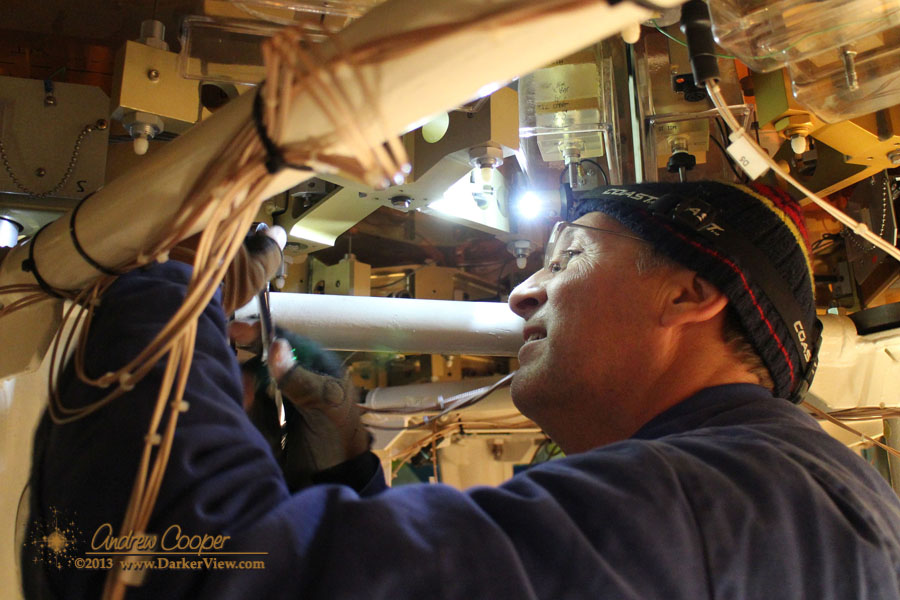
We have had a couple electrical engineers leave Keck this summer. As a result the few of us left are stretched a little thin. To help cover this, one of the engineers in our group has transferred to the TSD department to continue the telescope drive upgrade project. Unfortunately this moves some of his responsibilities to me.

Jacking a Segment
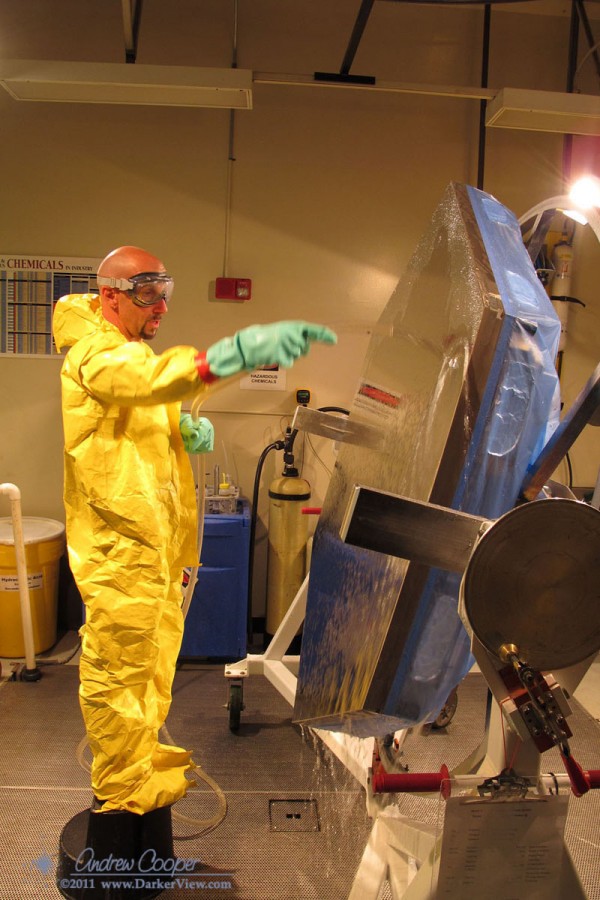
The segment jack lifting a Keck primary mirror segment during segment exchange
Telescope drives, dome and shutter drives, primary mirror active support system, and more. I have simplified the description of my new responsibilities to one line… If it moves I get to fix it.

This also means I am spending a lot more time at the summit. Over the last weeks I have almost forgotten what my desk at HQ looks like, two weeks and only two days spent in Waimea. This is not going to change any time soon.

I have a few projects left to finish up. This month will see the shipment and installation of the TRICK camera and support gear. We started this process last week with the pedestal and focus stage. The dewar and detector will be here next week. A few more days of hands-on work remain to install everything.

There is also the installation of another TBAD system on Keck 1. I will have to get one of the techs to do that for me. All of the engineering is done, what remains is the fun part, installing the gear. I expect that will be the pattern, I get to do the paperwork while the techs have the fun.

Meanwhile… If you are an electrical engineer or technician you might apply at Keck. We could really use a couple more good people.

Scientists Discover System with Three Planets in Habitable Zone

W. M. Keck Observatory press release

A team of scientists recently confirmed six, and possibly seven, planets orbiting a star system a mere 22 light-years from Earth. More importantly, three of those planets are super-Earths, lying in the Goldilocks Zone where liquid water could exist, making them possible candidates for the presence of life. This is the first system found with a fully-packed habitable zone. The findings will be published in the journal Astronomy & Astrophysics on June 26.

Previous studies of the triple star system called Gliese 667C showed the star hosts three planets with one of them in the habitable zone. Now, a team of astronomers has reexamined the system by re-mining existing European Southern Observatory’s HARPS data and combining it with data collected from the W. M. Keck Observatory and the Magellan Telescope to find evidence for up to seven planets around the star. These planets orbit the third faintest star of a triple star system. The two other suns would look like a pair of very bright stars visible in the daytime and at night they would provide as much illumination as the full Moon.
Continue reading “Scientists Discover System with Three Planets in Habitable Zone”