Will TMT use nuclear power?

I truly cannot believe I am writing this. But the question is getting asked over and over on social media. The claim that TMT will use some for of nuclear power is apparently believed in some parts of the protest community.

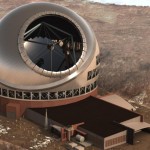
TMT Cross Section
A cross section rendering of the TMT observatory

What will power TMT? HELCO

TMT will draw power from the local power grid like every other telescope. There is an underground power line run up the side of the mauna from the cross island transmission line in the Saddle.

Continue reading “Will TMT use nuclear power?”

The 10 Questions?

A page asking 10 questions about Mauna Kea and the Thirty Meter Telescope is floating around social media with answers to those questions. Some of the questions are good, but the answers range from highly selective readings of the record to flat out wrong.

Saddle Water Cross Section
A hydrologic cross section of the Humu‘ula Saddle by the Humu‘ula Groundwater Research Project, University of Hawaii

I was going to ignore this as another piece of anti-TMT literature, but it has become too common and seems to be the source of some anti-TMT myths. As a result I decided to write an analysis of those answers here.

All of the supposed answers are highly slanted to the anti-TMT view. Most of the answers are simply incorrect, some are completely dishonest. There are some bits of valid argument, just enough to give the illusion of truth by a highly biased author.

Author’s note: While I admit to some bias myself, I can back up these alternate answers with some better data and references.

Continue reading “The 10 Questions?”

There are other places where TMT could be built?

While it is true that TMT could be located at another site, no site would be quite as good as Mauna Kea.

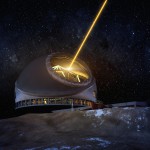
The Thirty Meter Telescope
An artist concept of TMT at night, with the laser guide star system illuminated.

Astronomers measure the quality of a site in several ways, one of the most important is simply called ‘seeing’. This is a measure of atmospheric distortion, the amount of turbulence in the atmosphere above the telescope that distorts or blurs the image. In short it is a measure of how much stars twinkle at the site.

Seeing is measured in terms of the smallest discernible detail in arcseconds. A good site will have seing of less than one arcsecond. The best Chilean sites have seeing that averages around 0.7 arcseconds at best. Mauna Kea can have seeing that averages around 0.4 arcseconds when it is good, roughly twice as good as Chile.

Continue reading “There are other places where TMT could be built?”

Space telescopes are better?

Opponents of the Thirty Meter Telescope attack the telescope in any way possible. Any argument is fodder in social media and newspaper editorials. Many of these arguments depend on a superficial level of knowledge about astronomy, this claim is a good example of this.

The Thirty Meter Telescope
The TMT with a laser guide star adaptive optics system
James Webb Space Telescope
An artist’s concept of the James Webb Space Telescope

The claim is that a ground based telescope like TMT is not needed as a space telescope is more capable. Why spend the money? Why build TMT on Mauna Kea?

Given the stunning accomplishments of the Hubble Space Telescope this sounds plausible. This argument also ignores a number of fundamental realities in telescope design and use. Both have their limitations and we will discuss some of the more important ones here.

Certainly a telescope in space has a number of advantages over a ground based telescope. Not having an atmosphere to look through helps, it helps a lot. This is countered by the way ground based telescopes have developed solutions to overcome those limitations. The limitations on a space telescope are not created by the atmosphere and as such are far more practical and daunting.

Continue reading “Space telescopes are better?”

An Open Letter from the Observatories of Mauna Kea

The observatories that call Mauna Kea home have written an open letter to the community expressing our position on the ongoing events in our local community…

Aloha to our scientific colleagues around the world,


On behalf of the more than 500 people employed by the Maunakea Observatories, we offer a perspective about the Maunakea situation with the sincere hope that our words encourage greater understanding of the complex circumstances in which we find ourselves.


Staff members of the Maunakea Observatories, many of whom are born and raised in Hawaiʻi, feel a deep and personal connection to the special people and place of our Hawai‘i Island home. We live and work together in a community where our success is measured by the quality of our relationships, one of the paramount reasons life here is enriching, rewarding and inspiring. Even in conflict, our differences don’t define us; our humble, reverent appreciation of our community does. The diverse mix of scientists, technicians, engineers, administrators, and students of the Maunakea Observatories continually seek a path forward that strengthens the future of our island community. Our local staff, family members, and friends have a wide range of views and strong feelings about the events that surround us. We deeply respect all these viewpoints, which come from our family and friends, and we both believe and champion their right to express them.


In our community, we are weathering the pain of rifts in these carefully tended relationships that will take mutual respect and time to heal. We know these challenges across our island home have gained attention with our peers in the international astronomy community. We understand your expressed concerns. We also urge your appreciation of the nuances and complexity of the issues we now face.


The future of Maunakea astronomy will be defined primarily by the diverse people of Hawaiʻi. The vast majority of island residents support the Maunakea Observatories, who have been part of this community for more than 50 years. Conflict about the Thirty Meter Telescope does not change the long-standing support our Observatories have earned, but it will undoubtedly influence its future. For the benefit of the people who work on the mountain, for those who practice their culture and religion on the mountain, we look to a future beyond coexistence because that still implies barriers. We look to a future in which knowledge and worldviews hybridize to create a reality more beautiful and resilient than its progenitors.


This is beginning already, through A Hua He Inoa, the interstellar asteroid ‘Oumuamua, black hole Pōwehi, and the unusual asteroids recently officially named Kamo‘oalewa and Ka‘epaoka‘awela by Hawaiian students. We look to a future for Maunakea where studies of the universe are buoyed by the wisdom of Hawaiian kupuna and grounded in the richness of Hawaiian culture. We are nurturing this future now as devoted members of the Hawaiʻi Island and international astronomy communities. We ask for the informed understanding and support of our international astronomy community to uphold this vision, which we believe will be an important part of everyone’s future.


Mahalo,

Director Doug Simons, Canada-France-Hawaii Telescope
Director Pierre Martin, Hoku Kea Observatory
Director Jennifer Lotz, Gemini Observatory
Director Paul Ho, James Clerk Maxwell Telescope (East Asian Observatory)
Interim Director Robert McLaren, Institute for Astronomy
Director John Rayner, NASA Infrared Telescope Facility
Director Michitoshi Yoshida, Subaru Telescope
Director Klaus Hodapp, UKIRT
Director Hilton Lewis, W.M. Keck Observatory (Keck I and Keck II)

Mercury at Inferior Conjunction

Today Mercury is passing through inferior conjunction, passing between the Sun and the Earth. This fast moving planet will reappear above the dawn in about a week, rising towards maximum elongation on August 9th.

This is a modest apparition, with the planet reaching only 19° away from the Sun.

Mercury Events for 2019
ApparitionDate ElongationMagnitude
Evening Feb 2718.1°E -0.2
Morning Apr 1127.7°W +0.6
Evening Jun 2325.2°E +0.7
Morning Aug 919.0°W +0.3
Evening Oct 2024.6°E +0.1
Morning Nov 2820.1°W -0.3
Data from the Mercury Chaser’s Calculator by John Walker

Will TMT be obsolete before completion?

Among the claims made against the observatories this is probably another on the top three list… That TMT will be obsolete before it is complete, that the telescope is simply a waste of money.

TMT Cross Section
A cross section rendering of the TMT observatory

This claim draws on the public perception that technology is advancing at a breakneck pace and that many devices we use in out daily lives are quickly obsolete in the face of new tech. What many people do not understand is that this does not apply to telescopes, or rather it does, but not in the way you might think.

The telescope itself is simply a light collector, a large mirror that collects the light from distant sources and focuses it for use by an instrument.

The basic optical design of one of the large telescopes atop Mauna Kea has not really changed that much since Laurent Cassegrain sketched it out in 1672. Sure the design has been refined, and made a bit bigger, but totally recognizable as the same in those original drawings from more than three centuries ago.

If the basic design of the telescope has served for centuries one can understand why it will not be obsolete in a few mere decades. The real technology in an observatory is found elsewhere.

Continue reading “Will TMT be obsolete before completion?”

Are there TMT jobs for locals?

Among the claims made against the observatories this is probably on the top three list… The observatories do not hire local people. As you can guess this is also quite wrong.

IRTF, CFHT, and Gemini
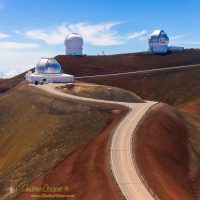
Looking from the top of the keck 2 dome towards IRTF, CFHT, and Gemini

For those who do not work on the mountain it is easy to be skeptical of job claims. Too many think that you need to be an astronomer to work at an observatory, or need to have some advanced degree.

What so many folks do not realize is that observatories hire relatively few astronomers. Maintaining a large observatory is the job of a wide range of people, a few scientists and engineers, and a lot of skilled workers that get the job done.

Astronomers do not fix telescopes, guys who know what wrench to use fix telescopes. The summit crews are largely mechanics, technicians, welders, electricians, and similar. By and large these guys are local, with most having grown up in the islands.

Continue reading “Are there TMT jobs for locals?”

A Compendium of Anti-TMT Myths

When the Thirty Meter Telescope issue began I would have described myself as quite sympathetic to the cause of Native Hawaiians due to my normal political leanings and my own personal heritage. Over the years I have often become quite bitter about the continued use of lies, smears, and insults used against the telescopes by opponents.

TMT Rendering
An overhead view of the proposed Thirty Meter Telescope, credit TMT Observatory Corporation

Can we have an honest dialog here?

Apparently not. The issues has become something akin to a religious crusade among people who have devoted their lives to the cause. When this happens little things like truth seem to lose.

I am going to be blunt here, we know much of the anti-TMT argument is either false or gross exaggeration. Project supporters have patiently corrected these arguments time and time again, documented the issues during the hearings, and yet we continue to hear these false arguments repeated.  They are repeated online in social media, in newspaper editorials, even under oath in official proceedings.

Certainly some people repeat this misinformation in an honest belief that it is true, maybe they hear it from a source they trust, perhaps from a leader in the protest movement. We are now well over a decade into the controversy and we have been over and over the issues so many times, those more involved with the controversy should know the difference.

Continue reading “A Compendium of Anti-TMT Myths”

Will access to the mauna be closed permanently?

This one is a new one, at least to me, this bit of misinformation started showing up just after Governor Ige’s press conference that announced the access road closure to allow construction equipment to be moved.

Loading Snow
Loading pickup trucks with snow for export from the mauna.

Why do I get the feeling shit will go down on Mauna Kea with TMT, which will give the authorities the excuse to execute their plan of shutting down the summit road to the public for good? Mountain access stolen….
(Isn’t that part of the new plan? Reducing public’s access? All they need is an excuse to do it sooner than later. What then?)

Demian Barrios, Facebook post, July 11, 2019

Having a good understanding of management to the mauna I know this one to be false. One need only read the Mauna Kea Comprehensive Management Plan, Public Access Subplan to know where the official stance on access is. These are the binding management plans for the mauna, and nowhere do these plans permit permanent restrictions on the public’s use of Mauna Kea. Quite the opposite, public and cultural access is to be specifically permitted.

Changing these plans, and changing the access rules requires a full rule making process and public hearings.

Continue reading “Will access to the mauna be closed permanently?”