
Turquoise Water
When you want to see the stars, find someplace dark


Yes, a new/old telescope has arrived at Andrew’s Home for Wayward Telescopes… A beat up and neglected 8″ Cave Astrola. The new arrival has me thinking of the other telescopes that have come through recently…
Yes, Andrew’s Home for Wayward Telescopes has a new resident, an 8″ f/6 1978 vintage Cave Astrola.
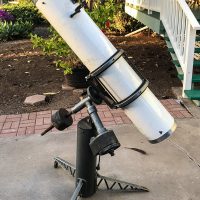
This telescope was literally rescued from the dump. Matt, the owner of the excellent Mountain Road Cycles in Waimea found the telescope at the transfer station.
Continue reading “The 8″ f/6 Cave Astrola Lightweight Deluxe”
2017 was a good year for me personally. This is reflected in the blog, with an array of posts chronicling my life over the past year. The posts resulted in 60k visitors to the blog, and while that may be down from last year I will consider that an improvement given DarkerView was not hacked to serve porn this year.
It is interesting to check the most popular posts. These do not necessarily represent the top read posts for the year as most folks read the latest post on the home page. Rather the top posts are the ones that gather steady traffic from search results, people looking for information on the subject and finding it in the archive of back posts…
In the list only a few of the posts are from this year. Most represent popular posts from the past several years, posts that continue to be steadily popular. This is in many ways the measure of a good blog, people find the back archive of posts valuable, that Darker View represents good content.
2017 featured many adventure recorded in the photos of the year. Fun to look back and relive the expereince…





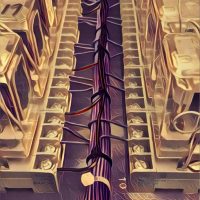








Another little problem around the house that can use a little creative circuitry to make it better. Do I really have to do it? No. I do it because I can, and because it is fun!
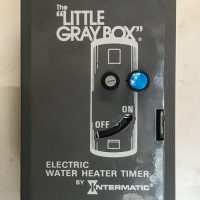
In Waikoloa solar hot water is an obvious addition to the house, we had it installed within a couple months of moving in. Considering electric power is about $0.40/kWh on the island, and tropical sunlight is quite intense, the use of solar to heat our water has been good money saving move… Long, hot showers with no guilt!
Once or twice a year we will get a period of heavy clouds and the water temperatures will fall to the point we need to turn on the electric back-up heating element in order to have that hot shower. Like most solar setups the storage tank has a electric element that will heat the water when needed.
Continue reading “A Better Solar Water Heater Electric Back-Up Timer”

W. M. Keck Observatory press release…
Stars forming in galaxies appear to be influenced by the supermassive black hole at the center of the galaxy, but the mechanism of how that happens has not been clear to astronomers until now.
“Supermassive black holes are captivating,” says lead author Shelley Wright, a University of California San Diego Professor of Physics. “Understanding why and how galaxies are affected by their supermassive black holes is an outstanding puzzle in their formation.”
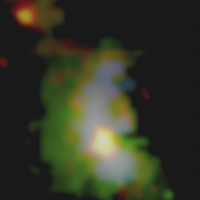
“We study supermassive black holes in the very early universe when they are actively growing by accreting massive amounts of gaseous material,” says Wright. “While black holes themselves do not emit light, the gaseous material they chew on is heated to extreme temperatures, making them the most luminous objects in the universe.”
Continue reading “Astronomers Shed Light on Formation of Black Holes and Galaxies”
Winter solstice occurs today at 16:28HST. Today the Sun will occupy the most southerly position in the sky of the year. The term solstice comes from the Latin terms Sol (the Sun) and sistere (to stand still). On this day the Sun seems to stand still as it stops moving southwards each day and begins move to the north. This is the first day of winter as marked by many cultures in the northern hemisphere. Alternately, this is the first day of summer for those folks in the southern hemisphere.
| 2017 Solstices and Equinoxes | ||||
|---|---|---|---|---|
| UT | HST | |||
| Perihelion | Jan 4 | 14:18UT | Jan 4 | 04:18HST |
| Vernal Equinox | Mar 20 | 10:29UT | Mar 20 | 00:29HST |
| Summer Solstice | Jun 21 | 04:24UT | Jun 20 | 18:24HST |
| Apehelion | Jul 3 | 20:11UT | Jul 3 | 10:11HST |
| Autumnal Equinox | Sep 22 | 20:02UT | Sep 22 | 10:02HST |
| Winter Solstice | Dec 21 | 16:28UT | Dec 21 | 06:28HST |
| Source: USNO data Services | ||||