This little meadow is is only a couple acres. Along one side is a spring where crisp water seeps from the ground and marks the beginning of a creek. Along the top the last few hundred feet of the paved road ends at a junction of rougher roads that lead further into the forest.
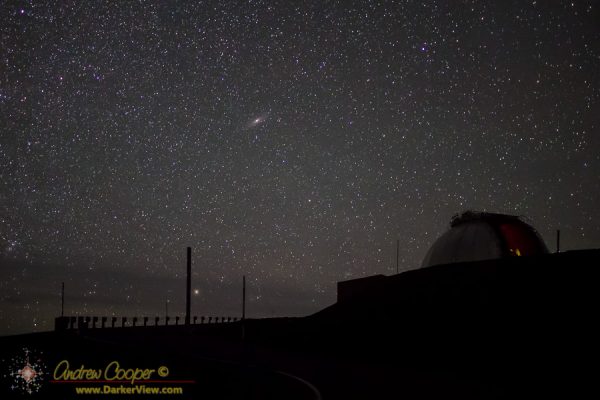
The meadow at Grant’s Spring under northern starsAt the very center of the meadow a large snag stands alone, broken off twenty five feet above the ground, a tangle of limbs on all sides. This old snag is a dark sentinel in the night, almost unreal and a bit eerie in the gloom, it seems to move when you are not looking.
The clearing is surrounded by seventy foot high trees. Pine, fir, and larch are all represented in the dense forest that covers much of the ridgeline. This limits the view, blocking objects low on any horizon. The tall trees also provide a stage above which the stars rise and set, sometimes blinking brightly as they pass behind branches.
There are simply no lights, no substantial civilization for fifty miles in any direction. There are no distant domes of light visible on the horizon to remind one of Edison’s terrible invention. There is just the darkness and the stars above.
A few years back I posted the design of a Sun finder. With the eclipse looming it is time to highlight that post again. Aiming your telescope or camera at the Sun can be a nuisance. A problem with a really simple solution.
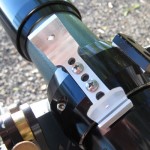
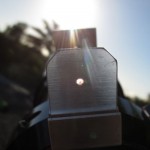
A Sun finder mounted to a TeleVue 76mm ‘scopeThe idea is simple… A pinhole that casts a small dot of light on a target. Line up the dot on the target and the Sun should be neatly in your field of view. Having used these devices many times, it really is that easy, Sun in view in seconds.
A sun finder in use with the projected dot visibleMy version is a custom machined part made from aluminum and plexiglass. In a crush a similar item can be made from cardboard and tape with a pair of scissors, and probably function just as well.
I would suggest light cardboard, the type used in a cereal box, and some masking tape that will peel clean off your telescope or camera. Just line up the telescope once and mark the dot of light’s position with a pen… Done.
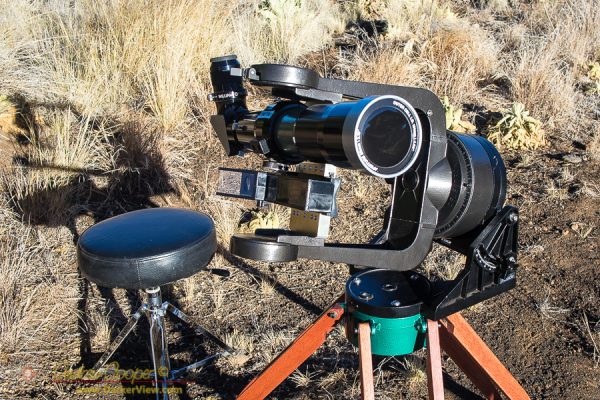
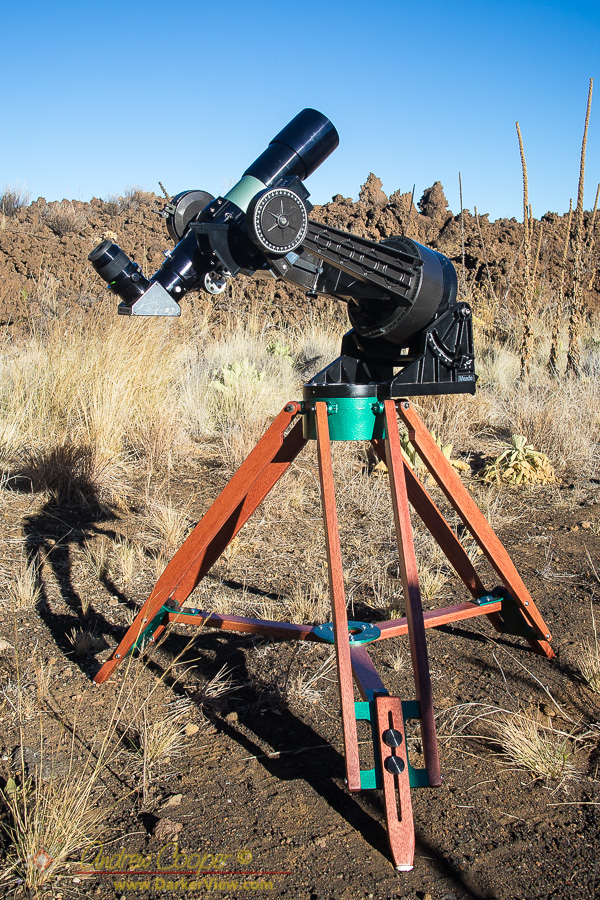
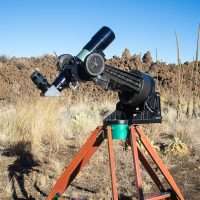
In the end it is a Celestron C8 telescope drive and forks containing custom electronics, a Meade heavy duty wedge from an LX-90, a hand-made tripod, holding a Televue 76mm APO telescope, using a Vixen style dovetail base, with a Baader film solar filter.
It is tempting to call it Frankenscope after the similarities with the classic monster.
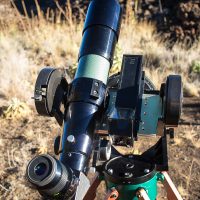
Hodgepodge setup on the side of Mauna Kea with the TV-76mm and Telrad on the plate
To further add the the Mary Shelley plot similarities, much of this was revived from the junk pile. I very nearly decided to toss the drive and fork, they were that bad, peeling paint and rusty bolts. A great deal of work was necessary to re-animate these components.
The wedge came from a telescope that was killed in an unfortunate incident with an aquarium heater. The heater was used to de-humidify the OTA and prevent fungus on the optics. Note: Aquarium heaters are not made to operate out of water.
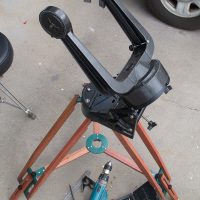
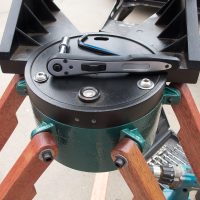
The Hodgepodge mount assembled for the first time
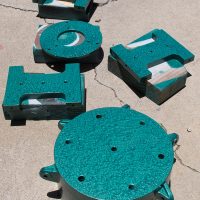
Several new aluminum parts were machined from scraps, some of which were scavenged when the observatory shop was being cleaned out and a lot of metal stock was tossed.
Many of the electronic components used to build the drive corrector were also scavenged parts from dead electronics, this includes the 1.8432MHz crystal that forms it’s beating heart. This heartbeat keeps the mount turning at exactly sidereal rate.
Yeah, you could call it Frankenscope.
But I will call it Hodgepodge.
The Hodgepodge mount assembled for the first time
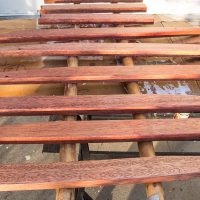
The legs and other parts of the field tripod with a fresh coat of polyurethane
Parts for the Hodgepodge field tripod drying in intense tropical sunlight
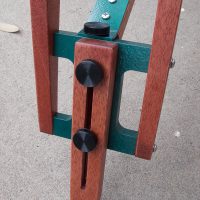
The extendable foot section for the Hodgepodge field tripod
The Meade wedge bolts to a Celestron field tripod head without modification
Hodgepodge setup on the side of Mauna Kea with the TV-76mm and Telrad on the plate
Hodgepodge setup on the side of Mauna Kea with the TV-76mm and Telrad on the plate
A few days ago I looked at the solar imagery from the spacecraft and ground observatories and feared that our Sun would be completely spotless for next week’s solar eclipse. The one sunspot visible had just rotated out of view, not to return until well after the eclipse. There were no other sunspots apparent.
SOHO sunspots on Aug 15, 2017 showing the newly formed AR2671Our Sun has served up a very nice surprise. A complex and energetic sunspot group has formed. Better yet it will be just about mid-disk when the Moon arrives.
Sunspot group AR2671 formed on the eastern limb of the Sun over the last couple days. It has even produced a few c-class solar flares to show it has some vigor.
Better yet… This sunspot group will be a boon to eclipse photographers across the US. The pattern of dark spots will make the difficult task of focusing a telescope on the Sun far easier. These spots will provide a focus target to untold telescopes.
The only question now is will the group last for five more days? Will is grow or shrink.
What will the Sun look like when eclipse day arrives on August 21st?
Very quiet!
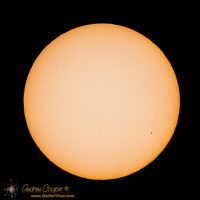
The Sun as it appeared August 10, 2017 with sunspot AR2670There is only one major sunspot group visible at the moment. The large spot AR2670 has been visible for a couple weeks now, crossing the face of the Sun since the beginning of the month.
I observed this spot several times while training some folks at the observatory to use a solar setup and while testing my eclipse telescope.
AR2670 is now disappearing from sight as it rotates over the limb, maybe it will be back in another couple weeks for a third appearance.
Checking the SOHO image archive and the GONG farside maps shows there is nothing else, no significant solar activity that will appear before the total eclipse in eight days. Nothing hiding on the farside to rotate into sight.
There is a slim chance of something new developing over the next week. However, we are approaching solar minimum, a quiet Sun is to be expected. Indeed, I expect we will have an almost featureless solar disk on eclipse day.
Update 14 Aug 2017: With one week to go a new spot has appeared! I do not see that is has an AR designation yet, but this new spot should be in the middle of the Sun on eclipse day if it lasts for the week. It may not be big or pretty, but it will at least give everyone something to focus cameras on in preparation for the main event.
Update 15 Aug 2017: The new sunspot has been designated AR2671 and has already produced some C class flares. Looks like has the energy to develop a bit more. At least one small sunspot for the eclipse?
When travelling to an eclipse, one solar filter is not enough. I need a backup!
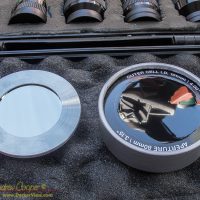
A Baader film solar filter beside an Orion Safety Film filter, both for the 76mm refractorThis is particularly true as my primary filter is a Baader film filter. While a very nice and effective filter, it is also very thin film, and easily damaged. Thus I have borrowed a second filter (Thanks Chris!), the borrowed filter being an Orion E-Series Safety Film filter.
Having the two filters available for use mean I must choose between them when the moment is critical. Which is better? Some testing is in order to find out.
The two filters appear very different, the thin silver film of the Baader quite different than the thicker black polymer film of the Orion filter. Both filters are safe to use and provide decent solar viewing. Both provided pleasing solar images using my Televue 76mm APO telescope at low and medium power.
Stepping beyond basic use I do find that they perform quite differently. So differently I felt some notes are in order.
For this solar eclipse I will be in the middle of central Oregon, a long way from any stores, much less an astronomy equipment store. I will have to have everything I need on-hand, nothing forgotten, nothing overlooked.
A checklist is certainly in order!
The checklist below was compiled as much for myself as anyone who might read this posting. Actually writing the checklist out is quite useful as a personal double check. I need to consider that we will be camping for several days prior to the eclipse, that time will be spent hiking, stargazing, or simply relaxing in the forest with family.