
Author: Andrew
An electrical engineer, amateur astronomer, and diver, living and working on the island of Hawaiʻi.
A New Hammer
“I suppose it is tempting, if the only tool you have is a hammer, to treat everything as if it were a nail.” – Abraham Maslow
The above statement is an adage that goes a long way to explaining many engineering decisions. Often referred to as Maslow’s Hammer it is a concept that has been well understood in science and technology for a very long time. In engineering we tend to use the tools we know to solve every problem in front of us, even if the tools we have may not be the best solutions.
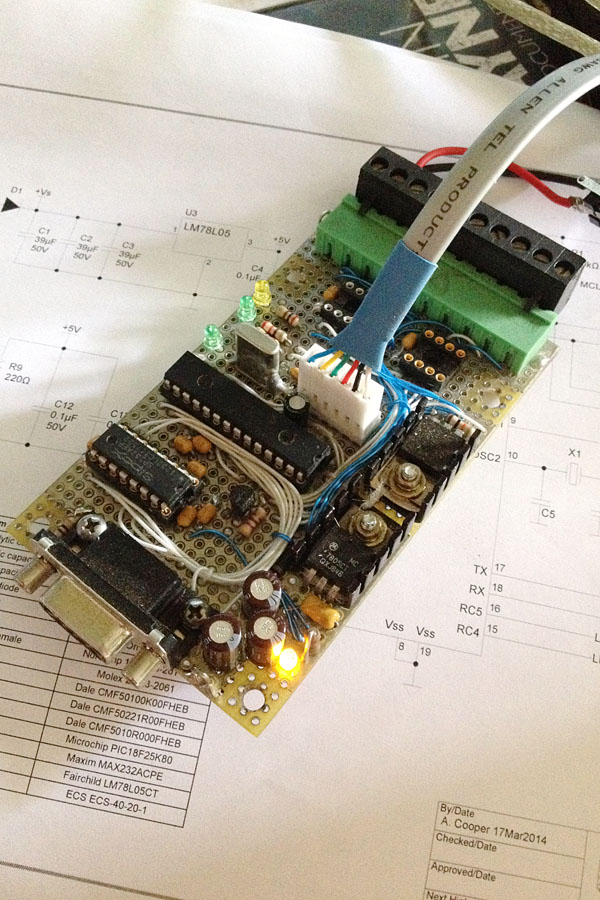
Or the old tools are simply obsolete and you are forced to update.
I am as guilty as any engineer in this. The major example, at least in my case, are microcontrollers. For many decades I have used Microchip PIC16F controllers each time I encountered a problem that required some form of complex control. Specifically I have always loved the PIC16F73 and the later PIC16F873 parts. they had everything I usually needed… A serial port, plenty of I/O pins, a few channels of 10-bit analog to digital, a convenient 28 pin DIP package. If I needed more I/O or more memory just step up to one of the larger packages like the PIC16F876.
Then Microsoft Windows 7 happened. How is this even related? The old versions of MPLAB I used to write the software and program the parts does not run of 64-bit Windows 7. When I updated my machine, I was forced to update to MPLAB X, a totally different platform. A new hammer to learn.
TMT versus Space Based Alternatives
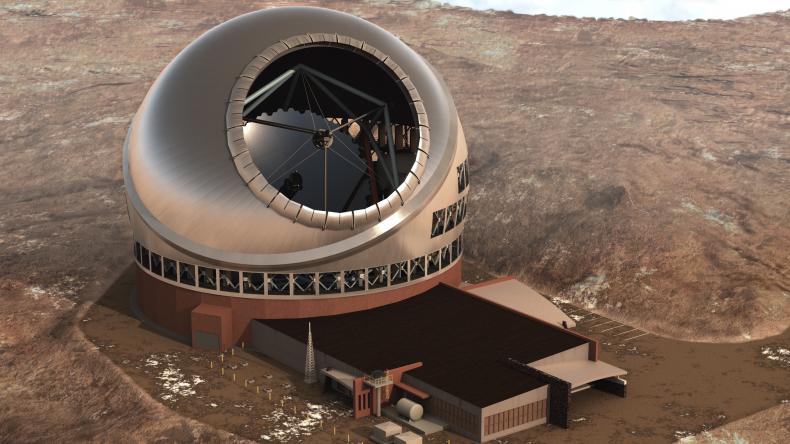
With the controversy again raging over the TMT we are again seeing complete mis-representation of astronomy in the press and social media. These postings and comments make interesting reading. These show the wide range of feelings in the community. There also seems to be a misunderstanding about the roles of large telescopes in general.
Note: This post was originally written and posted to the old DarkerView blog in August 2008. Re-posted again as it answers on of the common comments in the current episode of the TMT debate. A few edits thrown in to update for the current context seven years after the first publication.
One of the themes that popped up in the comments several times was the idea that space telescopes are where to put the money and the belief that ground telescopes were “obsolete’, thus projects like TMT are not needed. This could not be further from the truth. Yes there are advantages to space telescopes with respect to interference from the atmosphere. But space telescopes face several severe and inherent disadvantages.
Expense
Space telescopes are hugely expensive for what you get. Hubble is a mere 2 meter class telescope. Very small in the terms of modern telescopes. This limits the performance drastically. Hubble can only collect a little more light than a single segment of the current Keck telescope, and Keck has 36 segments in it’s 10 meter mirror. Work out the math and you find that Keck gathers 25 times more light than than Hubble. The new James Webb Space Telescope will be a 6.5 meter telescope. The Thirty Meter Telescope will be 30 meters with 492 segments, thus will gather 28 times more light than JWST.
Continue reading “TMT versus Space Based Alternatives”
Mercury at Inferior Conjunction
Today the planet Mercury passes through inferior conjunction, passing between the Sun and the Earth. In a week or so the planet will again be visible in the dawn sky, climbing higher each day. Maximum elongation will occur June 24th.
Caltech Submillimeter Observatory in Hawaii to End Operations
We have known this was coming for some time. With ALMA coming online the Caltech Submillimeter Observatory is looking decidedly obsolete. It’s closure was announced a few years back as Caltech planned to reallocate the budget.

Last year I arranged a tour of CSO for the members of WHAC. It was great to get a good look at this facility before it becomes part of history.
After almost 29 years, the California Institute of Technology (Caltech) will end operations of the Caltech Submillimeter Observatory (CSO) in Hawaii in September, 2015. As previously announced, Caltech will begin the planning for the dismantling of the observatory. This process will be planned in close coordination with the Office of Mauna Kea Management, University of Hawaii at Hilo, to ensure that it is undertaken promptly and in a culturally and environmentally respectful manner. Caltech is sincerely grateful to the people of Hawaii Island for the use of Maunakea for nearly three decades, enabling superb research from this excellent astronomical site for the betterment of humanity. Caltech commits to the dismantling of the telescope and site restoration according to the Decommissioning Plan approved by the Board of Land and Natural Resources.
The CSO is a cutting-edge facility for astronomical research and instrumentation development. The CSO’s 10.4-meter radio telescope was designed and assembled in the 1980s by a team led by the late Robert Leighton, Caltech’s Valentine Professor of Physics. Under the leadership of CSO founding director Tom Phillips, the John D. MacArthur Professor of Physics, Emeritus, at Caltech, new instrumentation for the CSO was developed over the years by Caltech faculty, students, and staff; by staff scientists from NASA’s Jet Propulsion Laboratory (which is managed by Caltech); and by collaborators at institutions around the world.
Located near the summit of Mauna Kea, the CSO began operation in early 1987, under the management of Caltech by agreement with the University of Hawaii. For nearly three decades, astronomers from around the world have used the observatory to pursue research and to accomplish groundbreaking achievements in submillimeter and millimeter astronomy—the study of light emitted by atoms, molecules, and dust grains in the interstellar space where stars and planets form. Well over 100 students, from Caltech and other institutions, have used the CSO for their PhD research.
“The CSO has played a central role in the development of the science and instrumentation of submillimeter and millimeter astronomy over the last three decades,” says Sunil Golwala, current director of the CSO and a professor of physics at Caltech. “The CSO legacy of combining training in instrumentation development, hands-on observing, and science will live on via its former students and researchers as well as in new projects for which it has laid the foundation.”
“This has been a most exciting time in which the field of submillimeter astronomy has been developed, leading to an understanding of astrochemistry, star formation, and distant, dust-obscured galaxies,” says Phillips, now the CSO’s director emeritus. “We thank the National Science Foundation, which funded the CSO continuously from construction in 1984 to the end of 2012.”
“The CSO has been foundational in creating the thriving discipline of submillimeter astronomy,” says Tom Soifer (BS ’68), Kent and Joyce Kresa Leadership Chair of Caltech’s Division of Physics, Mathematics and Astronomy. “It is with a deep sense of gratitude to the people of Hawaii that we thank them for hosting this magnificent facility for all this time.”
CSO Scientific Achievements:
- Development of superconducting-tunnel-junction detectors and spiderweb bolometers for radio astronomy, now commonly used on ground- and space-based radio observatories (ALMA, CARMA, Herschel, Planck), as well as the first astronomical demonstrations of an emerging new technology, kinetic inductance detectors
- Determination of the role of atomic carbon in the interstellar medium
- Detection of the submillimeter “line forest” using the line-survey technique, as well as of key hydride molecules, which has led to an improved understanding of interstellar chemistry
- Discovery of a new phase of stellar evolution for red giant stars, which occurs just before they completely lose their envelope of gas during the formation of planetary nebulae
- Mapping of the molecular gas of the radio galaxy Centaurus A, among others
- Determination of the volatile composition of comets, including the first ground-based detection of HDO (heavy water) in a comet, leading to an improved understanding of the origin of comets and of terrestrial water
- Discovery of ND3, a rare type of ammonia, with emission about 11 orders of magnitude stronger than initially presumed
- Discovery of signs of intermittent turbulence in interstellar molecular clouds
- Use of tools such as the Submillimeter High Angular Resolution Camera (SHARC) to image distant, dusty galaxies that are difficult to observe with optical telescopes
- Spatially resolved imaging of nearby stellar debris disks, using SHARC, providing evidence for the presence of planets in these systems
- Spectroscopy of distant and local galaxies using the Z-Spec spectrometer—developed at CSO—which has helped yield a better understanding of the processes of galaxy formation and provides a method for measuring galaxies that are too dusty to be seen with optical instruments
- Mapping of the pressure in the gaseous component of massive galaxy clusters via its interaction with the cosmic microwave background (the thermal Sunyaev-Zel’dovich effect)
- The first detection of the change in the cosmic microwave background caused by its interaction with the gaseous component of a high-speed subclump within a massive galaxy cluster (the kinetic Sunyaev-Zel’dovich effect)
Keiki Fishing at Anaehoʻomalu Bay

Cropping the Photo
You never frame a photo properly when taken. This is a lesson I learned long ago… In the sometimes frantic process of shooting the photo, you rarely have a chance to frame the subject correctly. That moment when the whale surfaces, or the bear looks right at you, there is little time to adjust the photo for best impact, you just shoot.
Rotation is also an issue, many photos are taken handheld, often hastily in the moment. These will have small errors in rotation. Do not even mention shots taken from a pitching boat! A modest crop of the photo will also allow correction on the image rotation.
The choice of crop is critical, it is the first step in my processing of the photo. Either the crop works, or move on to the next photo in the folder. Almost all photos can be improved by cropping in a little, to cut away the extraneous areas and to concentrate the viewer’s attention on the primary subject. Much of the time I will throw away 10-25% of the photo, not cropping a lot, just tightening up the composition.
Adobe LightRoom acknowledges this fact of photography, the crop and rotate tool is on top, first on the left of the processing tools. Crop it in, perhaps straighten the rotation, then you know if the photo is worth any further effort.
The art is in choosing the crop… How much to crop. How to position the major elements. This decision is an aesthetic choice of the photographer, and as with many such choices, there is no single best answer. There are some rules that can help. These are rules that can help, but are not ironclad, they can be broken if the composition calls for it.
Reaction to Governor Ige
To no one’s surprise those most opposed to astronomy on Mauna Kea have reacted negatively to yesterday’s statement by Governor Ige. Released statements by the Mauna Kea Hui, Kū Kia’i Mauna and other groups offer no compromise in response to the governor’s proposals.

Today’s protest is interesting compared to earlier protests, it seems less energetic, with far fewer passing vehicles honking in support. The previous protest at this location was almost constant honking. Has the community sentiment shifted away from those protesting? Are many accepting the spirit of compromise that was exemplified by the governor yesterday? The real test will be when construction resumes, and we all expect it to resume soon.
It was in walking over to check on the protest that I had a more interesting conversation. A Hawaiian gentleman was selling fresh ahi and pickled mangoes from a roadside stand. He ask why they were protesting the telescopes. It made no sense to him that anyone would oppose the TMT.
This is in line with many quiet conversations I have had. Many in the local community do support the TMT, but the support has been muted by the most strident voices of opposition. Conflict is not comfortable to many in this community, traditional Hawaiian and to a large extent traditional Asian attitudes that so many follow here have steered many away from the controversy. As we chatted he offered me a piece of ahi free, he had a big catch yesterday. I deferred and thanked him, I still have plenty of halibut to use up in the freezer.
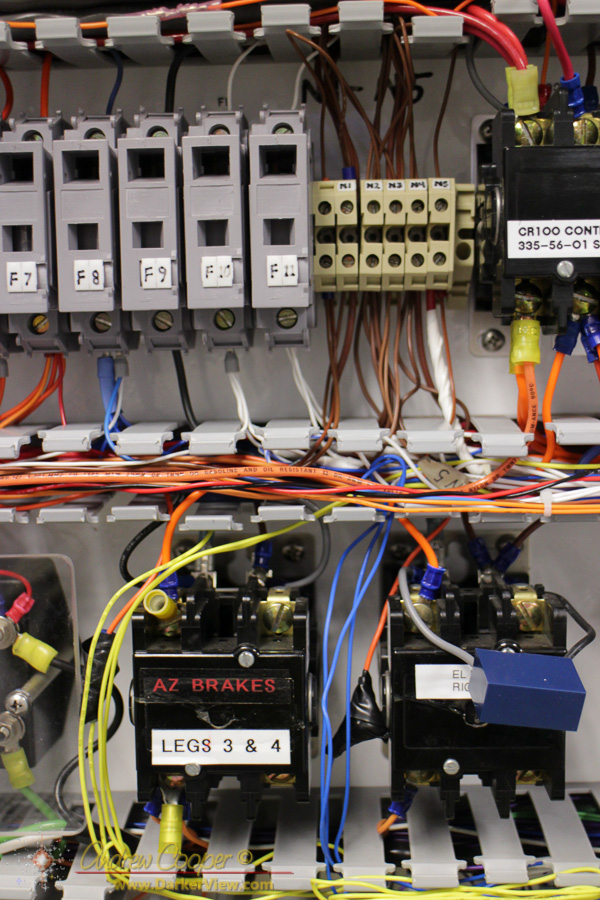
Telescope Controls
Governor Ige Steps In
After weeks of being pretty much silent on the controversy, Governor Ige has issued a statement on the ongoing issue of TMT construction. It was big news around this place, pretty much the entire staff of Keck Observatory piled into our big conference room to watch the governor’s address live.
