
Cane Toad
When you want to see the stars, find someplace dark

Given my interactions with various protesters I have wondered just what information is exchanged in the camp privately among those who have been living there. I wonder how that information has shaped their views and driven the core of the Kia’i movement.

My worry is that the camp is serving as an environment where a more extreme stance in this controversy can be created and thrive.
The recipe for this is simple… Take a number of people that already share the same views, isolate them together, and bring in speakers and teachers that amplify the message. The result of this process is well understood in human psychology.
One of the common statements from those in the camp, one repeated over and over, is to come on up and live in the camp, only then you will understand.
Continue reading “Living in the Protest Bubble”2019 is recorded in photos here on DarkerView.


The top posts of 2019 are a little different than I have seen in the past. Usually it is a mix of a few big hit posts that were linked on other sites and a lot of older posts that have long lives.

This year DarkerView’s traffic was dominated by the controversy on Mauna Kea. Publishing a series of posts on specific issues resulted in a lot of shares, mostly on FaceBook that drove traffic.
TMT supporters would routinely link DarkerView to provide more information in the raging online arguments that drove so much of the controversy. I can only hope that the posts had some effect in countering the dizzying amount of misinformation that featured in these arguments.
Of course the Backyard Telescope Pier article continues to be the most popular long term post. This post has been on every DarkerView top post list since I started the blog. A number of other similar reference posts can be found in the top post lists.
Overall DarkerView had 74,125 page views from 39,679 unique visitors, a large increase from the 46,707 views of 2018, almost double.
Something is definitely not right with Orion. For anyone familiar with the sky the constellation just looks wrong with Betelgeuse at half its normal brilliance.
We have long known Betelgeuse is a dying star, in the last stages of its life. Old stars tend to be unstable, changing in brightness. Betelgeuse has always varied a bit, but this is the largest change on record.
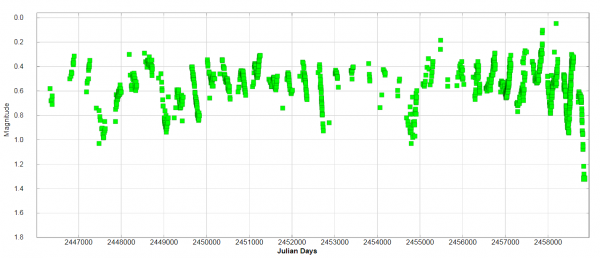
It is odd to see such an iconic star change so dramatically, a reminder that not even the stars are permanent.
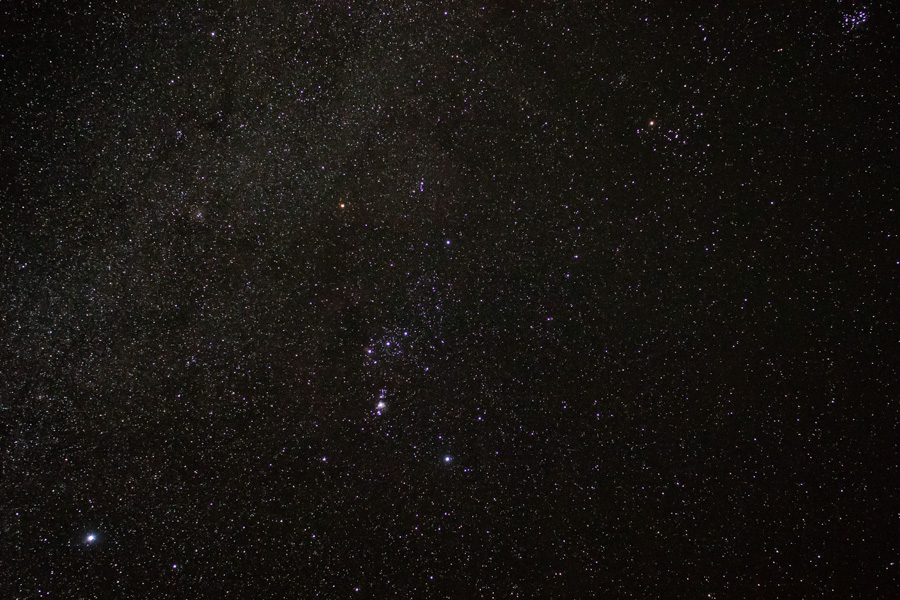
The photo tends to flatten the magnitude of stars, the difference is not as obvious. You need to step outside and look for yourself. Orion currently rises late in the evening.

A last star party of the year, actually the last star party of the decade.
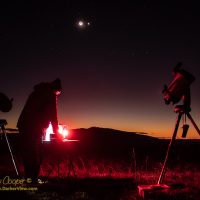
With new Moon in the middle of Christmas week I had the choice of the weekend before Christmas, or the weekend after. Guessing that attendance would be better in the quiet days between holidays I chose December 28th as our monthly new Moon star party.
The site was, as usual our Ka’ohe observing site on the side of Mauna Kea. The weather was nearly ideal, clear, not very cold, and almost no wind at the site.
Arriving at the site to find beautiful, clear skies we marveled at the sunset scene. A brilliant Venus and three day old crescent Moon hung above the fading sunset and Hualālai.
Continue reading “A Full Night at Kaʻohe”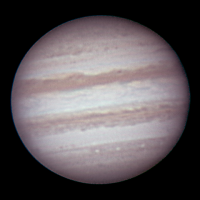
Today Jupiter passes through superior conjunction, rounding the far side of the Sun as seen from our earthbound vantage point.
Jupiter will re-emerge in the dawn sky towards the end of the January. Look for the planet low in the glow of dawn, rising higher each day.
Jupiter will pass through opposition on July 13th, 2020, crossing into the evening sky.
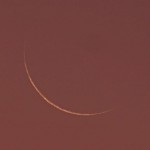
New Moon will occur today at 19:13HST.
An annular solar eclipse will sweep across the Indian Ocean, Southern India, and Indonesia during this new Moon.
This coming weekend, Dec 29th, offers an excellent dark night for observing. Get out to enjoy some holiday stars!
Continue reading “New Moon”The winter solstice will occur at 18:19HST today.
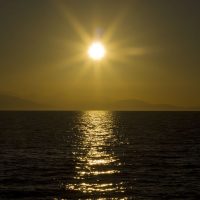
The Sun has reached the most southerly declination it will achieve this year. After today the Sun begins to move north in our skies.
Today will be the shortest day of the year for those of us located in the northern hemisphere.
Today is considered the start of winter for most cultures in the northern hemisphere, or the start of summer for those in the southern hemisphere.
| 2019 Apsides and Seasons | ||||
|---|---|---|---|---|
| Event | Universal Time | Hawaii Standard Time | ||
| Perihelion | Jan 03 | 05:20UT | Jan 02 | 19:20HST |
| Spring Equinox | Mar 20 | 21:58UT | Mar 20 | 11:58HST |
| Summer Solstice | Jun 21 | 15:54UT | Jun 21 | 05:54HST |
| Aphelion | Jul 04 | 22:11UT | Jul 04 | 12:11HST |
| Fall Equinox | Sep 23 | 07:50UT | Sep 22 | 21:50HST |
| Winter Solstice | Dec 22 | 04:19UT | Dec 21 | 18:19HST |
| Data from US Naval Observatory Data Services | ||||