A wall in Union, Oregon covered with old painted advertisementsLearning photography, shooting my father’s Canon AE-1 around Oregon. Three years of shooting across England and Europe. Wandering the deserts of Arizona and Utah with a camera. A visual history of much of my life trapped in small bits of celluloid and silver.
The old slide scanner has been out of commission for years, a victim of changing technology. The old SCSI interface is not supported on modern computers. I have often considered replacing it, but for whatever reason the idea has been delayed until now.
One of the better slide scanners available is the Plustek 7600i. I stumbled across a listing for rebuilt units on eBay, direct from the manufacturer. $245 with shipping was a great deal, one I could not resist.
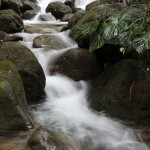
The flowing stream. An easy and fun shot that should be in any photographers skill set. Not only a pretty shot that captures the feel of a flowing stream, but a shot that teaches a little basic photography in the taking.
A stream tumbles through boulders on the Hamakua CoastThis shot was taken at the Hawai’i Tropical Botanical Gardens at Onomea Bay north of Hilo. Several typical rainforest streams tumble through the gardens flowing to the cove below. This is a shot that can be taken thousands of places on this rainy coastline, there are hundreds of streams and waterfalls to choose from. This one happens to have a little bridge to keep your feet and tripod dry.
While I was taking this shot another couple was taking the same photo beside me on the bridge. They wondered what I did to get the shot they saw on my screen. I offered them a turn on my tripod for a moment and talked them through the steps needed to create the flowing stream look. The Canon Rebel T5i they were using was perfectly capable of achieving the same effect. A minute later they had succeeded, happy with a very pretty photo. I suspect they learned a little in the process.
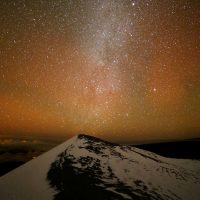
Starscape photography is becoming increasingly popular. Dramatic photographs of a starry sky over a scenic landscape. Properly done the results can be truly impressive. The photo is a beautiful landscape with a glorious display of bright stars overhead. For those who have long enjoyed the night such a photo captures a sense of being there, of standing beneath those brilliant stars. This is starscape photography, a relatively new type of photography made possible by improved photographic technology.
The winter Milky Way over the summit of Mauna Kea, Canon 6D and Samyang 14mm f/2.8 lens, 30s at ISO 6400
We will define starscape photography as shooting traditional landscape photographs with only starlight and skyglow for illumination. The exposure is fast enough to keep the stars from trailing. The result is a recording of what the scene would look like to a person standing under a starry sky.
Nothing serious, just a fun iPad app for a Sunday.
The many filter apps that process photos to create various effects have become ubiquitous. Old film effects, sepia, Polaroid, old time movie, painting, etc., etc., etc. There is a filter for everything. Some of these have often been accused of existing solely to make bad photos somehow cool. An accusation that probably has more than a bit of truth behind it.
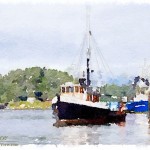
The fishing boat Roedda departs the packing plant dock in PetersburgEvery now and then a filter app seems to rise just a bit above. Waterlogue is a filter that creates a watercolor style painting from a photograph. The app is available for iOS devices and can run both on the pads and phones.
The painting process uses an edge detection filter first, extracting the structure of the photos. Each of the various presets has dramatically different settings for this edge detection. The app then paints in the selected colors to fill in the painting. The process is animated, watching this can be rather fun.
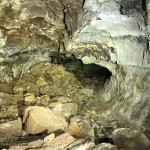
There are a lot of caves on this island. Much of the island of Hawaiʻi is riddled with lava tubes. Hiking or riding the trails or back roads of the island often offers a mysterious opening into darkness. Not that I explore too far, I am not a hard core spelunker. But I do often poke my head in to see what the cave has to offer.
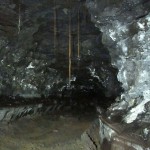
The interior of Goat House Lava Tube near Waikoloa, 15 second exposure painted with a flashlightOften when I reach a cave I am not carrying the necessary equipment to explore or photograph the cave. There are a few things I always have with me… A camera of course, I am rarely found without one. There is always a good flashlight in my pocket, a bright little LED light with a lithium battery. These two things are all one needs to get a photo of a cave.
Unless the cave is quite small the camera flash will provide unsatisfactory lighting of the cave. The flash will also tend to light up nearby parts of the cave and leave anything at any distance poorly lit. I generally do not use a flash in a cave unless I am photographing small features close at hand.
The technique is simple… Set the camera on a tripod, or a rock, and open the shutter for as long as the timer will allow, usually 15 or 30 seconds. During the exposure you paint the cave with light. Simply wave the light around in a random pattern, never letting the beam rest too long in a single place to evenly distribute the light. This simple method will allow even a large cave to be illuminated with a relatively modest light.
You will need to do this a few times and adjust your process to suit the situation. You can adjust the camera shutter timer or gain (ISO) to adjust the exposure. You can decide where to spend more or less time with the light if there are dark areas or hotspots in the image.
A classic Hawaiian lava tube, the downhill side of Kaumana cave, 15 second exposure painted with a flashlightThere are a couple tricks… The further away sections of the scene will require more light, spend more time illuminating the furthest sections of the scene. If the light is located too close to the camera there will be few shadows to provide depth and texture to the scene. during the exposure step to the side a little or keep the light close to the cave floor so the low rocks cast shadows.
Focus can be difficult. Set the camera for a smaller focal ratio, perhaps f/5.6 or f/8 to keep a good depth of field. Hold the flashlight on a feature well into the scene and focus on that. Some trial and error may be needed to get a good focus.
It can be fun too! When exploring the lower end of Thurston Lava Tube I was all set up with the camera and tripod when a group of kids arrived. Curious as to what I was doing I showed them. During the exposure I had the whole group wave their lights around as we all stood behind the camera. The kids were amazed when the photo appeared on the LCD display, they had no idea you could light up a cave and take a photo with a bunch of little flashlights.
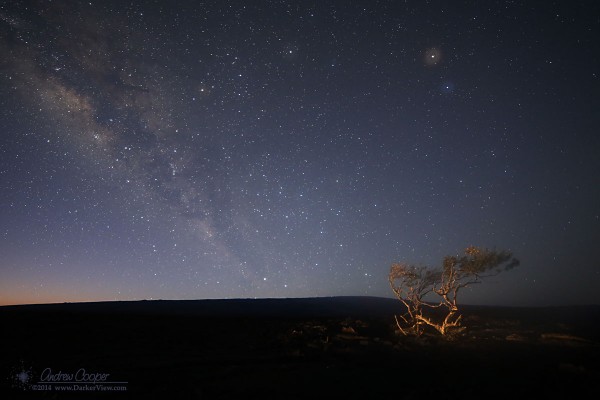
The photograph was planned… Somewhat. I knew there were some picturesque trees on the lava field along Saddle road. The plan was to shoot one of these trees silhouetted against the Milky Way and Mauna Loa. That was the plan. At least until the plan met reality.
Shot as planned the results were less than stellar. Actually they were rather boring. The rising summer Milky Way was spectacular, nothing else worked. The enormous bulk of Mauna Loa became a bump on the horizon from the low angle with the 14mm lens. The trees did not look like much against the dark.
Serendipity intervened… First a passing car lit the trees with dramatic results. Car headlights caught the trees at just the right angle to light up the right bits, a lucky bit of geometry and road alignment. Looking at the image on my screen I was intrigued… I repositioned the camera and shot again when another vehicle passed… This was working!
As I waited for other passing cars the shots deteriorated, odd glows across the frame. Were the headlights catching the big dome of glass at the front of the lens? Blocking the light from the headlights on the camera did not help. I pull out a flashlight to check the camera… Ack! The lens was fogging up!
Retrieving the anti-dew kit and a battery from the vehicle I secured a dew strap around the camera lens. At this point I wanted the shot and was willing to work for it. I was lucky again… I had thrown the dew gear in the car as a last moment afterthought.
It took time for the lens to warm and clear. As I waited dawn crept into the sky. I took a last few shots as the light increased and the stars faded. The dawn light added a nice shade of blue to the sky with a hint of peach to one side, another serendipitous bit that added to the photo. A last wisp of fog on the lens was just enough to create halos around Mars and the brighter stars.
Not a bad result! With a little skill and more than a little luck. The shot has been entered in the Hawai’i Photo Expo. Hopefully the jurors think the shot is as good as I think it is.
The rising summer Milky Way, Mars and dawn over Mauna Loa
A contest for local photographers, the Hawaiʻi Photo Expo is a full juried competition. A local contest, but a decent one, the entries will hang in the Wailoa Center gallery for a few weeks.
My chances of winning? I think my entries are fairly strong. Looking through the archives of past winners I feel my images are as good as anything there. I should be competitive at least, the rest is up to the standards of the jurors.
There are still a few days left to enter, the deadline is March 16th. Have any really good photos?
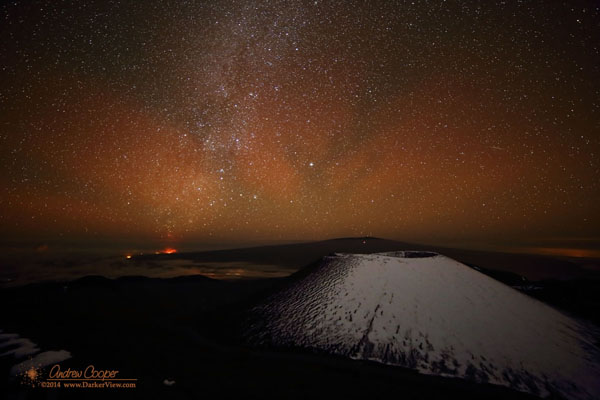
Airglow or auroral glow? An odd red glow in the photos during a strong geomagnetic storm.
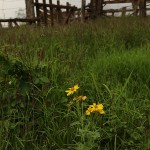
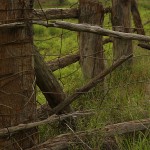
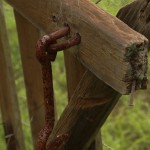
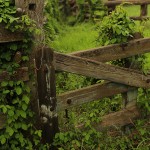
The corral is one of the relics of ranching that litter the Waimea countryside. Just a short detour off my daily commute, I have long noted the photo potential of the place. A foggy day offered an interesting opportunity to shoot the corral, enough that I missed my usual turn to take advantage of the even, subdued light offered by a grey afternoon.
Arriving I noted that recent rains had transformed the brown grass into a verdant green. Vines had appeared to cover the old fence posts in foliage. This was a good day to go shooting.
Photography is an art that has to be constantly practiced. You need to shoot, shoot some more, and critique the results with a stern eye. I have better gear than I have ever had, it helps. Still, the magic is up to the photographer, not the camera. A practiced eye, composition and creativity, any camera can shoot a great photo in the right hands.
I did get some good shots. But did I get any great shots? I am always my own worst critic.
An old corral falls into ruin south of Waimea
Recent rains have turned the brown land to verdant green
Old wood and wire, patched and modified for generations
The wear of many seasons of work scar the wood, rust betrays the lack of use
Vines now keep this old gate permanently shut, Canon 6D and 24-105mm f/4 L lens
Occasionally I use the Google image search function to see if any of my photos are being used on other websites. Yes… It is something to do when insomnia strikes.
Earlier this month I found quite a few of my photos being used on an very obnoxious site. The same page also contained numerous images from the West Hawai’i Astronomy Club website. I will forgo including the URL or link here, no need providing them one more incoming referral. Suffice it to say that the entire website was constructed of stolen or scraped material, the sole purpose of which is to serve as search engine bait. Once on the website clicking on anything generated pop-ups, pop-unders, a slew of ads. This was not innocent infringement, this is a business built on theft of intellectual property.
A little sleuthing revealed that the site was located on a hosting service out of the Netherlands, WorldStream.nl. As this site is not within the US a DMCA takedown notice is not legally enforceable. However, European law is pretty good with respect to copyright, the hosting provider should take a notice of infringement seriously. Thus I sent an email off to the listed customer service address…
The plan was simple. Stay on the summit after work to do some nighttime scenic photography.
I was hesitant in going up after suffering my recent ear infection. The ear is vastly better, no problems with clearing the ear for several days. After two weeks absence the list of things I needed to get done on the summit was getting lengthy and urgent. Yet I worried a bit about going up. An idea… Take my own vehicle. If I have trouble I can go at my own pace without holding up the rest of the guys. If the trouble is serious I can abort and head back down.
If I did bring my own vehicle I could get in a little photography along the way. I had not really had a chance to try out the Rokinon 14mm f/2.8 lens I had bought specifically for starry sky work. Why not stay late, watch sunset and take a few photos after dark? There is snow on the summit, the weather looked promising, the Moon would not rise until after 10pm, all good things.
The plan worked as envisioned. A good day getting stuff done. Actually a rather hectic day. The filter wheel problem of TRICK found and eliminated, the heater circuit at least looked at, I think the problem is still there. Warping data recorded for a segment in Keck 2 for the refurbishment project. Some wiring on TBAD completed, still more to do. An issue with the Keck 2 interlocks that popped up during the day was dealt with. Yes, a very good day.
A minimal dinner of instant ramen, and some paperwork accomplished while waiting for sunset.
Into the cold dark I go… The combination of the Canon 6D and the fast 14mm lens is impressive. This gear will really allow me to step up my game. I was able to shoot great material under very dark conditions. Photos that had been just out of reach for me until now. It will take me a couple days to go through and process the material, but a first look is very pleasing.
Only one problem… What is this red stuff showing up in my photos? Normal airglow is green, but this is crimson red and has very distinct structure? The idea of aurora crosses my mind, almost immediately dismissed as I am standing at 20°N latitude. I step away from the camera and the light for a bit. With some effort I can convince myself that I am seeing red in the sky, at least in the darker areas away from the Milky Way. But it is fleeting, and perhaps just an overactive desire to see something.
I get home and just out of curiosity I check the planetary Kp index… What?!? We have a Kp=6 geomagnetic storm in progress! Beautiful aurora photos are being posted from the upper midwest. Reports of aurora from across much of the United States. There is certainly a dramatic storm in progress. Perhaps this is a low latitude auroral glow!
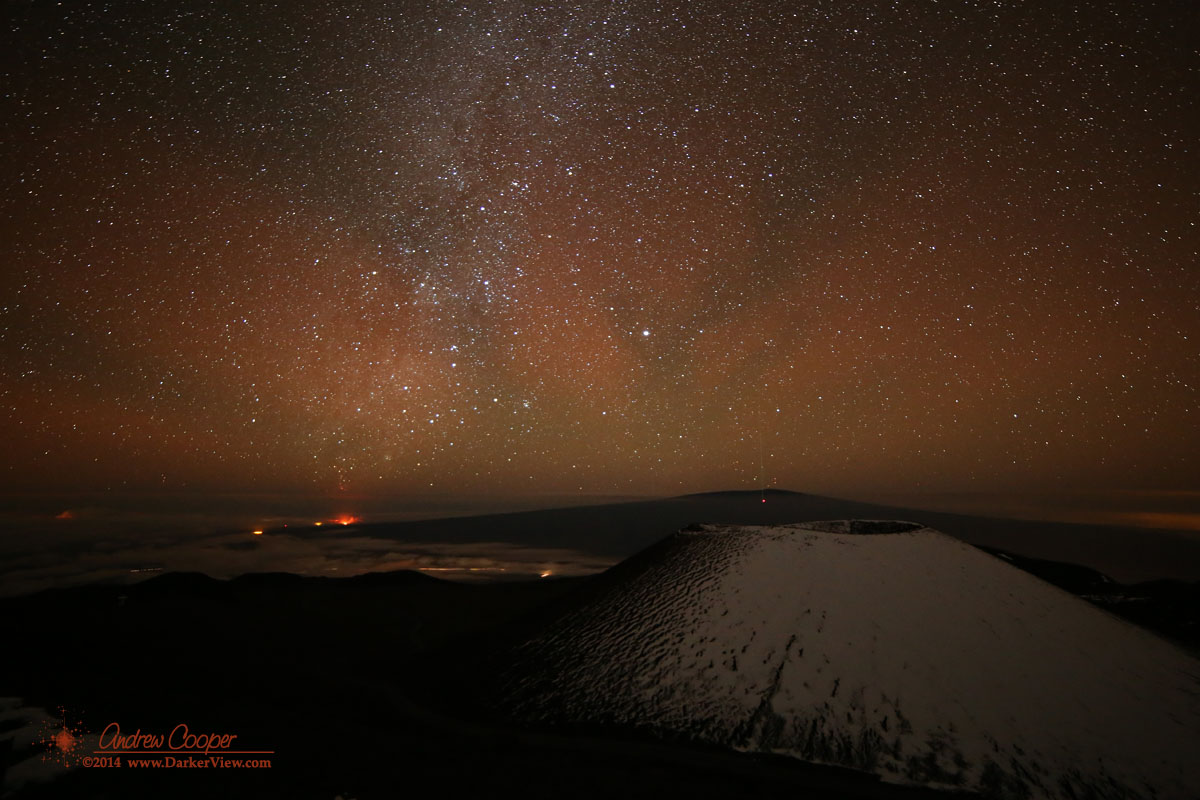
It is a nice photo. You can see the glow from the lava lake at Halemaʻumaʻu, the winter Milky Way, and a research laser shining straight up from the atmospheric lab atop Mauna Loa.
Airglow or auroral glow? An odd red glow in the photos during a strong geomagnetic storm.