A tricky shot, taking very precise timing and navigation. I can not claim credit, Sean Goebel did the planning. I just supplied scouting information and came along for the ride.
The Moon rising directly behind the telescopes on the summit as seen from near WaikoloaSean has been after this photo opportunity for some time. For months he has messaged me to check on the weather over the Waikoloa area each time a full Moon is available. As he has to drive across island to reach the correct locations, a look ahead at the weather can save a great deal of wasted time.
Given that this only involved a fifteen minute drive from the house for me… Why not? Give it a try. Besides, I already had a suitable telescope loaded in the vehicle.
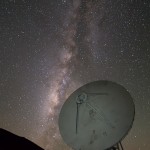
The summer Milky Way soars over the VLBA antenna atop Mauna Kea
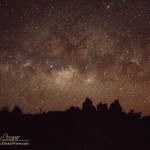
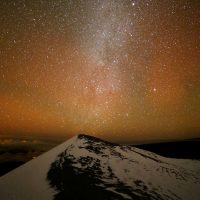
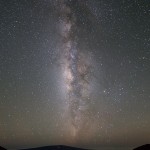
The rising Milky Way silhouetting and old a’a lava flow on Mauna Kea, Canon 60D @ ISO12800, 17mm f/4, eight 10 second frames aligned and averaged
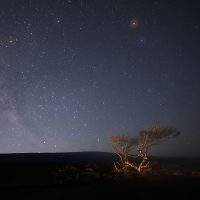
The rising summer Milky Way, Mars and dawn over Mauna Loa
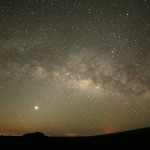
Venus and the summer Milky Way rising over Pu’u Huluhulu
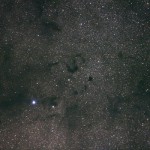
Baade’s Window, single 8 minute exposure at ISO 800, Canon 20Da DSLR camera mounted on a Televue-76 APO telescope with a 0.8x focal reducer/field flattener
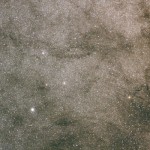
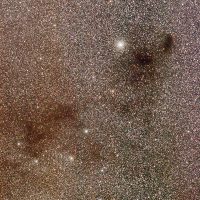
The cluster NGC6520 and the dark nebula B86 lost in the immensity of Baade’s Window
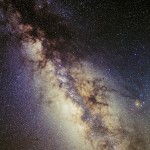
The central Milky Way from Mauna Kea, 37 x 30sec, Canon 6D w/24-105mm- f/4.5 @ ISO6400
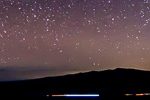
Horizon panorama from Ka’ohe, on the side of Mauna Kea
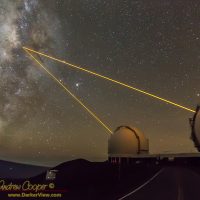
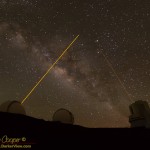
Both Keck lasers aimed at the center of the Milky Way galaxy
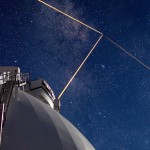
Three AO lasers aimed at the center of our Milky Way galaxy, the lasers are from both Keck 1 and Keck 2 as well as the Subaru telescope
The winter Milky Way over the summit of Mauna Kea, Canon 6D and Samyang 14mm f/2.8 lens, 30s at ISO 6400
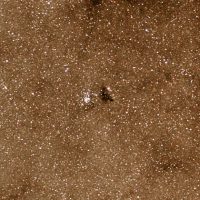
The globular cluster M9 next to the dark nebulae B64
A bright summer Milky Way shines over Mauna Loa
The Keck 2 and Subaru lasers cross the Milky Way above Mauna Kea
B72, the Snake Nebula, single 8 minute exposure at ISO 800, Canon 20Da DSLR camera mounted on a Televue-76 APO telescope with a 0.8x focal reducer/field flattener
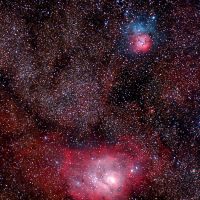
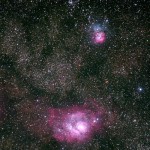
The Lagoon, M8 and the Trifid, M20 nebulae in Sagittarius
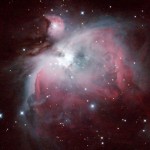
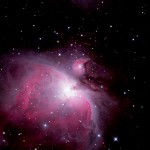
NGC1976 or M42, the Great Orion Nebula, taken with the Canon 20Da and a AT6RC telescope.
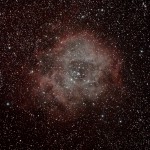
The Rosette Nebula and cluster, NGC2244, NGC2236, NGC2237 and NGC2238, photo is a stack of 19x8min @ ISO1600, Canon 20Da and TV-76mm
The Lagoon Nebula and The Trifid Nebula, single 8 minute exposure at ISO 800, Canon 20Da DSLR camera mounted on a Televue-76 APO telescope with a 0.8x focal reducer/field flattener
The Lagoon Nebula, NGC6523, in Sagittarius, 11 x 8min exposures, Canon 20Da and AT6RC
The ηCarina Nebula NGC3372, Canon 6D and TV-76mm
The Orion Nebula with and EOS-M, 40x30s exposures @ ISO12,800, AT6RC and 0.8x focal reducer
The region around Gamma Cygni in Hydrogen Alpha, including the nebulae IC1318 and NGC6888
The cluster NGC6520 and the dark nebula B86 lost in the immensity of Baade’s Window
M42, The Orion Nebula, Canon 6D and TV-76mm, 16x240s+10x60s+10x15s @ISO6400
The Swan Nebula, NGC6618, 8 x 8min with the Canon 20Da and AT6RC
The Moon one day short of full, afocal photograph taken with a 102mm refractor, 32mm eyepiece and a Canon G9 camera.
iPhone 5S photo of the Moon through a 6″ dob, afocal method
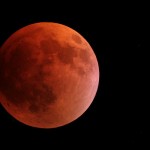
A total lunar eclipse on the night of August 27-28, 2007 with the Moon deep in the Earth’s inner shadow. A dark eclipse, this exposure shows a number of stars surrounding the Moon
The Moon taken on Feb 15, 2016.
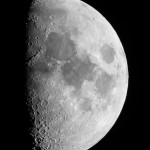
A nine day old Moon, taken with a 102mm refractor, a 25mm eyepiece and a Canon G11 camera
Total lunar eclipse August 28, 2007, photo is a 8sec exposure with a Canon 20Da on a 90mm f/12 APO
iPhone 5S photo of the Moon through a NexStar 11″, afocal method with a 35mm eyepiece
The Moon approaching full
A 94% illuminated waxing Moon, Canon 6D and AT6RC with 0.8x focal reducer.
An eight day old Moon, Celestron NS11GPS and Canon 6D
Occasionally we get phone calls. People have an astronomy question and decide to call an observatory to get an answer. I would caution that this is generally not the best way to get an answer, Googling the question or looking it up on Wikipedia is much more likely to result in a usable answer. Usually our front desk will politely defer the caller to some other source, Shelly is very good at doing this.
The International Space Station and the docked space shuttle Endeavour
Shelly is also a very nice lady who occasionally takes pity on some caller. Or the caller is very polite and asks very nicely. Often she forwards the call to me, knowing that I can usually answer these sort of questions.
What sort of telescope can be used to view the ISS?
At least the question did not involve aliens or NASA cover-ups, those question would have gotten the polite brush off from Shelly.
For someone who is inexperienced in using telescopes this not the easy place to start. Most of us who have been using telescopes for decades usually do not even try to do this. The space station is quite small and would require higher magnification to see well. It is also moving quite quickly across the sky. The combination of these two factors makes viewing the ISS a real challenge, to put it politely!