
Over the next few days Venus will swing just north of the Hyades star cluster. On the 30th Venus will be just over a degree north of εTau and just over four degrees from Aldebaran.
Category: Planet Events
Mercury at Inferior Conjunction
Today the planet Mercury passes through inferior conjunction, passing between the Sun and the Earth. In a week or so the planet will again be visible in the dawn sky, climbing higher each day. Maximum elongation will occur July 12th.
The Moon and Saturn
There will be a close approach of the Moon and Saturn tonight and tomorrow. At sunset on the 9th the pair will be separated by less than 7° and found well up in the eastern sky. As the night progresses the pair will slowly close the gap. As the pair sets around 03:30 the morning of the 10th, the separation will have been reduced to about 4°. As the two rise on the evening of the 10th they will have passed and the separation will be increasing. At sunset the pair will be 7° apart.
Viewers on the other side of our planet will be able to observe the closest approach, much less than a degree for many, an occultation if you happen to be in the right place. Sky watchers in Capetown, South Africa will see the planet disappear behind the limb of the Moon for about an hour around 19:11UT.
Mercury at Maximum Elongation
Today Mercury reaches maximum elongation, the furthest point it will reach from the Sun in our sky and the highest it will be above the sunset for this evening apparition. The planet is easily visible as a bright, starlike object about 23° above the setting Sun as twilight begins. Over the next couple weeks Mercury will slide back into the sunset, heading for inferior conjunction on June 19th.
Saturn at Opposition
Today the planet Saturn will pass through opposition, directly opposite the Sun in our sky.
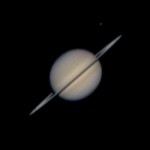
During opposition the planet and rings will be slightly brighter than normal, an effect known as the opposition effect. The effect is most notable in the rings where the apparent brightness can increase by 30%. The effect is a combination of two factors, shadow hiding and the retro-reflective properties of the ring particles.
Mercury at Superior Conjunction
Today Mercury passes through superior conjunction, passing behind the Sun as seen from the Earth. The planet will appear in the sunset in ten days or so, reaching maximum elongation on May 24th.
Mercury at Maximum Elongation
Today Mercury reaches maximum elongation, the furthest point it will reach from the Sun in the sky and the highest it will be above the sunrise for this morning apparition. The planet is easily visible as a bright, starlike object about 27° above the rising Sun as the twilight begins. Over the next couple weeks Mercury will slide back into the sunrise, heading for superior conjunction on April 25th.
Mercury at Inferior Conjunction
Today the planet Mercury passes through inferior conjunction, passing between the Sun and the Earth. In a week or so the planet will again be visible in the dawn sky, climbing higher each day. Maximum elongation will occur March 13th.
Mercury at Maximum Elongation
Today Mercury reaches maximum elongation, the furthest point it will reach from the Sun in our sky and the highest it will be above the sunset for this evening apparition. The planet is easily visible as a bright, starlike object about 18° above the setting Sun as twilight begins. Over the next couple weeks Mercury will slide back into the sunset, heading for inferior conjunction on February 15th.
Naked Eye 100 Challenge
Amateur astronomers love lists… The Messier observing list, the Hershel 400, the Hershel II, and on. Some lists can be complete on a night or two, some lists may take years, or even a lifetime to accomplish. Amateur astronomy is not the only avocation to use lists like this. Birders attempt to see all of the birds known to occur in their home country. Aircraft spotters love to see each model of aircraft in the air. Divers keep lists of species seen underwater.
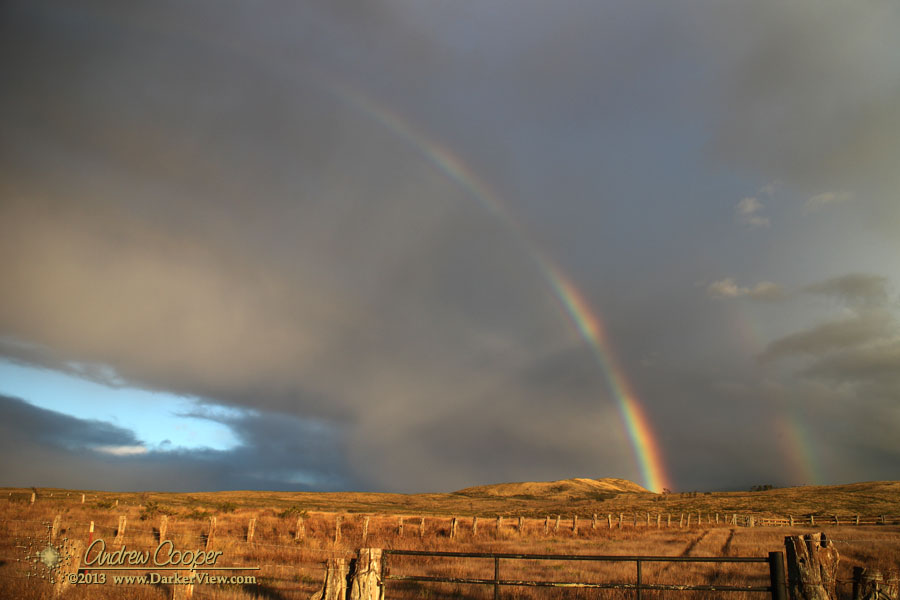
Lists like these are not only fun, but allow the list chaser to sample the wonders our universe has to offer. The challenge of finding and observing each of the items is worthwhile. Each object is a lesson into the science, hunting each object allows skills to be practiced.
Most of the astronomy observing lists require a small telescope to accomplish, or at least a pair of binoculars. One list is a bit different, it does not require any optical aid at all… The Naked Eye 100.