
Pineapple
When you want to see the stars, find someplace dark

Exploring the islands

One of the necessary life skills in the islands is the ability to fix a slippah. Yes, I know the mainland calls this minimal footwear sandals or flip-flops, but here they are called slippers or slippahs.

Plus, it is easy to fix.
My wife can relate a dozen slippah fixing tricks from around the school where she works. Many of the kids wear them and teachers learn all the tricks to fixing them when they inevitably break. From putting a bread clip on the central knob, to using a paper clip to replace the little side clips.
In my case it is one of the plastic clips that has failed. I used some heavy wire a touch more substantial than a paper clip.
A tricky shot, taking very precise timing and navigation. I can not claim credit, Sean Goebel did the planning. I just supplied scouting information and came along for the ride.

Given that this only involved a fifteen minute drive from the house for me… Why not? Give it a try. Besides, I already had a suitable telescope loaded in the vehicle.
The island is home to a vibrant community of photographers, a mix of professionals and serious amateurs. There is one set of photos everyone, and I do mean everyone wants… Dual lasers on the Milky Way.
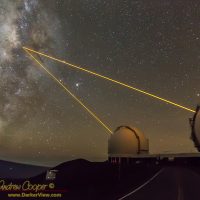
Opportunities to see and photograph this are few, and occur strictly during the summer months of June to August, when the Milky Way is high overhead. furthermore, these opportunities occur only when Andre Ghez and her UCLA Galactic Center Group have both telescopes scheduled.
July 25th was such a night, a good opportunity to get both lasers. Andrea’s group has the first half of the night, turning over the ‘scopes to other astronomers just after midnight. Actually there were a few nights this particular week, we just chose the 25th. After this galactic center season is over, at least until next year.
Another night on the summit for photography, another night of dual lasers working the sky above the Keck telescopes.
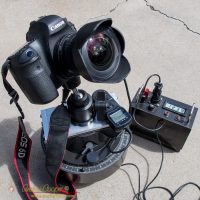
It works, and it works very well indeed.
The video below contains 2.5 hours of time-lapse at 15 second for each exposure for 557 frames. Put that together and render at 24fps and you have the following result…
I have to admit I was worried that the decision could go against the TMT project.
It did not.
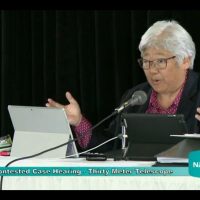
The decision is nearly three hundred pages long, none of us has had a chance to do more than skim some of the more interesting sections. Indeed most of us opened the document and skipped straight to page 260 to read the Recommended Decision and Order first.
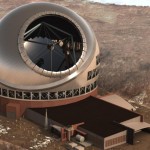
We have yet to see the outrage from TMT project opponents. I expect it will be shortly forthcoming and quite vehement.
Where do we go from here? As I understand it the next step is for the DLNR board to vote on the acceptance of the hearing officer’s recommendation and reissue the permit. Of course the next thing to happen after that is the inevitable court challenge. This will go straight to the state supreme court as recent legislation set that as the path for land use cases, skipping the lower courts.
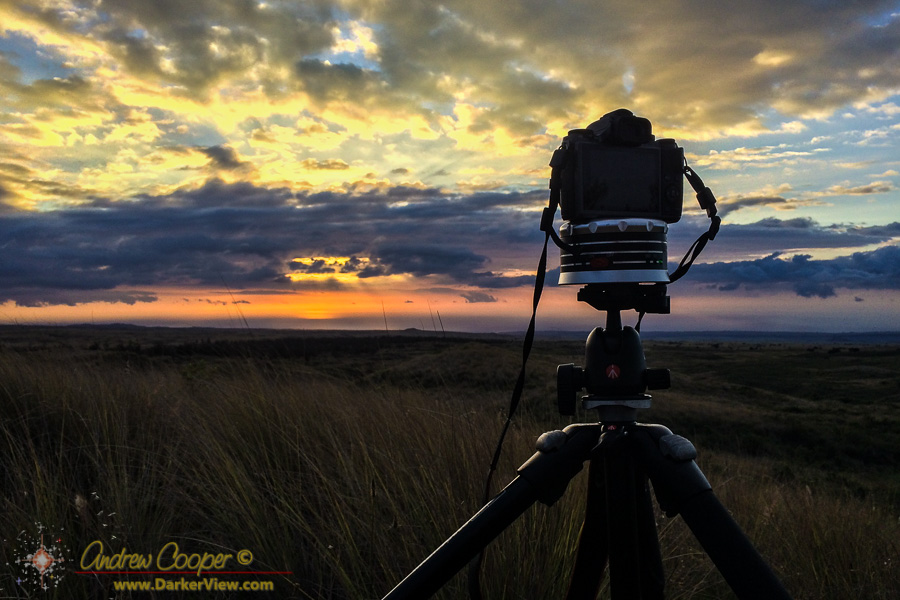
Having an array of cameras on the summit of Mauna kea that capture images all night long has advantages. While the cameras are intended to allow the telescope operators to monitor the weather, they do catch other atmospheric phenomena.
In this case is it a powerful blue jet, a form of upper atmospheric lightning. While these sort of events had been reported for decades, mostly by aircraft pilots, they were only acknowledged by meteorologists after they were first photographed in 1989.
My friend Steve Cullen first noticed the jet in an image from one of the Gemini North CloudCams. It jets upwards from a strong thunderstorm cell passing north of the island, part of the remains of Hurricane Fernanda.
Unfortunately our Keck CloudCam is pointed just a little too west to have captured this event. The next night our camera captures several red sprites, but they are rather distant.
The various cameras capture sprites and jets with a fair regularity anytime there are strong thunderstorms around the islands. If a hurricane is anywhere in the vicinity it pays to check the archives. This jet is bar far the most impressive yet.
Enjoy the image…
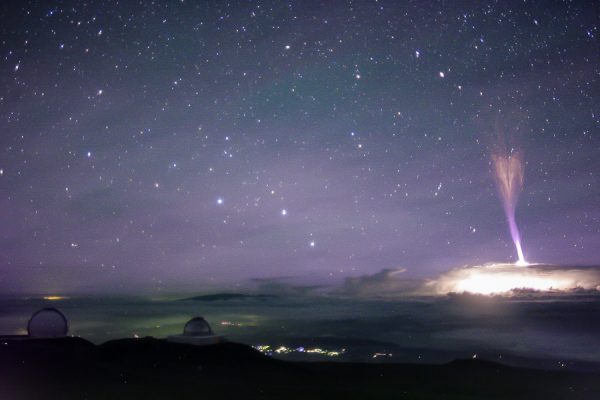
Update: On Facebook we were having a discussion about how tall the jet was. I calculated the image scale of the camera, a Canon XTi with a 20mm lens, arriving at about 59 arcseconds per pixel. I also measured the jet as 840 pixels high (there is some extension of the upper part in a hard stretch of the image). Thus the jet is 13.74 degrees high, now all you need is distance to the cell.
Tom Polakis found a good satellite image from the night in question showing the storm about 210 miles away from the summit of Mauna Kea. This and a little trigonometry shows the jet rose about 51 miles above the top of the storm clouds!
It has long been policy on the Mauna Kea summit road to use four wheel drive while ascending the mountain. One of the reasons given is to slow the formation of washboard, the annoying ripples that inevitably form on gravel roads.

On Mauna Kea an oft cited mantra is that the use of four wheel drive when ascending the mountain reduces the formation of washboard. I have always suspected this is a mountain myth with no substance. Where does this belief come from? Is there any real information on this?
There are a great many references that detail the practical details of maintaining gravel roads. Generations of highway engineers have spent a lot of time studying and writing about how to best maintain gravel roads at the least cost.
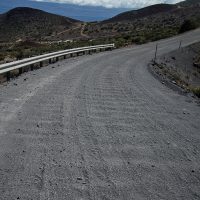
The US Department of Transportation highway Administration has published a lengthy guide to the problems and solutions of gravel roads. This guide dedicates a dozen pages to the issue of corrugation or washboarding. While multiple factors in the formation and prevention of washboarding are discussed there is no mention of 4WD vehicles being a factor.