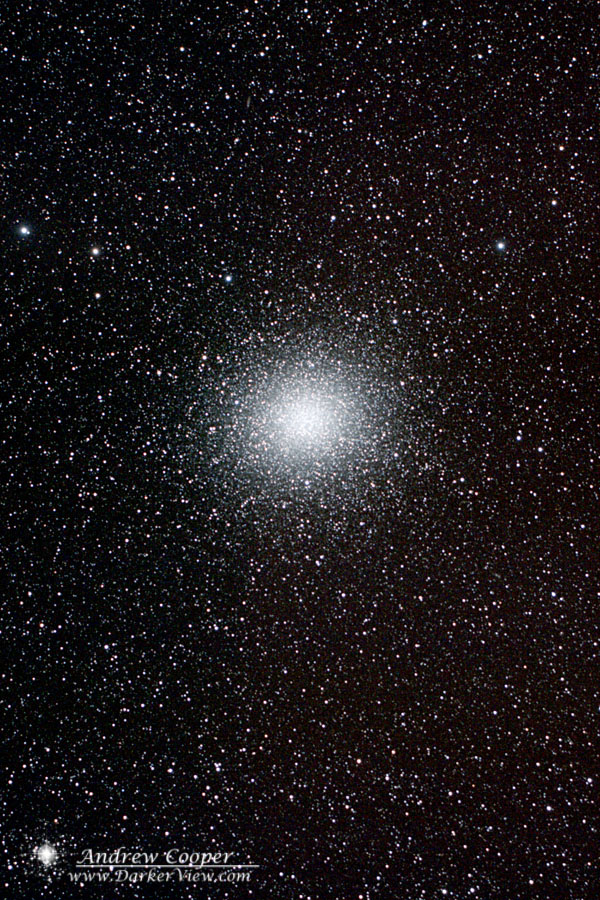
Omega Centauri
When you want to see the stars, find someplace dark

Exploring the cosmos
No, not produced by me. But a bit of video Keck & NSF commissioned to use in public venues. I have seen it a number of times, but recently stumbled over a copy posted to Vimeo. Just had to share…
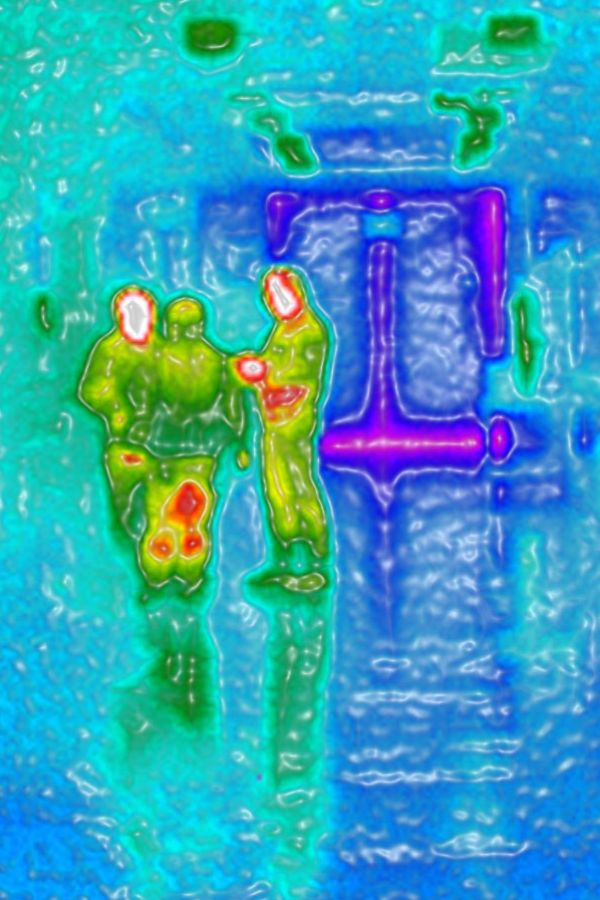
Keck Observatory with soundtrack by Big Empty FieldAnother processed infrared image from Mark Devenot. This time the subject is an everyday scene inside the facility with some of the crew standing in the hallway. The odd feature behind them is actually the large doors that lead into the Keck 1 Telescope dome. Everything looks much different in the thermal infrared…
How powerful is the K1 AO laser?
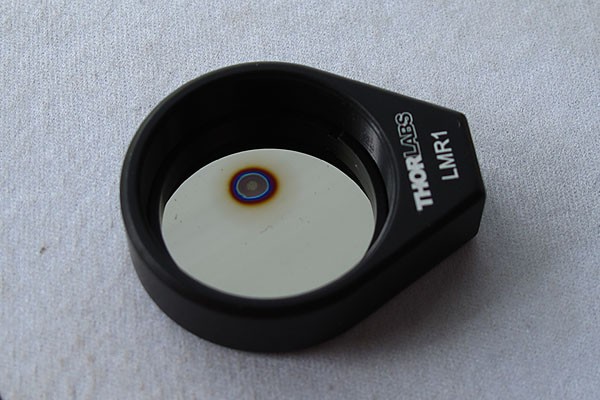
For someone who has lately been used to working around relatively harmless power levels, beams of a few milliwatts, this is a reminder that lasers are potentially very dangerous. With a milliwatt power level beam there is no danger in getting a hand in the beam, be mindful of your eyes, but otherwise not a lot of concern. This is vastly different, beam power here is measured in tens of watts… The bright yellow beam looks so innocent, appears so harmless. Give that beam a chance, a momentary slip, and it will burn you… badly.
Anything in the beam is at risk, even components we thought were robust enough to withstand the power levels. In this case a reflective ND filter that was to reflect most of the beam into a beam dump, allowing a small amount to continue up the beam train for use in alignments. So much for the ratings on the manufacturer’s data sheet, the beam punched through the coating and even started to melt the glass…
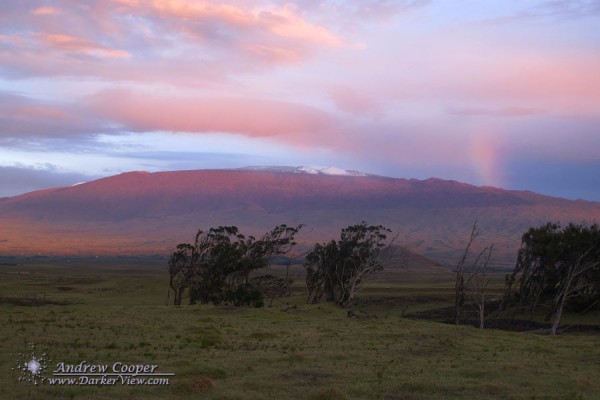
Waimea is a place of rainbows. So common are they here it is a rare day that goes by without at least one rainbow.
But what does a rainbow look like at sunset? When the Sun’s light is reddened by passage through so much air and haze. The bow will begin to lose all color except for red, this creates a red bow…
Shut it down! Shut it all down!
I get home from shopping in Kona and unloading a pile of groceries from Costco. Looking forward to a relaxing Saturday evening. That changed when I checked my e-mail.

Much of the systems on the summit are automated, up to and including sending e-mails when thing go wrong. The system works pretty well at letting the engineering staff know when attention is needed. The automated messages do tend to bomb a person’s inbox when it really goes bad.
Dozens of warning messages have flooded my inbox…
WARNING! K2AO temps are warm! dmrackTemp=45.42 degC, enclosTemp=37 degC
Ugly numbers indeed! 37°C is about 100°F in the AO electronics room. I have no choice… shut it down. Messages from MKSS indicate that the power lines have been hit by lightning and the power is out to the summit. The backup power is holding out, but the glycol cooling system is off. Without cold glycol flowing in the lines many of the rooms are without cooling systems to take away the heat generated by all of the computers and other electronics.
A re-post, but apropos at the moment…
A very nice musical compilation based on imagery of and from the Mars Rovers, Spirit and Opportunity. The set is put to some very appropriate music by Marian Call. Give it a listen while you consider the wear and tear of seven years on Mars…
One of the miscellaneous systems in the observatory that I have inherited is the weather station. A critical set of gear that has been neglected far too long. Neglected to the point our telescope operators had been complaining, loudly, about a system that frequently gives erroneous data or provides wildly oscillating readings.
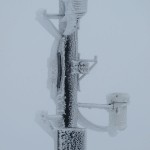
The first part I have replaced is the humidity and dew point sensor. In many ways the most important part of the system. The new unit is a modern sensor with a direct ethernet interface, simple to link into the observatory network. This is the same sensor used by the National Weather Service in their remote weather stations. All I had to do was spend a little money, and spend a day hanging off the weather tower on the observatory roof installing it. It was a beautiful, warm, sunny day up there, I got the job done, and got a slight sunburn in the process.
Walking through the room I somehow fail to notice just how much equipment is there. At night, with the lights off, the sheer quantity of LED’s and other indicator lights underscore the number of servers and other equipment the room contains. Every direction you look, the room is filled with equipment… The telescope control computer, network switches, terminal servers, instrument servers, the ACS controller and the telescope drive system itself. All necessary to keeping the telescope on-sky…

I have so many photos sitting on the hard drive, projects and ideas that remain un-realized. But every now and then I get around to completing one of those ideas and putting together something worth the effort. A couple winters ago I had an opportunity to shoot an entire 360° panorama from the top of Keck 2. I had set the camera on top of a toolbox and took photos steadily as the dome was moved through one complete rotation. A couple other photos were also taken that I could stitch into the result. The whole project made possible with the panorama features of Photoshop CS5. Twenty images were used to make the pano, resulting in a 105Mb image 26,000 pixels wide. The image shown here is downsized slightly…
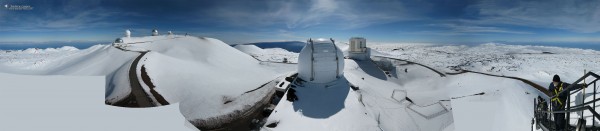
It was a great day, on top of the dome after a heavy snowfall, simply stunningly beautiful. Hard work as well, shoveling snow and chipping ice off the dome at nearly fourteen thousand feet. The fellows in the image are Bill Bates (top) and Mike Dahler (below), some of the great guys who keep Keck on-sky. Bill has since retired and is sorely missed on the summit.