




When you want to see the stars, find someplace dark

How do you organize your photos? The answer to that is critical. Anyone who generates a lot of images, and that is just about everyone these days needs to answer that question.

The trick is to develop a process and to use it… Religiously. I can not tell you how to do it, I can just tell you how I do it and offer a few suggestions.
There are two basic approaches, simply come up with a way to organize the images into a directory using nothing more than your operating system. The other approach is to use some form of photo organizing software to aid in the task. I do make a large assumption here, that the images are in digital format, not negatives and slides. For that you will have to look elsewhere for answers.
Today the planet Saturn will pass through opposition, directly opposite the Sun in our sky.
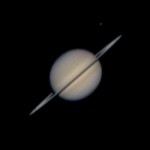
During opposition the planet and rings will be slightly brighter than normal, an effect known as the opposition effect. The effect is most notable in the rings where the apparent brightness can increase by 30%. The effect is a combination of two factors, shadow hiding and the retro-reflective properties of the ring particles.


All of the snow on Mauna Kea is gone again, the last forlorn patches disappearing in the last weeks of May. The glistening white has surrendered to the rich browns and reds of the cinder.
It was a bit of a bet among the crew as to whether the last patches would last until June 1st. Considering much of the snow in question fell just before Christmas, this was quite the run. Alas, the last bits were gone just before the 1st.
While we may get a light dusting or two over the summer anything heavier is unlikely. We had a fairly snowy winter over the 2016-2017 season. I wonder what next winter will bring?

Take a series of photos from the Juno spacecraft and just project them in sequence to make a timelapse movie of the spacecraft swinging past Jupiter. Sounds easy… Right?
Not easy at all. As the spacecraft orbited past the planet the perspective changes rapidly. To make a natural seeming animation much more would have to be done. Mathematician Gerald Eichstaedt did just that… Taking 36 images he projected each image on a mathematically modeled sphere, then panned through each image using the orbital trajectory of the spacecraft to create a view to simulate actually being there.
Further work by filmmaker Seán Doran smoothed the resulting video into an even more natural view. This created the video posted below. You can see the original video at https://www.youtube.com/watch?v=AuOy-shbQuM&feature=youtu.be
The result is simply stunning, take look at what it would have been like to be there as Juno swung past the planet just a few thousand miles above the cloudtops.
Jupiter: Juno Perijove 06 from Sean Doran on Vimeo.
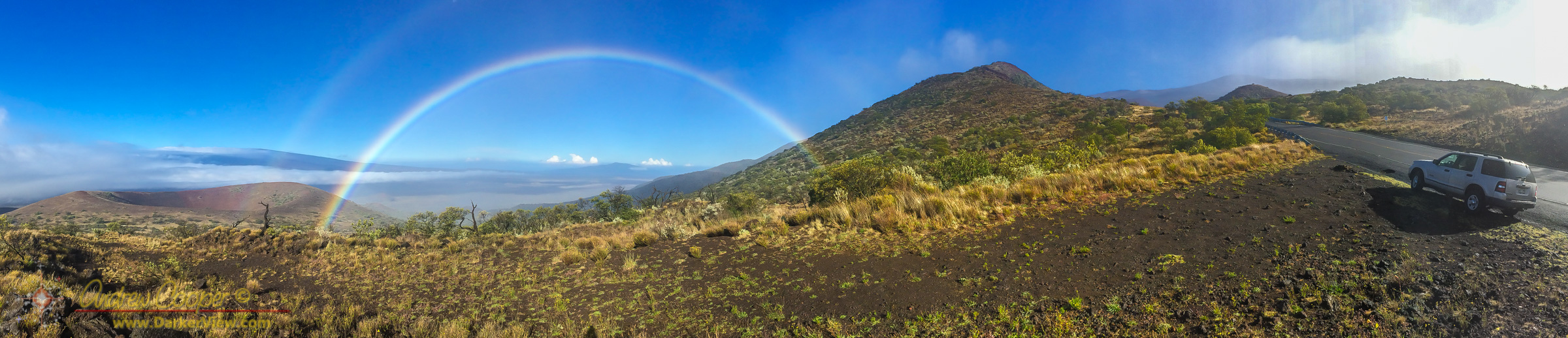
As you drive to the top of the cloud layer you hit a point where the fog and the sunlight mingle. This is often between 7,000 to 9,000 feet, a mile or three below Hale Pōhaku. Passing through this zone is often a beautiful event in the day, rainbows, fogbows and misty shadows fill the mountain air…
Today Venus is at maximum elongation, as high in the dawn sky as it will get for this morning apparition, about 45.9°. After today the planet will begin its slide back into the glare of dawn. It will disappear from view around the end of the year and reach superior conjunction on January 8th, 2018.
As Earth and Venus race about the Sun, Venus will complete about one cycle of appearances each year. We can expect one evening apparition and one morning apparition to occur in 2017.