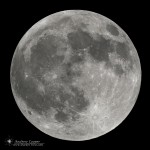
Full Moon taken 27Aug2007, 90mm f/12 APO and Canon 20DaFull Moon will occur today at 02:01HST.
This full moon will feature a penumbral lunar eclipse visible across the Pacific region. It will be well placed for observers in the Hawaiian Islands where the entire eclipse from beginning to end will be visible. Do not expect much, penumbral lunar eclipses involve only a slight dimming of the Moon, it is unlikely to be noticeable without instrumentation.
Still working on scanning the slide collection, I will probably be at it for years. Worth it though, so many memories. Here are a few images from a visit to Natural Bridges National Monument in 1993…
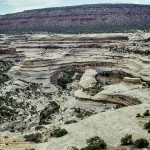
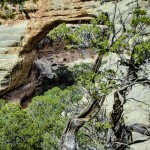
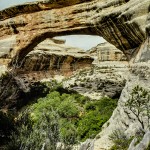
Sipapu Bridge at Natural Bridges National Monument
Sipapu Bridge at Natural Bridges National Monument
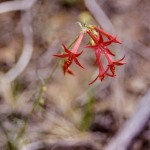
Skyrocket or scarlet gilia (Ipomopsis aggregata)
Sipapu Bridge at Natural Bridges National Monument
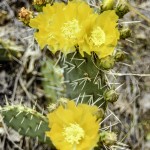
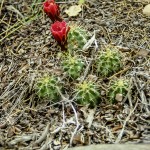
Pricly pear cacti bloom at Natural Bridges National Monument
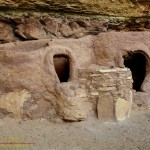
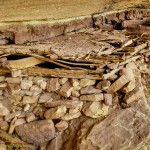
Horsecollar Ruins, an Ancestral Puebloan (Anasazi) site in Armstrong Canyon, Natural Bridges National Monument
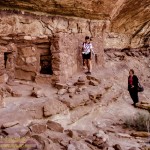
Deb and Joy Cooper explore Horsecollar Ruins at Natural Bridges National Monnument
Horsecollar Ruins, an Ancestral Puebloan (Anasazi) site in Armstrong Canyon, Natural Bridges National Monument
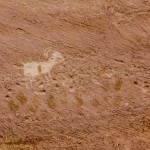
An Ancestral Puebloan (Anasazi) petroglyph in Armstrong Canyon, Natural Bridges National Monument
Claret Cup Cacti (Echinocereus triglochidiatus) in bloom
An Ancestral Puebloan (Anasazi) petroglyph in Armstrong Canyon, Natural Bridges National Monument
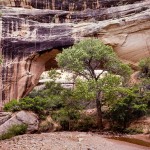
Kachina Bridge at Natural Bridges National Monument
The vernal or spring equinox occurs today at 18:30HST. Today there will be little difference between the length of the night when counted against the number of daylight hours. This is the first day of spring as marked by many cultures in the northern hemisphere.
Yeah, I did another Messier marathon, You know, that crazy exercise where you attempt to find all 110 Messier objects in a single night. A bit crazy, but also rather addicting. I am a somewhat of a purist, I use no computerized telescope, just a chart, a Telrad, and my knowledge of the night sky. This makes a Messier marathon a real challenge.
A few clouds wandering across the western horizon, some near, some far. At least there is some blue sky!I had invited a few other folks to join me at the Kaʻohe observing site on the side of Mauna Kea. A few other observers had indicated they would be there, I even had a DLNR permit for a small group to join me and a few extra checklists printed out. It was the clouds that convinced the others not to make the attempt. Thus, in the end I had the night to myself. Mostly.
Even if the clouds spoiled the event there was not much to risk. May as well pack up and drive to the site, as the organizer I pretty much had to be there in case any of the others responded to my invitation. This outing would not take much preparation, a cooler packed with munchies and drinks to get me through the night and one of my smaller telescopes. There is not much question as to which telescope I will use… Primero, my 6″ RFT and the veteran of many Messier marathons. it is this instrument with which I achieved my one perfect 110 score at the All Arizona Messier Marathon many years ago.
My first attempt at a proper Milky Way arch photograph. Not easy to stitch properly, but worth the effort! Click on the image for a file size large enough to properly enjoy…
The winter Milky Way arches over Hualālai with Orion and the setting Moon at the center, taken from the Kaʻohe observing site, panorama of five images taken with a Canon 6D and a Rokinon 14mm lens with over 300 degrees of horizon
The seeing was terrible, but at least we could see the Sun while much of the island was overcast and raining. I had hoped to set up in the parking lot for Puʻukohala Heiau but arrived a few minutes after they closed the gate. Instead I set up just below at Spencer Beach park.
Of course the telescope drew a crowd of folks who wanted a look. No matter, an eclipse is a slow motion affair with plenty of time to share the eyepiece. I showed my guests how to take photos with their cell phones at the eyepiece, so everyone got a photo or three of the event.
The solar eclipse of March 8th, 2016 taken from Spencer Beach State Park. Celestron C8 with a Canon 6D at cassegrain focus, 2000mm focal length
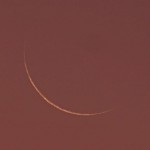
A very young moon over Waikoloa, this is only 26 hours after new, visible to the unaided eye as a sliver in the fading glow of sunsetNew Moon will occur today at 15:45HST.
A partial solar eclipse from Kawaihae, 9 May 2013Just a reminder that later today there will be a solar eclipse. This is a total with the path of totality passing north of the main Hawaiian Islands near Midway. For the Big Island this will be a deep partial, about 55%.