With aluminum shavings flying about I was enjoying an after work session in the machine shop.
Machining the mirror cell from an aluminum scuba tank on the latheMaking the heavy cuts to rough out the part I needed to remove a lot of material with a boring bar, I was cutting hard. The tool was also getting bogged down with aluminum sticking to the steel tool, to prevent this I was using a little machine oil while cutting. Predictably things got hot and started smoking, no problem, just stop and let the metal cool as I watched a streamer of smoke waft up from the spinning part.
Then the fire alarm goes off.
A moment of disbelief ensues, this had never happened before, and this was certainly not the first time I had created a little smoke in the machine shop. Nothing to do but call our facilities manager and let him know that I had just set off the fire alarm, not that he could mistake the loud ringing in the background of the phone call.
I also realized that earlier that day the fire alarm company had been about, replacing old sensors on the alarm system. This had to be related. With my phone call complete I joined everyone else outside. Admitting responsibility led to a round of good natured joking at my expense… Yeah, I will hear about this for a while.
Fire alarm reset everyone went back to work. I hope my disruption of the night crew preparing to observe was not significant. It was still quite light out and observations had not yet begun. I returned to finish the part, this time carefully not creating any smoke in the process.
The next day I found out what really happened. It had been decided to replace the heat detectors in the machine shop with smoke detectors. To my mind not a great decision, they will get set off. It is not a question of if, but when and how often. I just find it amusing that this occurred the first day. No worries, I expect it will get fixed. The same person who made that decision gets the phone call when the alarm goes off. Sufficient motivation to deal with the problem I expect.
First light is complete… It works very nicely, the images of rich star fields and sweeping nebulae are worth the hours of work it takes to complete the fabrication of a telescope.
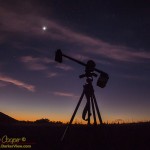
Makaʻiki under the stars for the first time at Hale Pōhaku on the side of Mauna KeaThe telescope is Makaʻiki, a new 6″ travel scope. Hours of design, cutting and drilling, sanding and spraying paint. There is nothing particularly hard about building a telescope, but it always takes more work that you remember from the last.
As usual the most difficult part of assembly is the last. Installing and aligning the optics. Adjustment of the secondary mirror for the correct position takes an hour of mucking about with allen keys, a Cheshire eyepiece, and a laser collimator. Get it centered, get the tilt right, correct placement of the secondary is critical for good performance of the telescope.
The final step is first light, the traditional ceremony when a new telescope is aimed at the sky for the first time. My traditional first light target is M42, the Great Orion Nebula. An old friend and telescope maker, Bob Goff, often stated he would like to tour this nebula in spirit after he died. I do not know if he made it, but I remember him each time I commission a new telescope and peer at the beauty of this nebula.
Given the time of year I had to get up before dawn for a view of this nebula. Driving uphill from the village I could see Orion rising above the dark shadow of Mauna Kea. In the predawn darkness I set up near Hale Pohaku for my first light checks. Set up is a bit grandiose for this telescope, there is not much to it. Open the tripod, set the scope on top, take the covers off and aim at the sky.
The first object to focus in the telescope was M42, the nebula appearing quite nice at low power. The 40mm eyepiece gives a 3.3° field at about 19x, wide enough to comfortably fit the entire nebula region in the field, from NGC1980 to NGC1981. From there I wandered about the sky… M1, M78, M79, M41, M35 made for a nice sampling of objects.
Higher powers shows that collimation can be a bit touchy in the ‘scope, not a surprise given the single strut design.
There were also three bright planets in the dawn. The brilliant Venus is shining near its maximum brightness right now, showing a nice crescent in the telescope. Mars is still too far away to show much of anything and Jupiter was still quite low in the brightening dawn, the moons barely visible.
First Light complete I knew that the effort to create a new telescope was worth it. Makaʻiki performs as designed. With a sense of satisfaction I headed uphill for breakfast and to join the crew for a day on the summit.
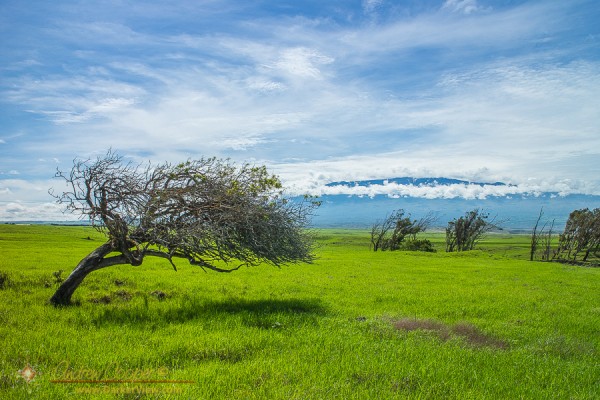
Processing the photo I realized I could not make it green enough. If I pushed the saturation far enough to resemble reality I would be accused of over-processing the image. Yes, the ranch lands around Waimea and Waikoloa are that green right now.
The normal annual rainfall in Waikoloa is about 12 inches. Over the last few weeks we have received eight inches in our unofficial rain gauge on the front lanai. Normally summer is the dry season here, with most of the rainfall occurring during the winter months. The result is endless green across the mountainside.
As the rains have continued this last weekend, another half inch in the rain gauge, it will stay green. Eventually the rains will come to an and, everything drying out, returning the pastures golden brown again. Then, of course, the mice will come.
The pastures around Waimea are currently vivid green.
A very young moon over Waikoloa, this is only 26 hours after new, visible to the unaided eye as a sliver in the fading glow of sunsetNew Moon will occur today at 20:41HST.
An international team of astronomers has discovered a distant massive galaxy cluster with a core bursting with new stars. The discovery, made with the help of the Maunakea-based W. M. Keck Observatory and Canada-France Hawaii Telescope, is the first to show that gigantic galaxies at the centers of massive clusters can grow significantly by feeding off gas stolen from other galaxies. The study has been accepted for publication in The Astrophysical Journal.
A massive cluster of galaxies, called SpARCS1049+56, can be seen in this multi-wavelength view from NASA’s Hubble and Spitzer space telescopes. Credit: NASA/STSCI/ESA/JPL-Caltech/McGill“Clusters of galaxies are rare regions of the Universe consisting of hundreds of galaxies containing trillions of stars, as well as hot gas and mysterious dark matter,” said the lead author, Tracy Webb of McGill University, Canada. “The galaxies at the centers of clusters, called Brightest Cluster Galaxies, are the most massive galaxies in the Universe. How they become so huge is not well understood.”
What is so unusual about SpARCS1049+56 is that it is forming stars at a prodigious rate, more than 800 solar masses per year – 800 times faster than in our own Milky Way.
This surprising new discovery was the result of collaborative synergy from ground-based observations from Keck Observatory and CFHT as well as space-based observations from NASA’s Hubble, Spitzer and Herschel Space Telescopes.
The Keck Observatory data was gathered by the powerful MOSFIRE infrared spectrograph and was crucial to determining SpARCS1049+56’s distance from Earth as 9.8 billion light-years, that it contains at least 27 galaxies and that it has a total mass equal to about 400 trillion Suns.
The cluster was first identified from the University of California, Riverside-led, Spitzer Adaptation of the Red-sequence Cluster Survey, or SpARCS, which has discovered about 200 new distant galaxy clusters using deep ground-based optical observations combined with Spitzer Space Telescope infrared observations.
Because Spitzer and Herschel Space Telescopes detect infrared light – enabling observers to see hidden, dusty regions of star formation – they were able to reveal the full extent of the massive amount of star formation going on in SpARCS1049+56. However, the resolution of the infrared observations was insufficient to pinpoint where all this star formation was coming from. Therefore, high-resolution follow-up optical observations were performed by the Hubble Space Telescope to reveal “beads on a string” at the center of SpARCS1049+56 which occur when, similar to a necklace, clumps of new star formation appear strung out like beads on filaments of hydrogen gas.
“Beads on a string” is a telltale sign of something known as a wet merger, which occurs when at least one galaxy in a collision between galaxies is gas rich, and this gas is converted quickly into new stars. The large amount of star formation and the “beads on a string” feature in the core of SpARCS1049+56 are likely the result of the Brightest Cluster Galaxy in the process of gobbling up a gas-rich spiral galaxy.
Floating down a century old irrigation canal is an excuse for a lot of photos. More than fit in the article that posted yesterday. I put a bunch more photos in a quick slideshow…
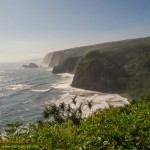
A view along the North Kohala Coast from near Pololu Valley, photo by Deborah Cooper
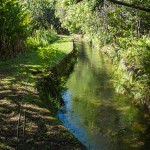
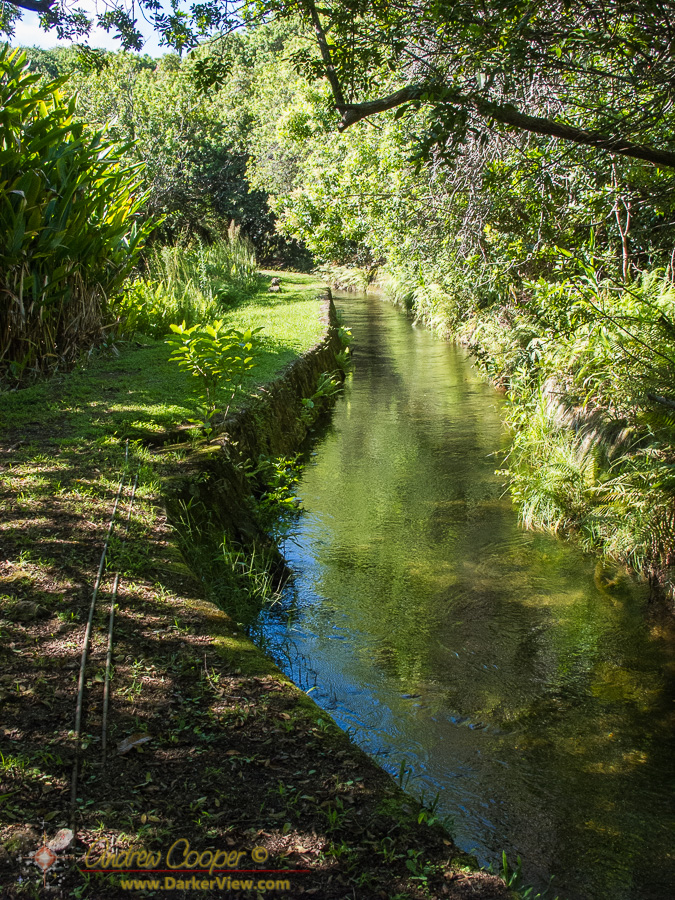
The Kohala Ditch irrigation canal winds its way around the mountain, photo by Deborah Cooper
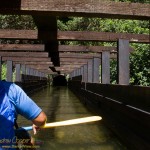
Flumin’ Kohala guide Virgil paddles a kayak along the Kohala Ditch, photo by Deborah Cooper
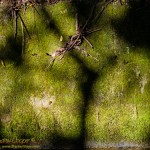
Moss and shadow along the walls os the Kohala Ditch, photo by Deborah Cooper
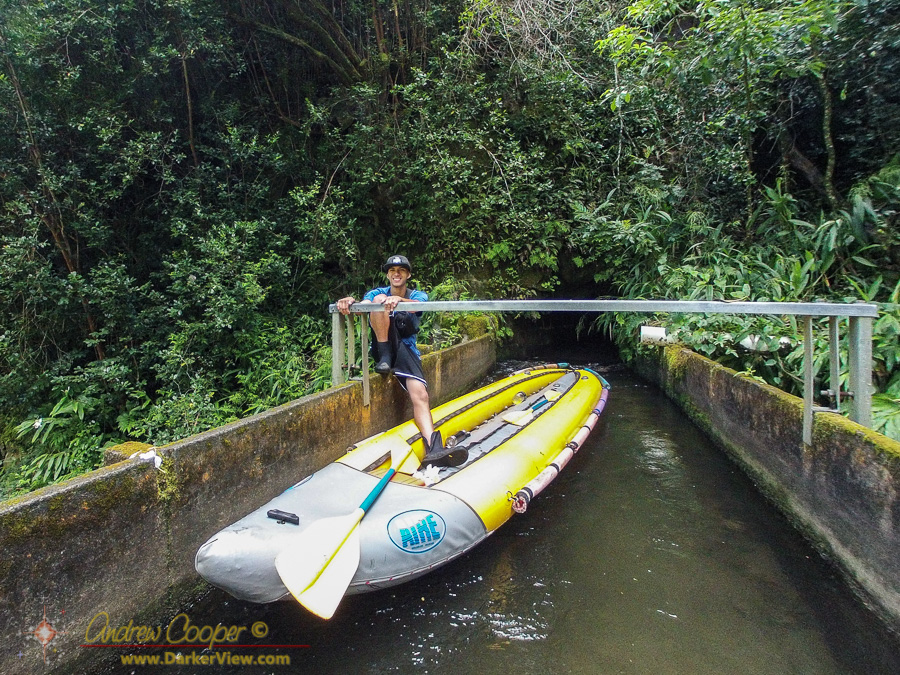
Flumin’ Kohala guide Austin holds our Kayak while we get out to take some photos.
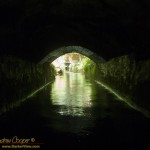
Light at the End of the Tunnel
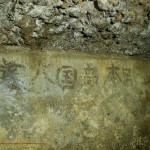
Japanese Kanji in one of the tunnels along the Kohala Ditch, photo by Deborah Cooper
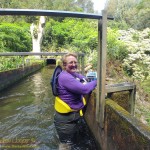
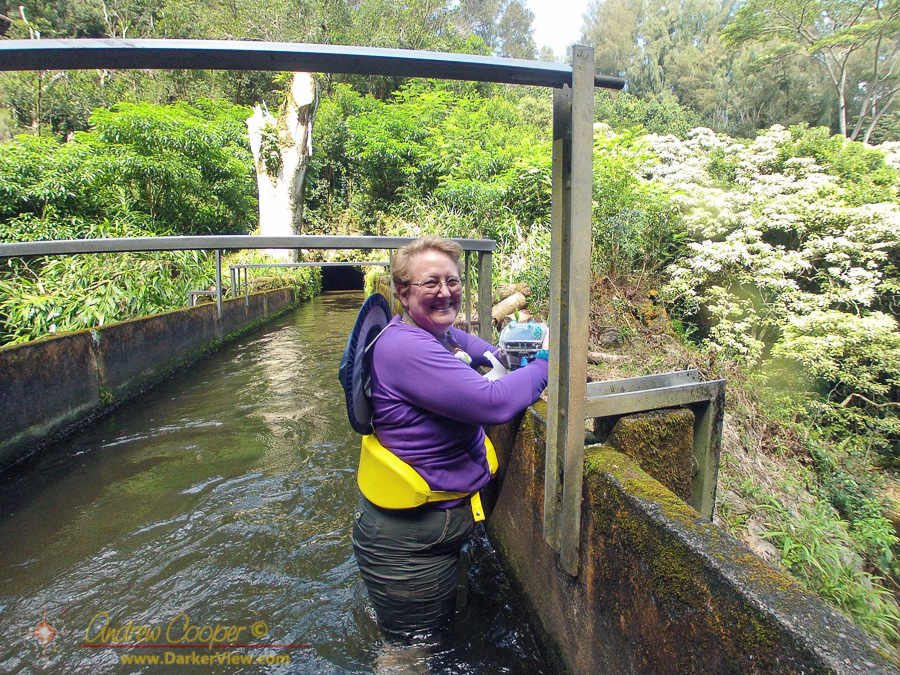
Deb standing in a flume along the Kohala Ditch
The Kohala Ditch irrigation canal winds its way around the mountain, photo by Deborah Cooper
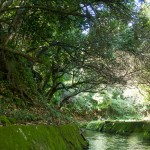
A stream in the North Kohala rain forest, photo by Deborah Cooper
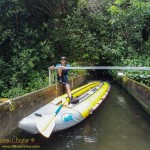
Deb and Andrew, your author, floating down a ditch
With the water conditions remaining poor for diving, it was time to consider some other activity for the Labor Day weekend. Recalling a news release from a few months ago I had an idea… Flumin’ Kohala.
The century old Kohala Ditch irrigation canal that winds its way around the mountainThe fun is in using kayaks to explore one of the old irrigation canals that is carved into the mountains above Hawi. Tours of the ditch are available as a tourist excursion. Reserving our trip for a Sunday morning Deb and I were lucky, we got a private tour, the only guests for the trip. The months of September and October are a slow season for businesses that depend on tourists after the start of school and before the holidays begin. Locals know this is the best time to go do many activities as the crowds are sparse.
Flumin’ Kohala offers two tours a day, an 8am tour and another at 12:30pm. I knew that the earlier tour was far more likely to offer clear blue skies and rain free conditions. In the afternoon the clouds often build along this coast, creating the rain that the irrigation canal is designed to collect.
This tourist attraction has been closed several times when the canal was damaged. The 2006 earthquake destroyed one flume and damaged others forcing the kayak tour to close. This was eventually repaired allowing tours to begin again. In early 2015 the canal was again badly damaged, this time by heavy rains and flooding, forcing tours to cease. After repairs the tour was restarted, this time by the ditch operator instead of contracted out. Thus the new company is locally owned and employs local residents. All of our guides were guys that grew up in North Kohala, full of information about the area.
Deb standing in a flume along the Kohala DitchConstruction started in 1905 and took 18 months to complete. The fourteen miles of ditch and tunnels were carved into the rock by hand, Japanese laborers working for a dollar a day. Tunnels over a thousand feet long were bored through the ridges, with sections of elevated flumes crossing the gulches. In many places the canal exits a tunnel, crosses a bridge, then immediately enters another tunnel. Completed on schedule the final cost was $694,000 in 1907 dollars, the equivalent to over $18 million today. Seventeen men lost their lives carving this ditch into the mountain.
The water was used to irrigate thousands of acres of sugarcane and to supply the five sugar mills that once operated along the Kohala Coast. While sugar production ceased in the 1970’s the canal system continues to supply water to local ranchers and a nursery.
Today it is the employees of Flumin’ Kohala that maintain the canal system as well as providing tours. Repairing the old stonework, clearing debris and sediment from the ditch and pruning back the rain forest that would quickly overgrow the canal. Water level is maintained through a system of sluice gates that must be adjusted with the rainfall to let water out of the ditch where needed.
Flumin’ Kohala guide Austin holds our Kayak while we get out to take some photos.It is the tunnels and bridges that make this section of canal so spectacular. The tunnels seem to go on forever, the proverbial light at the end of the tunnel disappearing as the channel curves and bends inside the mountain. A headlamp is provided to every guest, but I had my diving video light along providing a flood of bright light that drowned out the small headlamps and lit up the tunnel for photography. Our guides were asking where they could buy something like that!
Midway we stopped an got out to enjoy the view from one of the flumes crossing a pretty gulch and waterfall. Of course there is no trail here, getting out meant we were standing in a couple feet of flowing water wading across a bridge. Usually one wades under bridges, not over them. Everything about this tour was definitely unique!
The laborers who carved and maintained the canal system left marks of their passing. In a few places Japanese Kanji characters can be found along the tunnel walls, preserved underground. Thousands of hand carved blocks of stone line the tunnels and banks of the canal, a testament to the craftsmanship of those who built.
As the website strongly warned us… You will get wet! We wore swimsuits under our shirt and shorts, good choice. I wore a set of hiking sandals, Deb a pair of scuba booties. For cameras I used the GoPro while Deb shot a G11 in the waterproof housing. My sturdy canvas hat was a good choice as well, protecting my scalp from the tunnel ceilings a few times. Wet we got! As recommended we brought towels and the Flumin’ Kohala office has large bathrooms set up for changing into dry clothing when you finish the tour.
I was expecting a fun day, Flumin’ Kohala was more fun than I expected. This was no short trip, the miles of canal and tunnels just kept flowing past. This is an adventure well worth the cost. Great guides and a fascinating experience provided just the thing for an otherwise quiet Sunday.
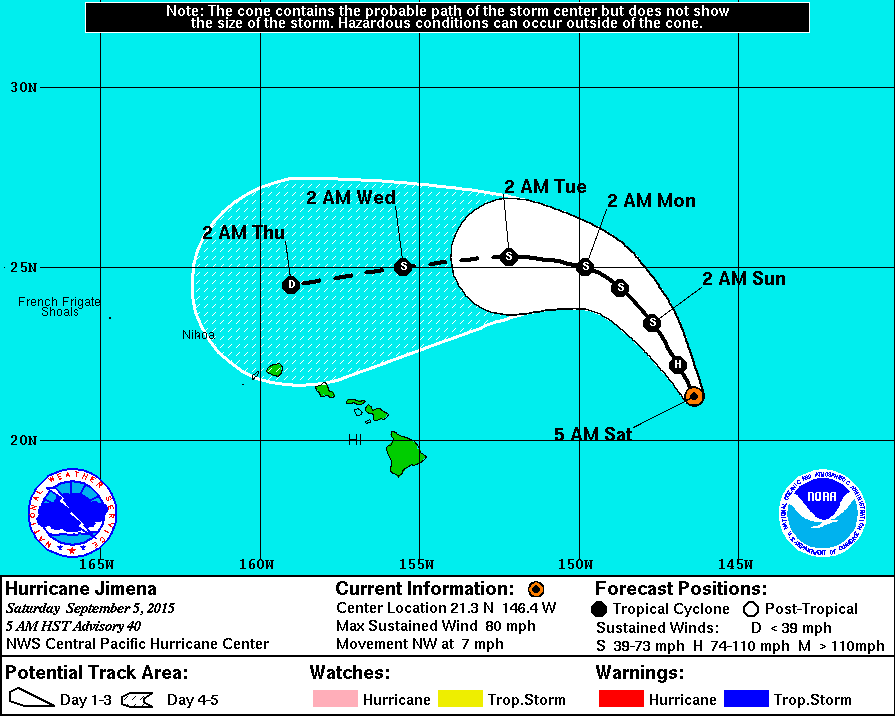
Predicted hurricane tracks continue to be the subject of conversation around the islands. The latest now shows Jimena curving back at the islands, when the predictions from five days ago showed the storm tracking off to the far north. Really?
At least it missed our island. Now it is the residents of Oahu and Kauai that need to worry.
The predicted course of Hurricane Jimena, 5 Sep 2015
Today Mercury will be at maximum eastern elongation, as high in the evening sky as it will appear for this current apparition. After today the planet will slide back into the sunset, passing through inferior conjunction on September 30th and reappearing in the dawn during the first weeks of October.
A small box with my name upon it, sitting on the shelf in our shipping department for me to pick up. The procedure is simple… Grab the box and note your receipt on the clipboard hanging at the end of the shelf.
A ribbon cable, one of three in a shipment.I have been awaiting this shipment for a while now, hoping to continue a project to build a new test fixture. But the shipment is not complete. The latest box contains three little bags, not what I am really hoping for.
What is it this time? I open the box, open one bag, take out the anitstatic bag within that and find… A ribbon cable.
I just have to sit back and stare at this in sheer disbelief.
The disbelief has been building for a week now as the boxes have appeared in our shipping department one by one. A single order, a pair of A/D units and accessories. I have now received four separate boxes, all delivered FedEx, and not received the actual A/D systems themselves, only the various accessories.
One box with three double bagged ribbon cables that weigh all of a few ounces each and are ten inches long. All of the accessories I have received in the four boxes could easily have fit in one box. The anti-static bag is even more unbelievable. These metallized mylar bags are not cheap. Why would you put one around a component that is totally immune to static damage? A ribbon cable with connectors at each end? To be static sensitive it would have to at least contain a semiconductor component of some sort. One transistor? Then you seal a poly bag around that? At least it was brown paper and not foam peanuts used to fill the rest of the box.
With this order National Instruments has by far topped the worst overpackaging I have seen to date. Quite something in the electronics industry where overpackaging is the norm. It used to be Digikey was the worst I had ever seen, but they have gotten much better over the last few years, shifting to all brown paper packaging aside from the plastic bag around the parts themselves.
How is it even possible to receive a small order in four separate FedEx shipments and not even get the primary thing you ordered? To Hawaiʻi? How can you construct a shipping system that inefficient and make any profit after paying the shipping bills? It is not like any of the accessories do me any good without the main units, no need to rush them. One box with everything would be quite acceptable.