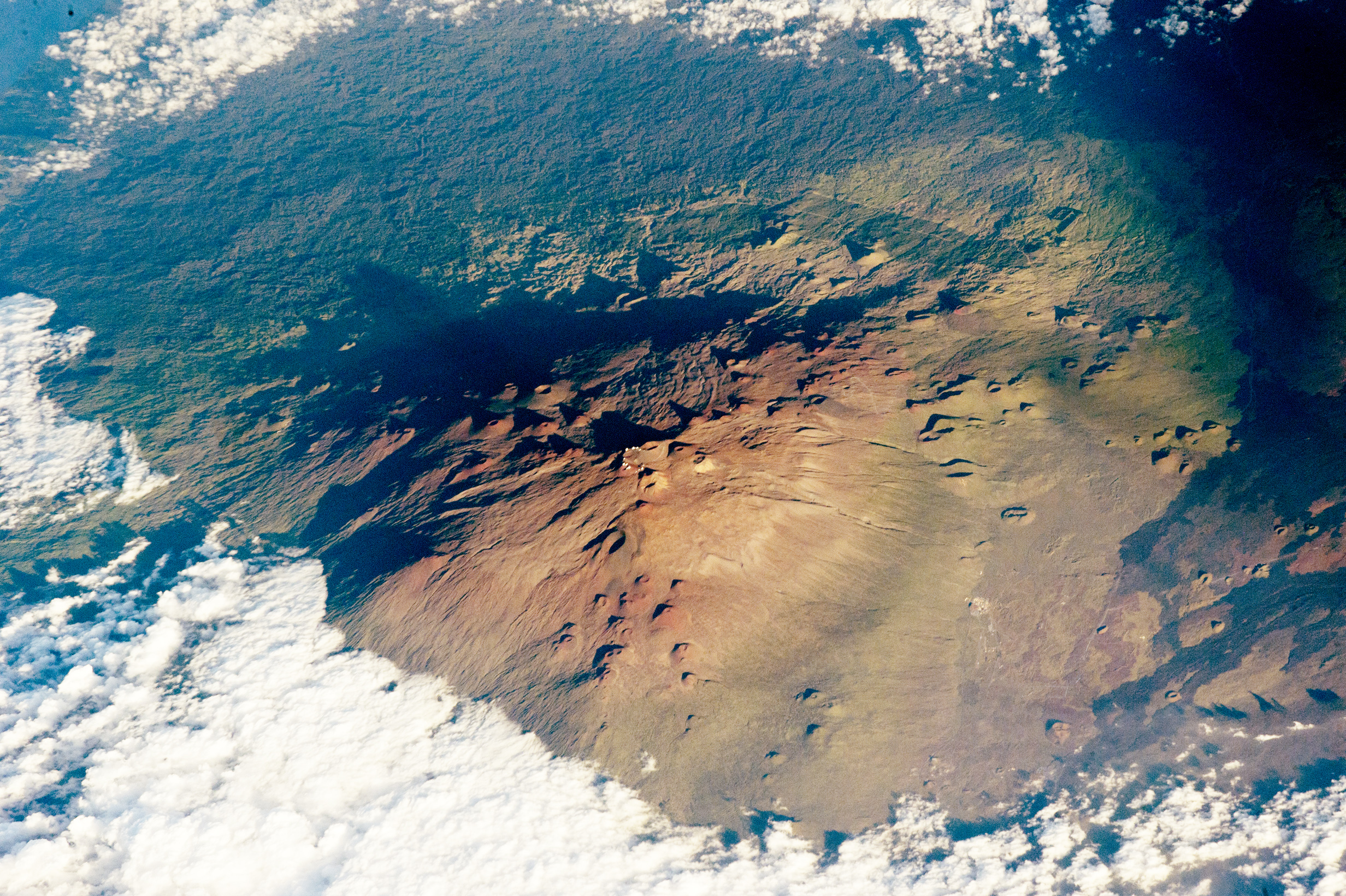
Looking for a site that is a bit closer to home than driving all the way to the Mauna Kea VIS? Maybe not quite as high up the mountain, not as cold or windy? There is not a lot to choose from on Mauna Kea, much of the land is controlled access, either DLNR or private ranch land. Locked gates are the standard solution around the island.

There is a gate that is generally not locked. The hunter check-in station at Kilohana that provides access to the Kaʻohe game Management Area. Starting at 5,700 feet from the Old Saddle Road the R-1 road climbs the mountain from here.
The actual spot I use is a staging area used by DLNR crews, hunters and the ATV riders who normally frequent the area. From the neat lines of pine trees it looks like the site was once a homestead or ranch house of some sort built high on the side of the mountain. It is about 1/4mile above Old Saddle Road and the Kilohana hunter check in station and directly adjacent to the R-1 road.
As usual you need to obey DLNR rules for access to the site. The R-1 road is designated a public access trail under the Nā Ala Hele trail system, so a permit should not be required. You must not be “camping”, this is defined by the DLNR as being in possession of “camping paraphenalia”, like sleeping bags, tent, etc., during the hours of darkness.
There is a sign in and out form at the hunter check-in station. The DLNR states that 4WD is required to use the R-1 road, but in reality the old homestead could be reached by any vehicle, the first part of this road is quite nice, basic gravel, the rough stuff is far higher up the mountain.
The site has many advantages. It is just far enough off the Old Saddle Road as to avoid vehicle headlights. Not that there is much traffic on the old road, the new road has accommodated most of the across island traffic and it is miles below the site.
One of the best features of the site is shelter from the strong trade winds that sweep across the island. The trades are generally from the northeast, while the site is on the southwest flank, sheltered in the lee of a 14,000ft mountain. I have seen days when the trades were howling in Waimea and Waikoloa, while it was dead calm at Kaʻohe.
You can get some fog and dew here in the evening. At 5,800 feet elevation you are just at the top of the inversion cloud level, sometimes just below. When it is clear it is glorious here, but you can get evening fog until the cooling night allows the sea breeze to wane and the cloud level to subside. You can always pass the site up and head on to the VIS if the cloud tops are higher.
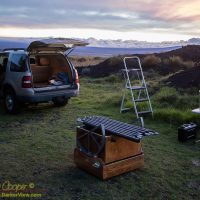
As with any site on the slopes of Mauna Kea, air currents around the mountain can cause some seeing issues. The site should be less susceptible to cold down slope flows than the VIS area as it sits upon a ridge line, not a depression.
The game management area can occasionally be closed to access by the DLNR for one reason or another. You can check the DLNR website or the Nā Ala Hele trail system webpage. Closures should also be marked at the hunter check-in station.
The site is most easily reached from the new Saddle Road (Daniel K. Inouye Highway) in the valley below. Turning up the old road near milepost 42 and driving one mile up to Kilohana. If you see the girl scout camp you missed the turn by a bit.
I have used the site many times, and have also observed from the nearby Kilohana Girl Scout Camp, and been very pleased with the observing. I suspect I will use the site again in the near future.
Directions from Waimea

- Drive south on the Mamalahoa Highway towards Kona
- 6.2 miles from the Lindsey road light you will reach the old Saddle Road intersection, turn left uphill
- Proceed 10.2 miles to the Kaʻohe GMA entrance with a sign and yellow gate, the signs also say Kilohana Hunter Check-In Station
- Proceed 0.2 miles on the dirt road to the site, the site is on the left in front of the pine trees
Directions from Kona
- Drive 24 miles north from Kona on the Mamalahoa Highway (upper road)
- Turn right on Saddle Road (Daniel K. Inouye Hwy.)
- Proceed 9.6 miles on Saddle to the Old Saddle intersection
- Turn left onto the Old Saddle Road
- Proceed 1.1 miles to the Kaʻohe GMA entrance with a sign and yellow gate, the signs also say Kilohana Hunter Check-In Station
Proceed 0.2 miles on the dirt road to the site, the site is on the left in front of the pine trees
Directions from Hilo
- Drive across island on Saddle Road (Daniel K. Inouye Hwy.) to near milepost 42
- Turn left up the old Saddle Road
- Proceed 1.1 miles to the Kaʻohe GMA entrance with a sign and yellow gate, the signs also say Kilohana Hunter Check-In Station
- Proceed 0.2 miles on the dirt road to the site, the site is on the left in front of the pine trees