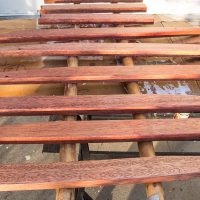
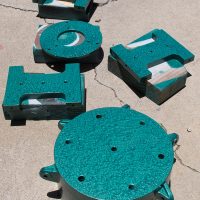
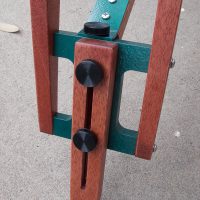
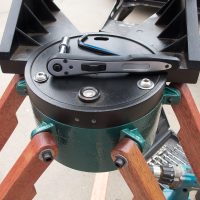
I do enjoy a nice project I can work on, get my hands dirty, and use my skills. A classic telescope in need of restoration? Just the thing.
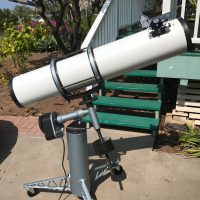
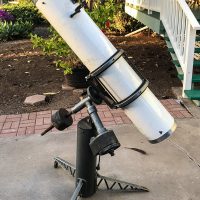
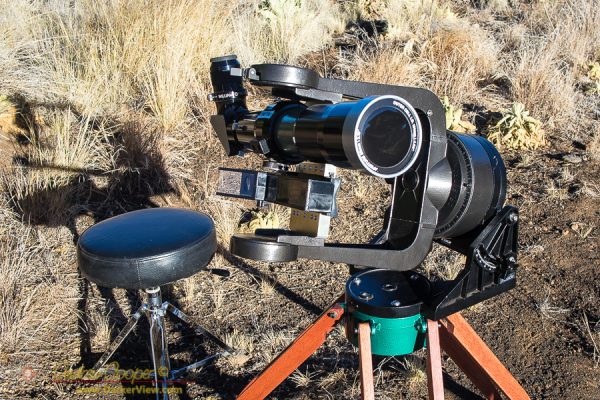
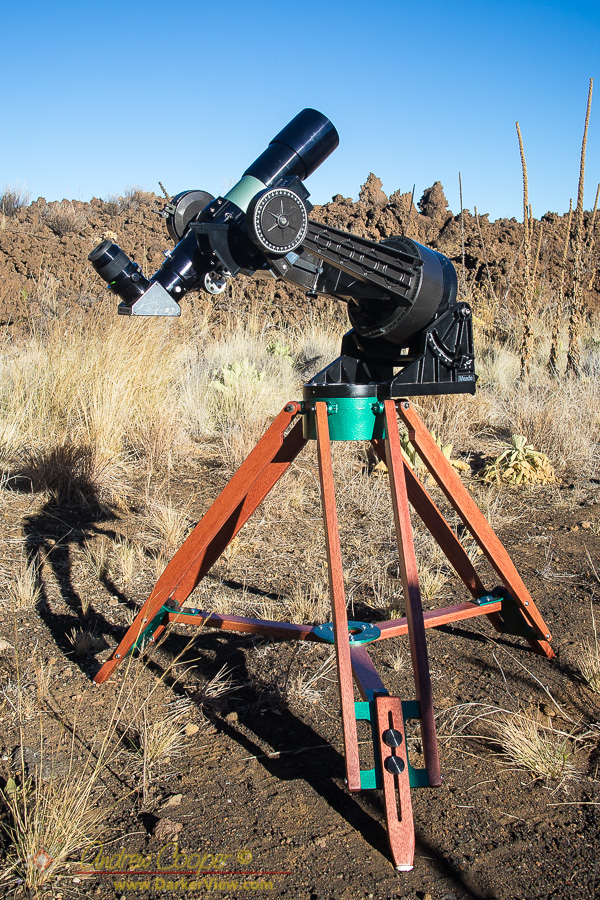
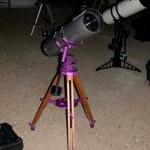
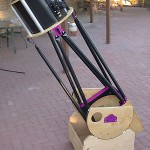
A restored Cave Astrola 8″ f/6 Lightweight Deluxe
This telescope was literally rescued from the trash. Matt, the owner of the excellent Mountain Road Cycles in Waimea found the telescope at the transfer station.
Matt put a message into the folks at the observatory, who represent more than a few of his customers. The info was quickly forwarded to me, as everyone here knows I build and restore telescopes for fun.
Restoring the 8″ Cave Astrola has me again looking at these classic telescopes. Reading the history of Tomas Cave and Cave Optical. Looking at the old advertisements and remembering things long thought forgotten. I may never have owned one before, but the Astrolas still had an impact upon me years ago.
My Astrola is now operational, with final assembly and collimation completed a week ago. So far I have used it for several evening sessions of observing from the driveway. The result is several pages of notes in the observing log, wandering through nebulae, clusters, and binary stars in Orion, Canis Major, and Puppis.
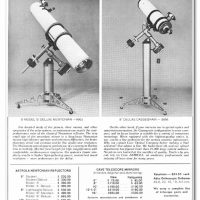
Cave Optical Advertisement 1970, from Phil HarringtonWhen I was just starting my journey in astronomy the Cave Optical advertisement in each month’s Sky and Telescope was something to inspire dreams in a young teenager. In many ways those dreams have never been forgotten.
Yes, a new/old telescope has arrived at Andrew’s Home for Wayward Telescopes… A beat up and neglected 8″ Cave Astrola. The new arrival has me thinking of the other telescopes that have come through recently…
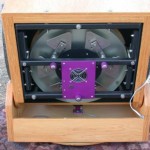
Yes, Andrew’s Home for Wayward Telescopes has a new resident, an 8″ f/6 1978 vintage Cave Astrola.
The 8″ Cave Astrola as it arrived
This telescope was literally rescued from the dump. Matt, the owner of the excellent Mountain Road Cycles in Waimea found the telescope at the transfer station.
I have previously published a description of Hodgepodge, the mish-mash mount I used for the solar eclipse. While I wrote about the mount, and posted some photos, I did not really cover the construction. Now for some details…
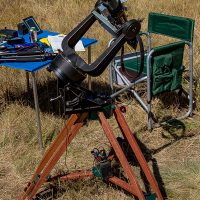
Hodgepodge set up at Grant’s Spring to photograph a total solar eclipse
A few months back I rebuilt the drive unit of an old Celestron mount, installing a drive corrector into the base unit in the process. I have used this sidereal drive for time lapse, but it can also be used to mount a telescope again. Better yet, with a few minutes reconfiguration, it can do either.
With the solar eclipse looming on the calendar I realized I needed a tracking mount to allow photography. Tracking would allow me to keep the Sun and Moon in the field without wasting precious seconds framing the image during the eclipse. It would also enable longer exposures without motion blurring the image.
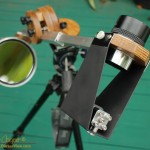
In the end it is a Celestron C8 telescope drive and forks containing custom electronics, a Meade heavy duty wedge from an LX-90, a hand-made tripod, holding a Televue 76mm APO telescope, using a Vixen style dovetail base, with a Baader film solar filter.
It is tempting to call it Frankenscope after the similarities with the classic monster.
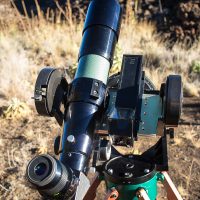
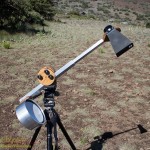
Hodgepodge setup on the side of Mauna Kea with the TV-76mm and Telrad on the plate
To further add the the Mary Shelley plot similarities, much of this was revived from the junk pile. I very nearly decided to toss the drive and fork, they were that bad, peeling paint and rusty bolts. A great deal of work was necessary to re-animate these components.
The wedge came from a telescope that was killed in an unfortunate incident with an aquarium heater. The heater was used to de-humidify the OTA and prevent fungus on the optics. Note: Aquarium heaters are not made to operate out of water.
The Hodgepodge mount assembled for the first time
Several new aluminum parts were machined from scraps, some of which were scavenged when the observatory shop was being cleaned out and a lot of metal stock was tossed.
Many of the electronic components used to build the drive corrector were also scavenged parts from dead electronics, this includes the 1.8432MHz crystal that forms it’s beating heart. This heartbeat keeps the mount turning at exactly sidereal rate.
Yeah, you could call it Frankenscope.
But I will call it Hodgepodge.
The Hodgepodge mount assembled for the first time
The legs and other parts of the field tripod with a fresh coat of polyurethane
Parts for the Hodgepodge field tripod drying in intense tropical sunlight
The extendable foot section for the Hodgepodge field tripod
The Meade wedge bolts to a Celestron field tripod head without modification
Hodgepodge setup on the side of Mauna Kea with the TV-76mm and Telrad on the plate
Hodgepodge setup on the side of Mauna Kea with the TV-76mm and Telrad on the plate
Telescope clock drives from the 1980’s or earlier often used AC synchronous motors. These commonly available AC motors are used to power timeclocks, record player turntables, and telescopes, anyplace a motor needed to run at a very accurate speed.
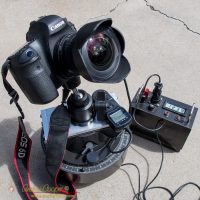
A Celestron telescope drive configured as a sidereal rate tracking camera platform
The speed of a synchronous motor is set by the frequency of the powerline, in North America and many other places this is 60Hz. As the frequency must be synchronized for every power station on the grid the frequency is quite accurate, a feature exploited by clockmakers and telescope builders. Once found everywhere these motors are less common, but are still around.
Drive Correctors
It was the common use of these motors in telescope drives that led to the invention of the drive corrector, a device that was once a required piece of kit for serious amateur astronomers. Drive correctors like this were needed when operating from a battery at some remote location, generating AC from a 12Vdc car battery.
You also needed a drive corrector for guiding while doing astrophotography. The corrector could speed up or slow down the telescope drive a bit to correct the telescope drive speed and stay on target, something not possible with the fixed 60Hz of the mains supply. Thus the term drive corrector.
Gluing the mirror box for Deep Violet, and 18″ f/4.5
The 18 point mirror cell, built to the plans from Barry & Kriege
The primary mirror support strap
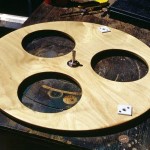
The ground board with center pivot and teflon pads in place
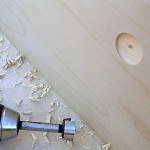
Drilling a pocket to accommodate a carpet pad in the side of the rocker box
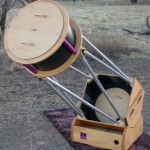
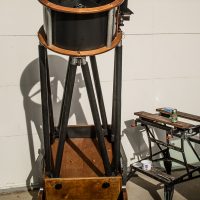
Deep Violet fully assembled and nearly ready for dark
Looking at the mounted mirror cell and primary mirror
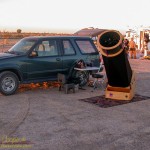
Deep Violet at Sentinel, Arizona for the 2015 Pierre Schwarr Star Gaze
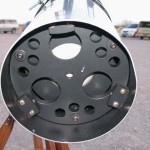
Looking in the rear of the tube at the mirror cell
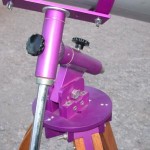
Detail of the tripod head, latitude adjustment and the RA and declination axis
Primero setup at Jarnac Observatory among a friendly crowd of other telescopes
Stripping and cleaning the 14×100 binoculars
A completely disassembled Celestron Cometron telescope
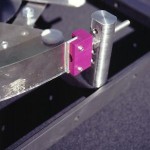
Detail of the upper truss tube with the lever type latch
Detail of the brass threadserts used to hold the lower truss clamp
A 12.5″ dobsonian telescope after the refit
Machining the mirror cell from a piece of scuba tank
The mirror cell prior to installing the primary mirror with the focus knob at the back of the strut
A very standard design for the mirror mount
A front view of Makaʻiki ready to observe
Makaʻiki with the main strut extended for use
Makaʻiki under the stars for the first time at Hale Pōhaku on the side of Mauna Kea
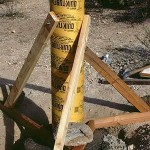
The forms for the pier upright filled and leveled
Bill Lofquist pouring concrete into the upright part of the pier
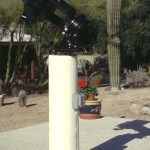
The completed pier with a telescope atop
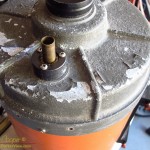
Looking at what remains of the paint on an old Celestron C8 orange tube telescope
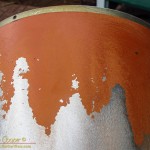
The orange paint just crumbles away under a few sweeps of a power sander
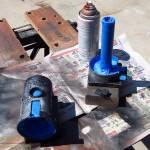
Parts of the mount prepped and taped for painting
Paint drying on the front and rear castings of the old orange tube
A restored Celestron C8 on a similarly restored TeleVue Renaissance mount.
The C8 set up along the old Saddle Road for Mercury Transit
Re-assembling the secondary cage on the 20″ Obsession. The truss tube clamps still need to be cleaned up and re-installed, same with the focuser.
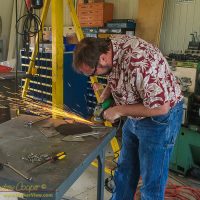
Grinding the heads off a few screws
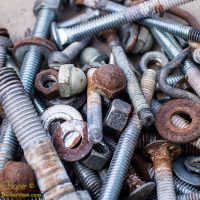
The rusted hardware removed from a 20″ Obsession telescope
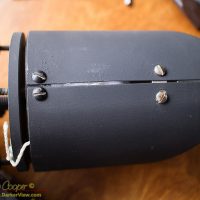
Opening up the truss tube clamps by widening the slot with a hacksaw.
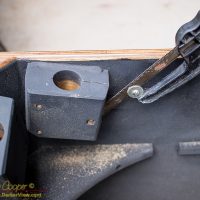
A fix for the secondary mount
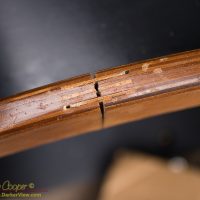
A failed plywood joint
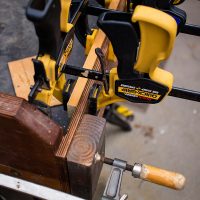
Clamping the rocker box of a 20″ Obsession
Installing the primary mirror. This is a Galaxy Optics 20″ f/4. Oddly enough Sky Hudek, the son of John Hudek, the owner of Galaxy is a good friend and dive buddy.
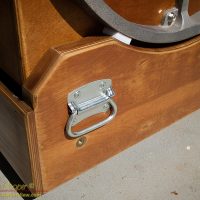
Trunk handles added to the rocker box to make picking it up and loading it in a vehicle easier. They are mounted just high enough to avoid the wheelbarrow handles when installed.
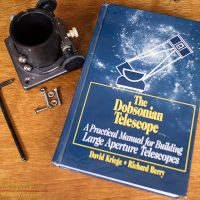
My copy of The Dobsonian Telescope by David Kriege and Richard Berry
20″ f/4 Obsession #004 fully assembled for the first time in over a year. Ready for alignment and use!