
Mercury is sliding into the light of dawn this week. Currently about 10° elevation at sunrise, the planet will disappear into the Sun’s glare over the next few days. It will pass through superior conjunction on August 24th, to reappear for an evening apparition around September 8th.
Way Too Much Color
Ever take a photo you think is going to be great, to have it ruined by too much color?
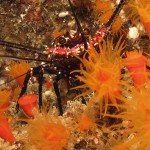
Some of the best underwater images I have are full of subtle colors and textures. While a splash of bright color can make a photo, too much bold color can take it too far. Another lesson in learning the art.
Postcard from the Universe – Eclipse Viewing

Postcard from the Reef – Sleeping Parrotfish
A number of parrotfish species can secrete an odd mucus cocoon in which the fish will sleep through the night. Divers will often find these fish at night, enveloped in a transparent balloon. The discarded cocoon makes an odd sight rolling around the reef the next day.
Even within the same species some fish will use this technique, some will not. It is not known how this behavior is useful to the fish. This very large bullethead parrotfish is sleeping without aid of a cocoon…

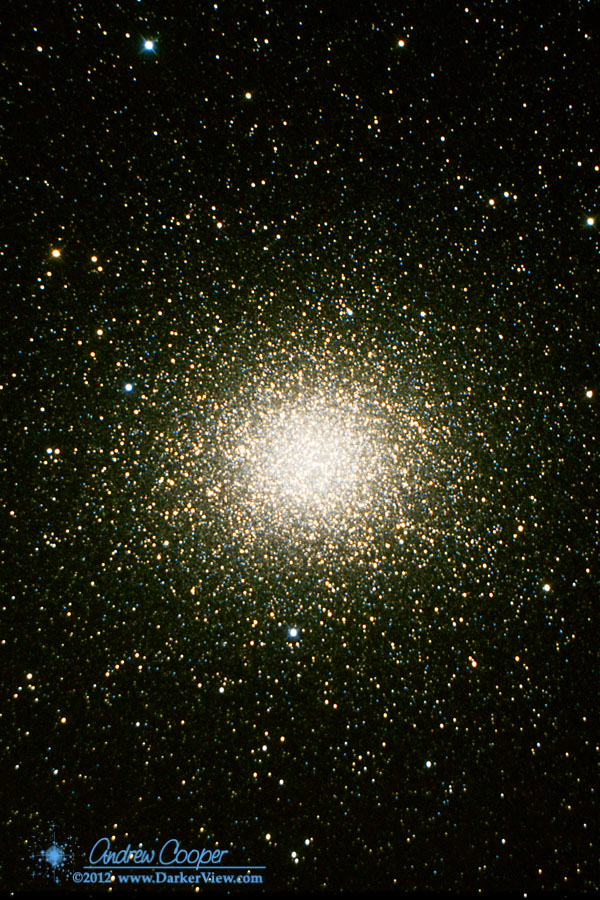
Omega Centauri
New Moon
Perseid Meteor Shower
The Perseids are one of the most watched meteor showers. Occurring during northern hemisphere summer, the shower can be appreciated on a summer night. Quite a difference from the other reliable showers such as the Leonids and Quadrantids, that occur in November and January. Consider a warm summer night under a dark sky full of stars, a picnic blanket, relaxing while shooting stars streak across the sky. What could be better?
The Perseid meteor shower occurs when the Earth passes through a stream of debris along the orbit of Comet Swift-Tuttle. This shower has been consistent throughout recorded history, mentioned in Chinese, Japanese and Korean records as early as the 1st century. Active from July 17th to August 24th, the shower will build slowly for weeks before the peak. A week before or after peak the shower can still be seen with around 20 meteors each hour. The shower is a northern hemisphere event, for southern observers the radiant never rises above the horizon.
Postcard from the Reef – Honeycomb Coral
It is worth a moment, even in the limited time of a dive, to stop and look close at the coral itself. Never mind the psychedelic fish, the coral is what makes a reef. Untold billions of small polyps, each a separate animal, cooperate to build the largest natural structures in the world.
Some corals are easier to examine closely. Honeycomb coral has corallites much larger than most, easier to get a good look without magnification. Getting your mask close allows you to appreciate each little animal, part of the larger colony.

Counters and Cats
Keeping the cat off the kitchen counter? Rasalhague is an obstinate cat, yell at him and he will just cock his head and seem to say “Who Me?” Extremely cute, but not effective.

I could build some sophisticated cat alert, an IR beam with a loud alarm perhaps? It may come to that. In the meantime I thought of something considerably more low-tech… A stack of empty soda cans.
The cans work. The mere brush of a kitty tail brings them down with a substantial clatter that sends Ras running. The cans have the advantages of being readily available, easy to stack, make a kitty terrifying racket, and don’t hurt anything when they come crashing down.
More importantly it has worked. No cat on the counter for a week now. The cans have been tossed in the recycle bin… Until next time.
The Moon, Mercury, Mars and Jupiter
The dawn is getting crowded. While three planets, Mercury, Mars and Jupiter have been dancing on the dawn stage for weeks now, tomorrow morning a thin crescent, waning Moon will join in. Tomorrow morning the Moon will be 10% illuminated and 4.5° south of Jupiter.
Over the next couple mornings the Moon will continue to wane and slide along the line of planets in the dawn. On the morning of the 4th it will be 5% illuminated and between Mercury and Mars. On the 5th it will be lower than all three and only 1.6% illuminated.