
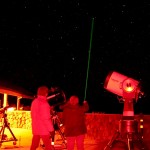
Mercury at Inferior Conjunction
Today the planet Mercury passes through inferior conjunction, passing between the Sun and the Earth. In a week or so the planet will again be visible in the dawn sky, climbing higher each day. Maximum elongation will occur July 29th.
The Aqua Safari Awaits

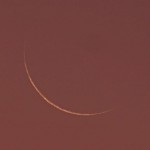
New Moon
Postcard from the Reef – Unidentified Flatworm
It was small, but I was looking for small, scouring a reef wall at Kua Bay. At first glance I hoped I had found a nudibranch, a closer look revealed a flatworm. A pretty little creature moving quickly across a sponge covered surface. I did not recognize the species, not one of the usual flatworms we see by day. Certainly not another fuchsia flatworm, I had lost count of those early in the dive.
I am not alone in not being able to identify the species. It was not in the book, I had to search the websites before I found any reference to a matching species. The reference on Hoover’s website came without an identification, merely a genus name and a description that perfectly matched the flatworm I had found. Active by day on a shaded wall… Check. Found at 15-20ft… Check, more or less, found at 30ft. Reported from Maui by a known expert in the field Cory Pittman.
The worm does resemble a species known in Indonesia, the Philippines and the Mariana Islands, Pseudoceros bimarginatus. There are some differences in the photos as well. No clear answer, best leave this ID to experts. I have forwarded my photograph.
Thus my identification remains… Pseudoceros sp?

Apehelion
Today the Earth is furthest from the Sun, a point called apehelion. We will be about 152,096,000km (94,508,000miles) from the Sun. Compare this to the 147,099,000km (91,403,000miles) we were be at perihelion on January 1st, a difference of about 4,996,000km (3,104,000miles) occurring throughout one orbit.
It may seem odd that we are actually at the furthest for the middle of northern summer, you just have to remember that proximity to the Sun is not the cause of the seasons. The seasons are caused by the axial tilt of the Earth, creating short and long days throughout the year, with a resulting change in the angle and intensity of the sunlight.
| 2013 Solstices and Equinoxes | ||||
|---|---|---|---|---|
| UT | HST | |||
| Perihelion | Jan 2 | 00:59UT | Jan 1 | 14:59HST |
| Spring Equinox | Mar 20 | 11:02UT | Mar 20 | 01:02HST |
| Summer Solstice | Jun 21 | 05:04UT | Jun 20 | 19:04HST |
| Apehelion | Jul 5 | 18:59UT | Jul 5 | 08:59HST |
| Fall Equinox | Sep 22 | 20:44UT | Sep 22 | 10:44HST |
| Winter Solstice | Dec 21 | 17:11UT | Dec 21 | 07:11HST |
| Source: NASA Sky Calendar | ||||
The Moon, Mars and Jupiter
Tomorow morning, July 6th, will see a nice 5-7° triangle made up of a slim crescent Moon, Mars and Jupiter. Look for the trio to start rising about 04:30 HST with Mars rising first, followed by a 2.5% illuminated Moon. Last up will be Jupiter, rising about 04:55 HST. The Sun will not rise until 05:48 giving plenty of time to enjoy this conjunction.
Getting to the Summit
I wish it were this easy! Our summit crew is having way too much fun on a holiday.
At least I do not have to go up today, I am just on-call over the holiday weekend.
Postcard from Hawai’i – Fireworks

Honor the Flag
