
Trickle
When you want to see the stars, find someplace dark

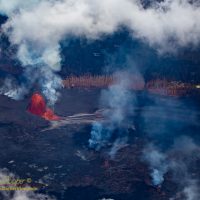
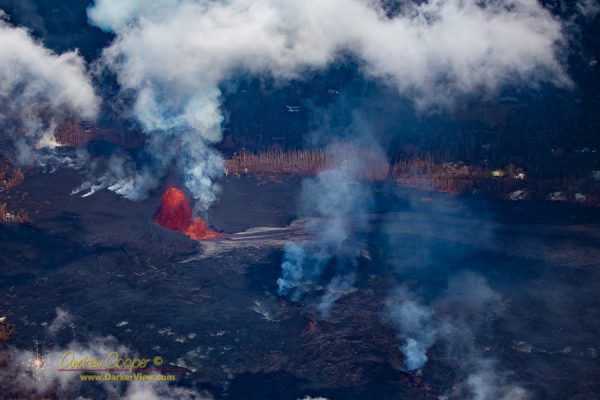
On June 3rd, 2018 Deb and I flew over the ongoing eruption of Kilauea. It seems so long ago, it seems like yesterday.
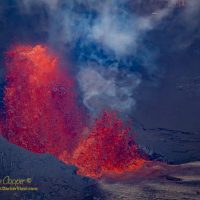
We looked down on a broad flow front, over a mile wide. The flow burning through orchid farms and papaya orchards, destruction that was painful to watch.
We looked down on a lava fountain hundreds of feet high. Fissure 8 was supplying a river of lava that spelled doom for Kapoho Bay and the beautiful tidepools at Waiʻopae.
A year later the lava is still cooling and the community is still rebuilding. Kilauea is quiet with no lava on the surface anywhere. We wonder where the next eruption will be.


Hawaiʻi Volcanoes National Park reopened to the public at the end of September. Reshaped by the eruptions the park has substantially changed since I was last there back in February. It was well past time I got myself out to the park to see the changes, it had been open almost two months!
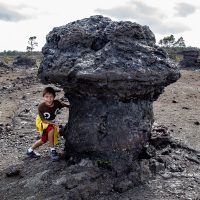
Off we go.
When will this eruption end? The answer to that is a question many are asking on this island. Today we might just be seeing the answer.
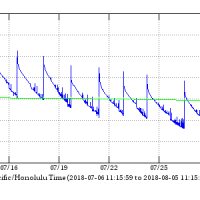
Even more interesting is the deformation data from the summit.
We are now more than two months into this new eruption from Kilauea. Two months ago the fissures opened in the Leilani Estates subdivision and homes began to burn.
For those of us outside the eruption zone things are not quite as immediate. We read the daily news, peruse images of helicopter overflights each morning, and wonder when it will be over.
The multiple county civil defense status reports and various emergency alerts that pop up on our phones each day provide current information… A bit of the Mamalahoa Highway has collapsed in Volcano Village with a one lane restriction, the road to Kalapana has re-opened, there is no tsunami threat from that last 5.4 magnitude earthquake.
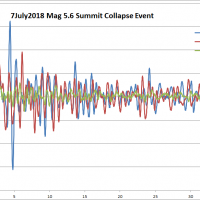
For the most part these events pass unnoticed by much of the island. The volcano area gets shaken up pretty well, but these fifth magnitude quakes are often not felt very far beyond that.
On the summit of Mauna Kea these daily quakes often do disturb the telescopes at night, bumping the tracking and ruining exposures, but otherwise too weak to cause any damage to the facilities.
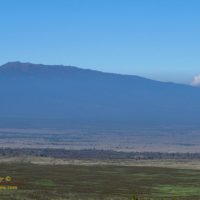
When the vog is bad you not only see it, you smell the sulfur, it irritates eyes and nasal passages. Fire and brimstone reaches out to touch us all.
While the vog makes for spectacular sunsets, the vog can also be thick enough to curtail outside activity. A day like today, with brisk trade-winds to clear it away, is a welcome relief.
I have not attempted to go to photograph the lava river, despite a very strong desire to do so. The county and state have repeatedly talked about opening a lava viewing area. while there is a great deal of pressure from the community, so far nothing has materialized.
We are so ready for this eruption to be over.
Given the collapse of the summit caldera and the enormous volume of lava emitted so far, it may be possible that when this is over there will be no further eruption for a while. It may take a while for the volcano to recharge, perhaps a year or two. Will we return to the pattern of intermittent eruptions that was seen through much of the 20th century?
One of the most beautiful places on the island is gone.
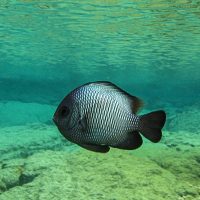
And they were popular, on any given day a couple dozen locals and tourists could be seen exploring the pools. You could swim across one or two, then have to climb across a few feet of old pahoehoe lava to drop into the next. The more adventurous were rewarded with even richer coral in the outermost pools where the ocean waves created more challenging swimming conditions.