We are attempting to deal with our banana surplus issue.
A bunch of bananas is too much fruit for us to use in the few days before they spoil. A single bunch can yield 50 to 60 bananas. We snack on bananas, we make smoothies, we slice bananas onto our morning cereal, it is still too many bananas. Our standard answer to avoid waste is to give away much of the fruit. Apple bananas are quite popular and quickly accepted when given away to neighbors an co-workers.
A batch of bananas in the dehydratorStill, it is a long time between bunches, feast and famine, and I would like to have bananas around more often. We have tried freezing, but are not entirely happy with the results, and our freezer space is limited.
This time we are trying dried bananas using a recently purchased food dehydrator. A bit of an experiment, I have never done this before. I dimly remember my mother drying bananas when I was a kid, I do remember the results being pretty good.
Today the Earth is closest to the Sun, a point called perihelion. We will be about 147,099,000km (91,403,000miles) from the Sun. Compare this to the 152,096,000km (94,508,000miles) we will be at aphelion on July 4th, a difference of about 4,996,000km (3,104,000miles) occurs throughout one orbit.
It may seem odd that we are actually at the closest for the middle of northern winter, you just have to remember that proximity to the Sun is not the cause of the seasons. The seasons are caused by the axial tilt of the Earth, creating short and long days throughout the year, with a resulting change in the angle and intensity of the sunlight.
Looking through the site statistics is an interesting exercise. I get a chance to see what people are reading. The vast majority of readers do not write comments, the stats are the best tool for feedback I have. Perusing the stats is also an realization of one’s own vanity, a necessary motivation for all writers, not just bloggers.
Site traffic has taken a large hit with the transfer to the WordPress platform. I expected this, there would inevitably be loss of links and search engine traffic with the changeover. This has begun to recover, but very slowly. There have been 55 thousand views of the Darker View blog in 2012. Overall there were 66 thousand views of the entire site for the year, not just the WordPress material. This compares to 91 thousand visitors in 2011, about two-thirds of pre-changeover traffic. Total traffic to Darker View since inception in 2007 is now over 288 thousand visitors.
For your viewing pleasure, here are some of the best photos from Darker View assembled into a gallery. New Year is a time for reviewing the year past. I have enjoyed the last year, with the photos to prove it. I hope that 2013 brings you the chance to collect your own gallery of photos and memories.
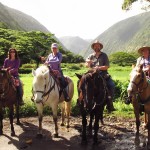
Karen, Darcy, myself and Deb horseback riding in Waipio Valley
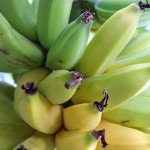
Apple bananas in our patch ready for harvest
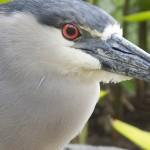
Black-crowned Night Heron (Nycticorax nycticorax)
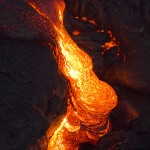
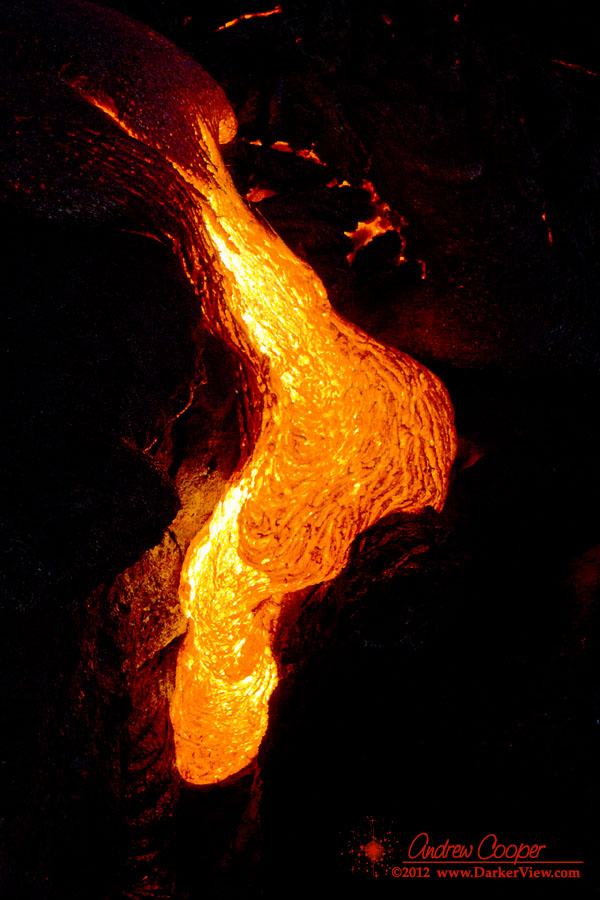
A pāhoehoe breakout near Kupapa’u
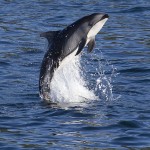
A Pacific white-sided dolphin (Lagenorhynchus obliquidens) leaps from the water near Seymour Narrows, British Columbia
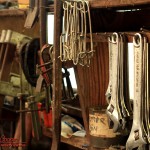
Tools and parts ready for use in the workshop at Lagoon Cove, British Columbia
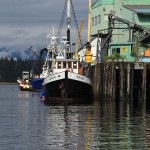
A fishing boat offloads fish at the packing plant in Petersburg, Alaska
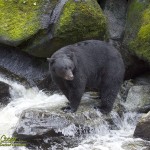
A black bear (Ursus americanus) fishing at the Anan Wildlife Observatory
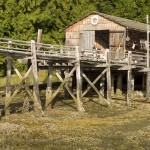
A workshop at Lagoon Cove, British Columbia
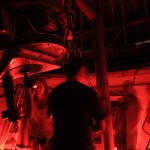
Visitors observe through the 40″ Nickel Telescope at Lick Observatory
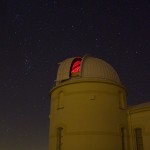
Stars above the 40″ Nickel Telescope at Lick Observatory
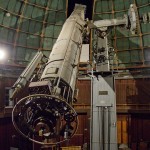
The 36″ refractor at Lick Observatory
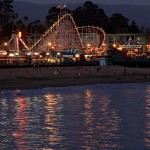
The roller coaster and rides along the boardwalk at Santa Cruz
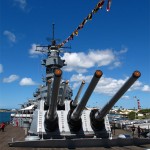
The 16″ guns of the Battleship Missouri in Pearl Harbor
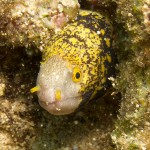
A Snowflake Moray (Echidna nebulosa) in the reef at Three Tables, Oahu
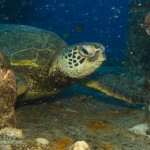
A green sea turtle (Chelonia mydas) rests on the stern of the YO-257
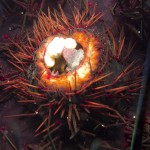
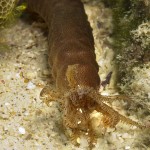
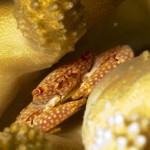
A female sea urchin crab (Echinoecus pentagonus) in the anal cavity of a large banded urchin (Echinothrix calamaris)
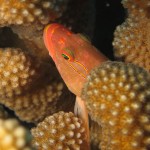
An Arceye Hawkfish (Paracirrhites arcatus) hides from the photographer deep in a coral head
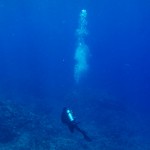
Diver Mark Devenot cruising the reef at Hoover’s Towers north of Honokohau
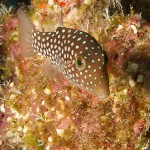
Hawaiian Toby (Canthigaster jactator) under a coral head at O’oma
Keferstein’s Sea Cucumber (Polyplectana kefersteini) at 30ft, Puakō
Yellow-spotted Guard Crab (Trapezia flavopunctata) at O’oma
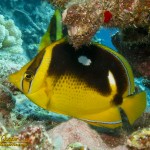
Fourspot Butterflyfish (Chaetodon quadrimaculatus) under a coral head at O’oma
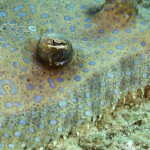
Flowery Flounder (Bothus mancus) on the reef at O’oma
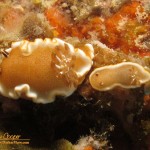
A pair of White-margin Nudibranch (Glossodoris rufomarginata), 25ft depth at O’oma
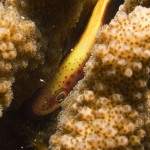
Blackside Hawkfish (Paracirrhites forsteri) at O’oma
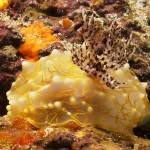
Gold Lace Nudibranch (Halgerda terramtuentis) in a small cave at 25′ depth, Puakō
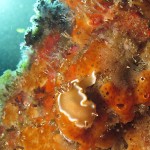
White-margin Nudibranch (Glossodoris rufomarginata) grazing on colorful sponges, 25ft depth at O’oma
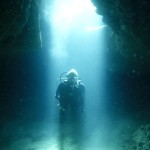
You never know what terrifying monsters of the deep lurk in these caves… Oh.. Hello dear.
The Keck crew lowering OSIRIS into Keck 1 AO
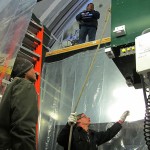
The team moving a mirror segment from the telescope to the coating facility
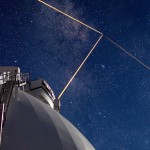
Three AO lasers aimed at the center of our Milky Way galaxy, the lasers are from both Keck 1 and Keck 2 as well as the Subaru telescope
George Wall snowing the Keck 1 Primary Mirror
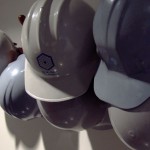
Hard hats ready for use just outside the Keck 1 dome
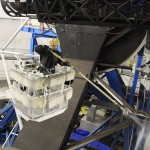
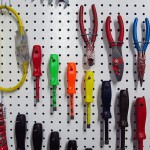
A set of tools ready for use on the Keck 1 nasmyth deck
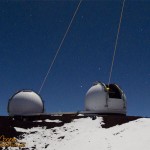
Both the Keck 1 and Keck 2 lasers in operation under a nearly full Moon
What else would I do on a Christmas Eve? Go shopping? Not really my ideal plan for the day. What about going diving? Not a bad idea at all…
Pete and I had already planned to go diving, but the plan had been to go shore diving somewhere. Then Dennis extended an invitation to join him on the boat, a gracious invitation we quickly accepted. As a result, the morning of the 24th saw us leaving Honokohau Harbor looking for a dive site to try.
Pete attempting to photograph garden eels at the base of the reef at Eel CoveThe surf was definitely up a bit, with a long swell rocking the boat and breakers hitting the rocks. Conditions in the water were pretty nice, visibility to near 100ft and just a gentle surge to be felt nearer the shore.
We did not go far from the harbor. First choice was a dive site called Sharkfin Rock just off Old Airport Park about two miles south of Honokohau. It is always a good sign when you can see the bottom 60 feet below through the blue water. Just inshore from the mooring a few surfers enjoyed the breaks along the park. Except for the one bodyboarder who was yelling at us to stop blocking his waves, as if a mere boat can have any significant effect on waves of any real size!
Pete imitating an old fashioned photographer with his strobe held away from the cameraThe second site was a spot even closer to the harbor, a site called Eel Cove. The little indent in the shoreline that is right at the tip of the peninsula that protects Honokohau Harbor from the south. It is a very exposed site that drops off steeply. The cove offered just a bit of protection from the southerly swell and gave access to great diving conditions.
A typical Hawaiian dive profile, start deep and work your way upThe sites we dove this day allow access to deep water, we dropped to the base of the coral reef and explored our way up the slope. At Eel Cove there were indeed garden eels below 80ft on the sand slope. We dropped down to see them for a few minutes before heading back up the slope.
We found nothing truly unusual.. There were a number of nice encounters with reef regulars, some uncommon species of butterflyfish, a large day octopus, a young whitemouth moray. The second site at Eel cove was definitely one of the fishiest sites I have seen in quite a while. A lot of young fish to be seen. I expect the the more exposed site offers good feeding opportunities and less abuse from the aquarium collectors. I got a few good photos, particularly of the octopus. I have not seen what results Pete got from his efforts.
The day was simply a nice day to be out on the water, with good dive conditions that provided two nice dives. In the end I did do a little shopping. A stop at Costco was convenient as it is right above the harbor. There I grabbed a quick lunch and a couple things to keep our refrigerator stocked over the holiday.
The first meteor shower of 2013 is the annual Quadrantid meteor shower. The Quadrantids are a reliable shower, producing 60-120 ZHR, one to two meteors per minute. The Quadrantids are named for the obsolete constellation Quadrans Muralis, now part of the constellation Boötes.
Unlike other showers where activity can occur for days or even weeks, the Quadrantids have a sharp peak, activity falls off rapidly on the preceding and following nights, or even a few hours away from the peak. Thus it is important to observe the Quadrantids quite near the peak prediction. For 2013 the peak is predicted for January 3rd around 13:33UT, or 03:33HST on this side of the globe, excellent timing. This is the good news for observers here in Hawai’i. The bad news is that the peak will be sullied by the light of a bright last quarter Moon.