
Petroglyph
When you want to see the stars, find someplace dark

Exploring the islands
Hawaiian TMT opponents are quick to claim the mantle of representing the Hawaiian people, making the implied claim that all Hawaiians oppose construction of the TMT. It is theme I have seen repeated over and over, repeated by the leaders of the movement.

62% of Hawaii residents support construction of the TMT, while 29% oppose construction. If one considers only the island of Hawaii the numbers are 59% in support and 39% in opposition. Notably a strong 88% of residents think that culture and science can share Mauna Kea. The statistics of the sample size and sampling method determine a ±4% error possible in the results.
Continue reading “TMT Support and Opposition by the Numbers”


One of the things the recent controversy has starkly revealed is the lack of understanding of what we do on the mountain. Myths and misunderstandings pepper the comment sections of local newspapers and echo on Facebook.

Rumor has it that Hawaii Forest and Trail will be providing the transport, a comfortable service with knowledgable guides.
Surprisingly this was announced by President Obama at the White House Star Party this week. A rather high profile announcement for a local effort.
I will probably volunteer to help out and be a tour guide when it comes Keck’s turn to host the tour.
Information can be found on the website http://www.kamaainaobservatoryexperience.org


A great deal of mythology swirls about our mountain. Some of it may be true, much is probably not as wishful thinking and reality collide on the summit. The current debates have moved every little detail into the light.
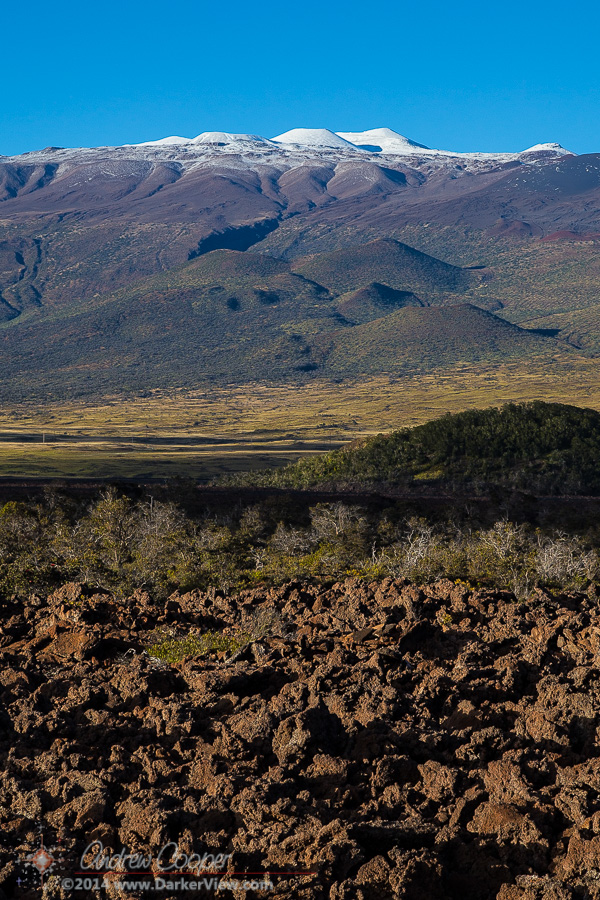
I had my doubts about this. Whenever these questions arise it is important to check the records. Fortunately this has already been completed for us… Norbert Schorghofer, Elianna Kantar, and M. Puakea Nogelmeier at the University of Hawaii combed through the historical records looking for observations of the presence of snow atop Mauna Kea. What they found is that there were any number of records indicating the lack of snow on the mountain.
Follow the link and read the paper, it is a fascinating view into the past of Mauna Kea. Included are excerpts from ships logs and diaries of early visitors to the islands. At the end is a convenient timeline of the accounts covering the first century of written records and a set of three conclusions drawn from this information. The author’s conclusion is clear, Mauna Kea has not featured permanent snow cover any time in the last few centuries.
There was a time when the mountain featured permanent snow and ice fields. During the last ice age, around 12,000-11,000 years ago, there was permanent ice and active glaciers in the summit region. Along the access road there are textbook glacial features to be seen, glacial polish and moraines. This was gone before humans arrived in the islands. What we see today was probably much as it was over the past few centuries, as borne out in the records of the first European voyagers to make it to the islands. Snow may have been more common, but there were certainly periods when no snow was to be seen atop the summit of Mauna Kea.
These historical accounts date from long before human activities had begun dumping vast quantities of carbon dioxide into the atmosphere. We do face an uncertain climate future, warming temperatures may reduce snowfall. The opposite may also be possible, warmer sea surface temperatures may create more precipitation at the summit with heavier snowfall events possible.

It has gotten a bit confusing of late. As the argument rages over the summit of Mauna Kea even the name of the mountain is something that few can agree upon. Mauna Kea, Maunakea, Mauna Akea, Ka Mauna a Kea, or Mauna a Wakea are all used by the various parties involved. This is not an idle question, what to call the mountain, the various names are used to present a point of view, a context from which to view the mountain.
“The districts of Amakooa and Aheedoo are separated by a mountain, called Mauna Kaah, which rises in three peaks, perpetually covered with snow, and may be clearly seen at 40 leagues’ distance… On doubling the East point of the island, we came in sight of another snowy mountain, called Mouna Roa.” – Journal of the Cook expedition March 17791
The name of this mountain is found in the journals of the Cook expedition, recorded as “Mauna Kaah”. This would be the first record of the mountain’s proper name in writing, and possibly the most accurate record of the ancient usage. The journal does not translate Kaah, but does translate Mauna as mountain. Attempting to translate kaah or kaʻah using modern references does not seem to yield any useful result.
“the summit of the mountain Monakaa, which had been obscured by the clouds since our making the land, was now clear” – Captain Joseph Ingraham, May 22, 1791