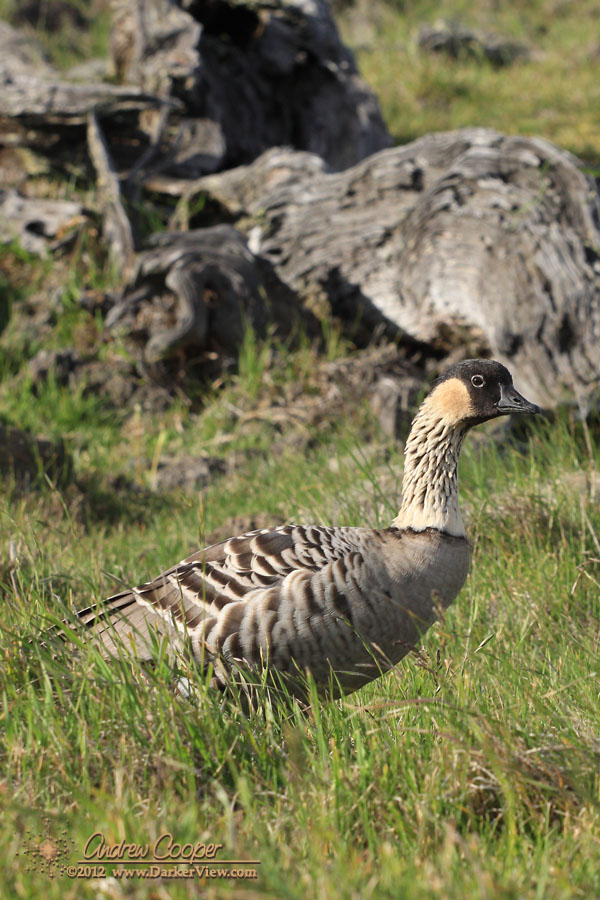
Nene
When you want to see the stars, find someplace dark

Exploring the islands
Another new Moon weekend, another observing outing to Mauna Kea. With some shiny new astro equipment to play with I decided to load for photography instead of visual. Disassembling the photographic mount I realized it had not been taken apart in over two years, setup in the garage and used in the driveway. I did not expect to be alone, a few other local observers had indicated plans to get out this night.
As expected the Mauna Kea Visitor Information Station was a zoo. A dozen summit tour buses added to a heavy Saturday night crowd. The parking lot was full with even more cars parked along the road. Not a real problem, the tour buses use reserved spaces right in front of the building. They pull out about an hour before sunset, headed for the summit with their customers. We swoop in on the vacated parking spaces and set up our gear.

In addition to the VIS telescopes, there were quite a few local amateurs taking advantage of a moonless Saturday night. Cliff and Tony brought Cliff’s 24″ Dob, a two person job to move that ‘scope. Wayne brought photography gear. Mike was likewise set up for photography, planets instead of deep sky, using a Flea 3 and an ancient 10″ Celestron. Olivier brought his 19″ Pricilla, providing plenty of glass for visual astronomy while the cameras exposed for hours.
It was Malalo o Ka Po Lani, cultural night at the VIS, with a special lecture. This meant a large crowd, most of whom stayed to enjoy the perfect skies the mountain provided this night. They wandered around the telescopes asking lots of questions. While the photographic ‘scopes did not offer views through the eyepiece, there was still a lot of interest in the process. I chatted with many folks as I worked, fiddling with the complex equipment necessary to take photos of the sky.
It was quite the gathering of Losmandy G-11’s! Wayne brought two, Mike brought one to carry the old 10″ Celestron, I had mine setup for photography with the AT6RC. Add the three that the Mauna Kea VIS uses! A testament to these well-built mounts, some of which are two decades old.
The astrophoto gear was working nicely. There were a few issues to deal with at the beginning of the night, the usual new gear stuff. A few things I need to fix before next time… need to remount the guider so I can co-align it with the imaging ‘scope. I need to mount a real finder, and make it easier to hunt down the targets. But overall I was pleased, the new setup worked as I hoped it would.
Another pleasant surprise was the ease of focusing with the AT6RC with a Bahtinov mask. I have been wondering about the stock focuser on the new ‘scope, how well does it handle the heavy DSLR camera. One lesson is that it locks the focus quite well, I noticed no drift each time I checked focus. Indeed, at one point I pulled out the 60D, swapped the focal reducer and adapter onto the 20Da and checked focus again, it was still perfect.
While my camera took exposure after exposure, I took in the views that big glass can produce. Bouncing back and forth between Cliff 24″ and Olivier’s 19″. No surprise for a spring session, galaxies were in rich supply. We viewed a lot of the showpiece objects, from Ursa Major to Virgo and Corvus.
This night was the type of night we hope for when planning an observing outing… Not too cold, no strong wind, and no clouds. Just a dark sky to delight the imagination all night long.
Everyone is gearing up for the Transit of Venus. Starting at just after noon on June 5th, Venus will cross the face of the Sun. This will be our last chance to see such an event in our lifetimes, as a result, many skywatchers are making an extra effort to see this transit. This includes a number of folks who are traveling to Hawai’i this June, just to be here for the transit.
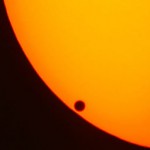
There will be solar telescopes stationed at the MKVIS, at the summit, and at a number of other locations around the island. With many options to choose from, you do not need to go to the summit to get at least some view of this event.
The diehards, those wanting to see the entire transit, will probably go to Mauna Kea. I really do not know what sort of crowd to expect on the mountain. While it could be substantial, I really expect a more modest showing than some folks are predicting. In any case it will be a fun event.
Myself? I will be on the summit. I will be running the Keck live webcast of the event using one of my telescopes. From a vantage point behind the Keck 1 telescope we should be in position to witness the entire event from start to finish.

There are few open paths to trail ride on this island, a place where landowners gate every side road and jealously guard any access. There are a number of exceptions, but you have to look to find them. One such is a power line road off of Saddle Road. The power line is gone now, the stumps of poles remain where they were sawn down years ago. The road runs arrow straight across the landscape, now serving forestry crews, pig hunters and hikers. Enough traffic traverses the path the keep it clear of growth. Here is a glimpse of natural Hawai’i, where invasive species are relatively few and the calls of native birds echo amongst the ‘Ōhi’a.

It may be a rough trail, but the goal is worth it, a relatively recent cave with an array of classic lava tube features. Emesine cave, is found in the 1881 lava flow that threatened to flow into downtown Hilo, but stopped just short of the city. Today, over a century later, the cave is now an excellent example of volcanic action and how life returns to reclaim the land afterwords.

The flows did not stop until August 10th 1881, reaching within a few miles of downtown Hilo. Some fingers of the flow crossed the present day Komohana and Kumukoa Streets near the University of Hawai’i at Hilo campus. When the flows finally did stop a number of lava tubes were exposed, including Kaumana caves, a popular tourist attraction above Hilo. Also formed in the eruption was a series of tubes higher on the north flank of the volcano, Emesine cave.
A fern draped opening into the earth, that beckons us to explore what was once the domain of Pele. A place of fire and molten rock, now a cool, dripping passage beneath the earth. The island of Hawai’i is riddled with hundreds of miles of lava tubes, most are inaccessible, but some are easy to get to. Kaumana Cave is one of the easy ones.

Going makai, a short path leads to the entrance. There are a few boulders to step carefully through, after which sections of smooth and mostly level surfaces allow a bit easier access. About 50 yards into the downhill section you will reach a choke point, a little scrambling and a bit of duck-walk is necessary to get through. After the narrow, the cave opens back up again. After another hundred yards there are a series of ledges, old crusts left by cooling lava when it half filled the cave. To continue from here requires crawling through another very low passage. Perhaps a good place to turn around if you are only interested in a short exploration.
Two telescopes set up on the side of Mauna Kea. Olivier’s 12″ and my 18″ Deep Violet. A full night of deep sky observing under very nice conditions.
The photo was taken with a red LED light swept over the area during the 20 seconds of exposure. The camera had other ideas, set for automatic white balance it attempted to correct the color, fairly successfully. Surprising given the monochromatic nature of the light source.
As usual, click on the image for a larger version…


I have not done much diving south of Kona, usually diving the shores close to home, the reefs of North and South Kohala. I have done a couple dives at Two Step, at Hōnaunau. The terrain is different further south, there are different species to see. Last weekend I got a chance to do some more diving down south.
This was made possible through a friend and fellow Keck engineer. Dennis owns a boat. Not just any boat… The Aqua Safari… A big boat, a fast boat, a dive boat, equipped for scuba, actually a pretty nice boat. I was invited to join the guys for a dive outing. I didn’t even ask where we were going, it really didn’t matter, I just wanted to dive.

A find of the dive was a Bearded Cusk Eel hiding in a crevice at the base of a rock wall. I managed one half-decent photograph before it disappeared further into the crevice, out of sight. I guess it did not like the strobe, cusk eels are notoriously shy.
Mark, Patti and I shared the meal preparations. They had brought sandwich makings, I brought tuna mac, drinks and chips. Deb even sent a long a batch of home-made chocolate chip cookies. We ate well indeed.
The second dive site was Tanks, a site just north of the old Kona Airport and south of Honokohau. A fair amount of surge made mooring quite a challenge, we actually gave up on one mooring buoy, too close to the rocks where we were getting bounced around. There was quite a bit of surge underneath as well, and visibility was poor. At least poor by Kona standards, fairly good for most anywhere else. The surge and vis did not preclude a decent dive, we descended to the edge of the dropoff, where the slope plunges into the deep blue abyss. A few good photos, including a Undulated Moray. We spent the last part of the dive exploring a number of small caves just under the shoreline, where we found several white tip reef sharks, including one of the largest I had ever seen. This shark was a bit more than six feet, and quite rotund. He lived up to the scientific name for the species Triaenodon obesus.
A great day and a couple good dives. That was the goal, and that was what we achieved. Thanks Dennis!