Fireball over Hawaiʻi

So last night a Russian satellite burns up over Waikoloa… And I miss it!!

Some of my friends and co-workers did not, asking me what it was this morning after personally witnessing it. There are videos all over Facebook. I am so envious!

The satellite was Cosmos 1315, a Russian signals intelligence mission launched in 1981. It re-entered just west of the Big Island about 11pm HST last night.

I have embedded a video below, the language is more than a bit rough, a few f-bombs. The language goes to illustrate just how dramatic the event was. Aside from the unfortunate choice of vertical format, the video is surprisingly good.

Several items stand out in the video…  The giveaway that it is man made is the very slow speed of the object, not the high speed typical of most meteors.  You can also see the satellite coming apart, fragments breaking away.  Larger meteors can also do this, breaking up upon re-entry.

The guy (I believe Chris Jardine) identifies the object as a meteor, a good guess. I first thought meteor when I saw the video.  I received word a bit later from Steve Cullen who passed along a link to information on the satellite.  The gal thinks comet? We need to do more public outreach and education around the island!

Keck Staff

Almost the entire Keck Observatory staff forming the hexagonal outline of one of the primary mirrors. Seeing the size of one of the mirrors like this really puts things in scale.

Our director, Dr. Hilton Lewis, is center front. Do not look for me… I am standing on the ladder taking the photo.

Keck Staff
Nearly the entire Keck staff forming the outline of one of the primary telescope mirrors

Venus Appears in the Dawn

The bright planet Venus will appear in the dawn sky over the next couple weeks, climbing higher to become the morning star for the remainder of 2015. It is currently 15° from the Sun and shining at magnitude -4.2, bright enough to be seen against the dawn sky. It will reach maximum elongation on October 26th, 46° above the rising Sun.

Continue reading “Venus Appears in the Dawn”

The Keck Observatory Archive

The data produced by the W. M. Keck Observatory is available for anyone to view. This may come as a surprise to some who assume that astronomers hoard their precious data and jealously deny any access. I have also seen claims by anti-TMT activists who claim that telescope data is secret and access is restricted to some authorized group. It is a common theme I have seen repeated quite a few times during the Astronomy on Mauna Kea debate.

Saturn NIRC2 dePater
An image of Saturn taken in infrared light by NIRC2, image credit KOA/dePater

“There is an appointment signup of experts of bureaucrat choosing and the findings disappear amongst the grant supported or institutions we have no knowledge about” – Claire Templeton in a Facebook comment 16Aug2015

The idea is at least understandable. Much of modern astronomy is fairly arcane to the layman, not easily understood and seemingly mysterious. It does not have to be that way, the images and data are fully public. A small community, including astronomers and amateur astronomers, has learned to use the data to do science, or to simply peruse for their own edification. All it takes is an evening of educating yourself and you have access to a huge array of data.

The astronomers do guard their data and deny others access, but they are only allowed to do this for a limited period of time. This gives the astronomer exclusive use of their data long enough to complete the research and publish the paper. The amount of time they have exclusive use varies by telescope and institution, but it is usually a year or two. For the W. M Keck Observatory the data is usually embargoed for 18 months. Once the exclusive period expires the data is available to anyone and is posted in the online public archive.

Keck’s archive is known as KOA, or Keck Online Archive. Also a nice reference to the beautiful Koa forests that are common on the windward slopes of Mauna Kea. Here you can search and peruse twenty years of Keck data.

Continue reading “The Keck Observatory Archive”

Building a New Telescope

No, I am not talking about TMT. I have something a bit smaller in process. For the first time in many years I am building a telescope. Just a little one.

Makaʻiki
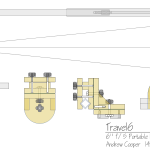
The design for a 6″ f/5 travel telescope Makaʻiki

It has been a while, my cred as an ATM is in jeopardy of being revoked.

When I say a little one I am being serious, a 6″ f/5 is the design specification. This is the same optical specification as Primero, my first telescope. The difference here is in building a travel telescope, something that will fit in carry-on baggage with room for clothing.

I am modelling the telescope off a small telescope built by Brett Schaerer he named WikiKea, a telescope I had a chance to examine at Oregon Star Party a couple years ago. He incorporated a clever focus mechanism into that ‘scope that got my attention.

Brett built his telescope for a trip to Hawaiʻi, thus the Hawaiian influence in the name. I will follow suit and have decided that I am building Makaʻiki, which translates as little eye.

I have generated a full set of plans based on a couple photographs of the original telescope. That exercise itself was fun, I love designing things like this. When these plans are complete, a few details are to be settled during building, I will publish them here on DV.

I have manufactured many of the mechanical parts over the last week. A couple more days will be required to make the remainder. I have sourced many of the materials from my stash in the garage, including the plywood, scraps left over from building other telescopes including Deep Violet. I have found that the selection of stainless steel hardware at the Waimea ACE truly sucks, they are out of stock on everything.

Other parts are coming in from eBay merchants, like knobs and HDPE tape. The optics will likewise be from the eBay, most likely GSO. Later today there will be a stop at Home Depot, I am out of wood glue, the last bit thrown out as it had hardened in the bottle. And unlike the local ACE, their hardware selection is pretty good.

Update! The new ‘scope is complete, you can read more about it here.

Venus at Inferior Conjunction

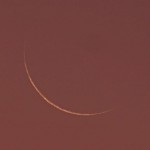
Today Venus is at inferior conjunction, passing between the Earth and Sun. It will reappear in the dawn sky near the end of the month to become the morning star for the remainder of 2015 and well into 2016. The planet will reach maximum elongation on October 26th at 46° from the Sun.

Continue reading “Venus at Inferior Conjunction”