An international team of astronomers has released the largest ever compilation of exoplanet-detecting observations made using a technique called the radial velocity method. By making the data public, the team is offering unprecedented access to one of the best exoplanet searches in the world.
UCSC astronomer Steve Vogt (foreground) with collaborator Paul Butler at the W. M. Keck Observatory in Hawaii. Photo by Laurie HatchThe data were gathered as part of a two-decade planet-hunting program using a spectrometer called HIRES, built by UC Santa Cruz astronomer Steven Vogt and mounted on the 10-meter Keck-I telescope at the W. M. Keck Observatory atop Mauna Kea in Hawaii.
“HIRES was not specifically optimized to do this type of exoplanet detective work, but has turned out to be a workhorse instrument of the field,” said Vogt, a professor emeritus of astronomy and astrophysics. “I am very happy to contribute to science that is fundamentally changing how we view ourselves in the universe.”
Many scientists believe the Earth was dry when it first formed, and that the building blocks for life on our planet — carbon, nitrogen and water — appeared only later as a result of collisions with other objects in our solar system that had those elements.
The twin domes of Keck Observatory lit by the first rays of dawnToday, a UCLA-led team of scientists reports that it has discovered the existence of a white dwarf star whose atmosphere is rich in carbon and nitrogen, as well as in oxygen and hydrogen, the components of water. The white dwarf is approximately 200 light years from Earth and is located in the constellation Boötes.
HIRES instrument helps detect potential exoplanets. Artist’s conceptions of the probable planet orbiting a star called GJ 411, courtesy of Ricardo Ramirez.An international team of astronomers today released a compilation of almost 61,000 individual measurements made on more than 1,600 stars, used to detect exoplanets elsewhere in our Milky Way galaxy. The compilation includes data on over 100 new potential exoplanets. The entire dataset was observed using one of the twin telescopes of the W. M. Keck Observatory on Maunakea over the past two decades. The search for new worlds elsewhere in our Milky Way galaxy is one of the most exciting frontiers in astronomy today. The paper is published in the Astronomical Journal.
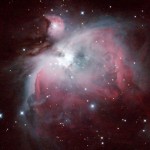
M42, The Orion Nebula, Canon 6D and TV-76mm, 16x240s+10x60s+10x15s @ISO6400
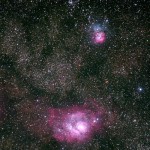
The Lagoon Nebula and The Trifid Nebula, single 8 minute exposure at ISO 800, Canon 20Da DSLR camera mounted on a Televue-76 APO telescope with a 0.8x focal reducer/field flattener
The region around Gamma Cygni in Hydrogen Alpha, including the nebulae IC1318 and NGC6888
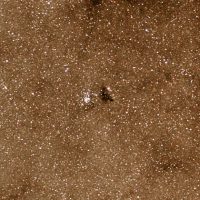
The cluster NGC6520 and the dark nebula B86 lost in the immensity of Baade’s Window
The Orion Nebula with and EOS-M, 40x30s exposures @ ISO12,800, AT6RC and 0.8x focal reducer
The Swan Nebula, NGC6618, 8 x 8min with the Canon 20Da and AT6RC
The Rosette Nebula and cluster, NGC2244, NGC2236, NGC2237 and NGC2238, photo is a stack of 19x8min @ ISO1600, Canon 20Da and TV-76mm
The Lagoon Nebula, NGC6523, in Sagittarius, 11 x 8min exposures, Canon 20Da and AT6RC
NGC1976 or M42, the Great Orion Nebula, taken with the Canon 20Da and a AT6RC telescope.
I have had hardware for a while now, it is about time I release some firmware that actually runs it.
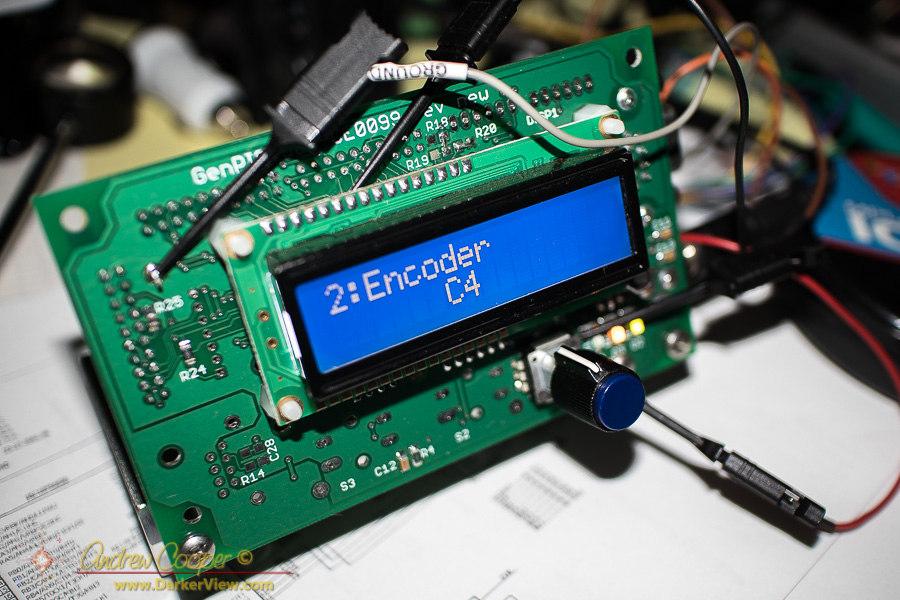
The development setup in use generating the first software release for the GenPIC utility PCBHere it is!
The first GenPIC code revision is a test and demonstration release. It contains support for one serial port, an LCD character display, user input including the encoder and pushbuttons, the indicator LED’s, timer generation, analog input including onboard temperature readout.
Also included is a serial command interpreter implementing a serial interface usable with any serial terminal. There is also a user interface system with a state setup that provides multiple input screens. This should handle a wide array of basic control capabilities, either using the serial port or through using the LCD screen and the encoder.
The code allows you to exercise many of the basic functions of the hardware and provide a framework on which a real application can be built.
It works, it runs, it looks fairly good. Now time to make something useful with it…
Even when Venus is high in the sky and well placed for observation I will seldom take the effort of turning a telescope towards the planet. Why? Because Venus is pretty boring to look at. Perpetually cloud covered it has all the detail of a cue ball. It is a white disk with nothing of note to be seen. Yeah, pretty boring. Now turn the telescope to Jupiter.
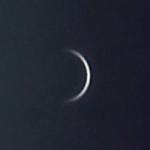
Venus approaching inferior conjunction, 24Dec2013One exception to this occurs when Venus is approaching, or just emerging from inferior conjunction. As the planet passes between the Earth and the Sun we are looking at the nighttime side of the planet, with only a little of the daytime side to be seen. As a result Venus will appear as a brilliant crescent.
This begins as the planet passes maximum eastern elongation, about two months before inferior conjunction. At this point the planet is seen from the side with respect to the sunlight, the planet will be about half illuminated. In the weeks after maximum elongation the planet will appear ever more crescent.
Venus on 28May2012, about 12°44′ from the SunThe last weeks before conjunction, as Venus is very low in the sunset, or the first weeks after conjunction as it sits very low in the dawn are the most interesting. During this time the planet is a very fine crescent, quite a beautiful sight in the telescope. Many observers, including myself, have made a point to observe Venus at this time, the one time this planet really becomes interesting to view.
Imaging Venus in the daytime a mere 12°44′ from the Sun.As the planet is quite low in the sky it makes it a challenging telescopic target and distortion by the atmosphere can be troubling, blurring the view.
It is possible to enjoy this sight in the daytime, while the planet is high in the sky, the seeing can be better and the view sharper. Of course this also occurs when the planet is near the Sun, thus extreme caution should be practiced at the telescope to avoid any direct sunlight and possible eye damage.
A page from Galileo’s 1623 treatise The Assayer—Il SaggiatoreThe phases of Venus are quite interesting from a historical standpoint. The phases of Venus clearly show that the planet revolves around the Sun. The phases were one of the primary arguments used by Galileo in his treatise The Assayer—Il Saggiatore published in 1623, where he lays out many of his ideas on science itself and how observation and experimentation should be primary.
While the the evidence challenged prevailing ideas of the time, some astronomers attempted to explain the phases of Venus by any other means to preserve their Earth centered universe, which led to rather tortured models of planetary motion. But it was clear to most that Galileo was right, the simple and elegant answer was that the Sun lay at the center. The orbits of Mercury and Venus, the phases, along with other observations like the moons of Jupiter, were hard evidence that few could ignore.
In 2017, eastern elongation occurred on January 12th. By now Venus has begun to show a substantial crescent, about 30% illuminated if you look today, Feb 12th. Over the next few weeks as the planet sinks into the sunset, the crescent aspect will thin dramatically.
By the end of February the planet will be only 17% illuminated, another week after that it becomes only 11%, by which time the planet will be difficult to spot in the sunset. Inferior conjunction will occur on March 25th. A couple weeks later and it will be possible to spot the planet in the dawn and observe the now thickening crescent.