2017 Cherry Blossom Festival Star Party

Cherry Blossom Festival is a huge event where a large segment of the island population descends upon Waimea for a day of celebration. there are booths and events all across town. There are cultural demonstrations, cooking demonstrations, performances, and lots of food available for an all day, all town festival.
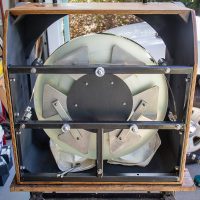
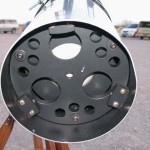
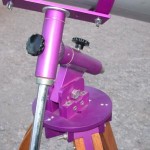
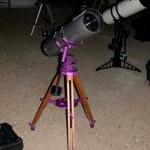
Solar Viewing
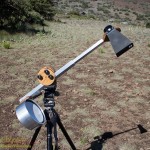
Viewing the Sun at the Cherry Blossom Festival
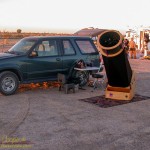
With most of the parking on the south side of Keck observatory, the shopping mall parking lots, and the main event venue north of Keck at Church Row where the cherry trees are, a huge number of people cross the observatory lawns on their way to the festival. It is a natural fit for us to use the day for an outreach event.

The festival is also a very local event. Sure there are a few tourists drawn to Waimea for a festival. But, by and large this is a local event, the majority of attendees are island residents.
Continue reading “2017 Cherry Blossom Festival Star Party”

Shooting the Canon EOS M5

The Canon EOS M5 is the latest offering by Canon in the mirrorless form factor. Offering the same sensor and much of the performance of the mid-range DSLR’s, the mirrorless bodies are far smaller. This allows the photographer the chance to use these cameras in places a full sized DSLR would be too cumbersome.

The Canon EOS M5 and the 22mm f/2 EF-M lens
The Canon EOS-M5

I am a veteran of the original M and the M3, carrying both cameras extensively. From Nicaragua to Alaska, and around the islands, I have used these little cameras to capture some excellent images.

I had issues with the original, returning my first copy. I eventually gave the camera another chance and have learned to like the capability the cameras provide a mobile photographer. I carry the camera on the job atop the incomparable Mauna Kea, a place where you always want a camera handy!

A trio of EOS-M's, including the original M, the M3 and the M5 (left to right)
A trio of EOS-M’s

The critics have not been kind to the previous M series cameras. While they are decent cameras, offering excellent photo quality, they have lagged behind the competition, particularly the Sony mirrorless, on the features.

The M5 marks a change in this, several reviews from the key sites note that M5 performance and features places it among the best on the market in terms of features and cost. The comment echoed by several critics… This is the camera Canon should have built to start with.

Yeah… I wanted one.

Continue reading “Shooting the Canon EOS M5”

New Planet Imager Delivers First Science

JPL press release

A new device on the W.M. Keck Observatory in Hawaii has delivered its first images, showing a ring of planet-forming dust around a star, and separately, a cool, star-like body, called a brown dwarf, lying near its companion star.

Vortex Coronagraph
The vortex mask with a microscopic view shown on the right. Image Credit: University of Liège/Uppsala University
The device, called a vortex coronagraph, was recently installed inside NIRC2 (Near Infrared Camera 2), the workhorse infrared imaging camera at Keck. It has the potential to image planetary systems and brown dwarfs closer to their host stars than any other instrument in the world.

“The vortex coronagraph allows us to peer into the regions around stars where giant planets like Jupiter and Saturn supposedly form,” said Dmitri Mawet, research scientist at NASA’s Jet Propulsion Laboratory and Caltech, both in Pasadena. “Before now, we were only able to image gas giants that are born much farther out. With the vortex, we will be able to see planets orbiting as close to their stars as Jupiter is to our sun, or about two to three times closer than what was possible before.”

Continue reading “New Planet Imager Delivers First Science”

Astronomers Measure Universe Expansion, Get Hints of ‘New Physics’

W. M. Keck Observatory press release

Astronomers have just made a new measurement of the Hubble constant, the rate at which the universe is expanding, and it doesn’t quite line up with a different estimate of the same number. That discrepancy could hint at “new physics” beyond the standard model of cosmology, according to the team, which includes physicists from the University of California, Davis, that made the observation.

Lensed Quasar HE0435-1223
The image of this quasar is split into four by a massive galaxy acting as a gravitational lens. Image credit: Sherry Suyu, European Space Agency/Hubble Space Telescope/NASA
The Hubble constant allows astronomers to measure the scale and age of the universe and measure the distance to the most remote objects we can see, said Chris Fassnacht, a physics professor at UC Davis and a member of the international H0LiCOW (H0 Lenses in COSMOGRAIL’s Wellspring) collaboration, which carried out the work.

Led by Sherry Suyu at the Max Planck Institute for Astrophysics in Germany, the H0LICOW team used the NASA/ESA Hubble Space Telescope and other space- and Earth-based telescopes, including the Keck telescopes in Hawaii, to observe three galaxies and arrive at an independent measurement of the Hubble constant. Eduard Rusu, a postdoctoral researcher at UC Davis, is first author on one of five papers describing the work, due to be published in the Monthly Notices of the Royal Astronomical Society.

Continue reading “Astronomers Measure Universe Expansion, Get Hints of ‘New Physics’”

The Moon, Venus and Mars

The Moon, Venus and Jupiter
A morning conjunction of the three brightest objects in the night sky, the Moon, Venus and Jupiter on the morning of July 15, 2012, the Pleiades star cluster can be seen at the top
This evening a pretty crescent Moon will slide past Venus and Mars in the sunset. The Moon will be a slim 16% crescent a little over 5° from Venus shining at -4.6 magnitude.

Look for the trio in the western sky this evening just after sunset, it will be nearly impossible to overlook. You have plenty of time to enjoy the show as the trio will not set until around 9:30pm.

Venus in the Daytime

With the Moon only a few degrees from Venus this afternoon, it should be relatively easy to spot the brilliant planet long before sunset.

Venus 28May2012
Venus photographed on 28May2012, about 13° from the Sun in the mid-afternoon sky
Spotting planets in the daytime is not that difficult, both Jupiter and Venus are bright enough to seen in full daylight. Venus is currently near maximum brilliance at about -4.6 magnitude, easily bright enough to see in a clear sky. There are a few helpful hints to make this easier.

Today the Moon will aid finding Venus in the sky as it is about 5° north of the Moon. Having the Moon nearby will not only aid in locating the Planet, it will also provide your eyes something to focus on.

Of course these bright objects will be even more dramatic after sunset when Mars will also be visible nearby.

The Moon, Venus and Mars

The Moon, Venus and Jupiter
A morning conjunction of the three brightest objects in the night sky, the Moon, Venus and Jupiter on the morning of July 15, 2012, the Pleiades star cluster can be seen at the top
This evening a pretty crescent Moon will be located close to a brilliant Venus. The Moon will be a slim 9% crescent a little over 11° from Venus shining at -4.6 magnitude.

The Moon is approaching the pair of Venus and Mars, tomorrow will see the trio in close proximity, forming a triangle of about 5° separation.