
On the evening of the 31st, a pretty crescent Moon will join this dance in the sunset, forming a triangle about 5° across. A 16% illuminated crescent moon with make a lovely trio with the bright planets.
When you want to see the stars, find someplace dark

On the evening of the 31st, a pretty crescent Moon will join this dance in the sunset, forming a triangle about 5° across. A 16% illuminated crescent moon with make a lovely trio with the bright planets.
On Monday I tuned back into the TMT contested case hearing, it is a soap opera that has become rather addictive over the last few months. I will often keep the video feed up in the corner of my monitor, attempting to pick up the more interesting bits through the day.

Mr. Michael Lee was offered as a witness by Harry Fergerstrom, one of the more extreme participants in the ongoing contested case hearing. It is no surprise that this witness would espouse some of the more interesting claims made against the TMT project. I expected some wild claims, I was surprised at just how wild.




Another set of images from the slide archive as the digitization project continues.

I visited the mission several times over the years, it can be very photogenic. A little patience will allow the photographer to catch the beams of sunlight from the upper story windows illuminating some of the saints and other icons found in this richly decorated church.
The photos are obviously from scanned slides. In the original frames the film grain is readily obvious, I use a little luminance noise reduction in processing to remove some of that. The super color saturation was not added in digital processing, it is very much part of the original slide.








Over the years I have hand wired so many microcontroller PCB’s. Along with my own projects for myself there are more than a dozen of my little microcontroller devices at work about the observatory. The OSIRIS IR calibration source, the Keck 2 dome inclinometers, a precipitation sensor interface, the Keck 1 AO electronic vault temperature sensors, the weather mast fan and shelter controller, the list goes on. Anyplace a bit of electronic intelligence is needed for the task.
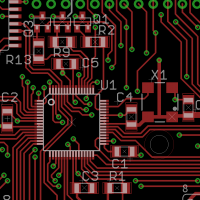
While a couple of my microcontroller designs have been laid out on proper circuit cards, like the SciMeasure camera exposure controllers, I have never laid out a general purpose microcontroller PCB. This is not for lack of thinking about it, so many times I have considered this could be so much easier if I could only invest a little time in a layout.
Today Mercury will be at maximum western elongation, as high in the morning sky as it will appear for this current apparition. After today the planet will slide back into the dawn, passing through superior conjunction on March 6th to reappear in the evening around the end of March.
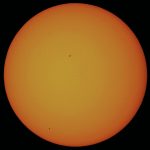
There are no transits of Mercury in 2017, the next will be Nov 11, 2019.

