Sunrise over the Caldera
When you want to see the stars, find someplace dark

Once you descend below a few feet underwater photographs begin to be all greens and blue. The reason is that water absorbs the red light, leaving a very skewed color balance in the images. Thus bringing a light source with you becomes important to allow the underwater world to be seen in vivid color.
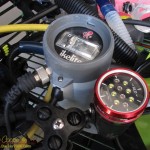
Enter the Sola Photo 800 by Light and Motion… The Sola offers a nice flood with an even field of illumination for video. Several of my dive buddies use Sola lights, Thus I have had a chance to check out the lights firsthand before putting down a few hundred dollars. I was particularly noting the build quality and the control setup, both are excellent. With dozens of dives on the lights they still work well. Perhaps I should consider one of these little units?
There are several models available, but it is the photo version I was looking at. The light provides 800 lumens of white in an evenly illuminated, large field. The photo version also offers a red mode for framing and focusing that purportedly does not change the behavior of the subject. Deep red light is not seen by many marine critters as there is little to no red light at depth to be seen.
A coincidence of decent sales on the Sola lights occurring on my birthday resulted in a package appearing on my lanai. I ordered light with both the hand grip mount and with a ball mount that will allow attachment to my camera rigs.
Time… It is simply a matter of time. At 00:00UT May 3rd, many of the observatory computers suddenly started reporting that the date was September 17th, 1995. To say that this created some problems is a dramatic understatement.
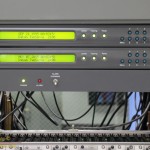
The problem came from the primary observatory clock. This clock, properly called a time server, uses GPS signals to create a time reference that is accurate to microseconds. This is made possible by referencing to the atomic clocks carried by each GPS satellite. A time server is intricately connected to the network to distribute this time. Any computer in the building can ask it for time via the NTP protocol, but that has some inaccuracy due to network delays. For equipment requiring more precise time the server distributes a hard wired time reference using the IRIG-B protocol or a 1PPS timing pulse.
Without accurate time a telescope will simply not point in the correct direction. The calculation that the computers perform must take into account our rotating planet. Feed incorrect time to that calculation and you will point to the wrong piece of sky. A few milliseconds off can result in a pointing error of arcseconds, a large error for a large telescope.
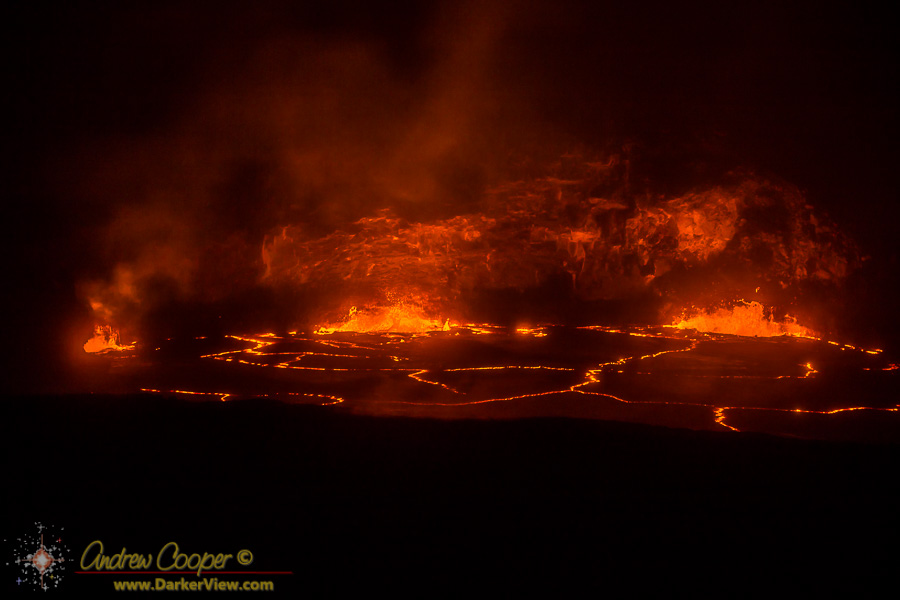
Processing photos of the Halemaʻumaʻu lava lake presents quite the challenge. The very bright lava fountains are difficult to properly expose while showing anything of the surrounding scene. Yet another try is shown here. This version uses very heavy tonal editing to compress the dynamic range of the lava fountains while expanding the low end of the histogram to show detail in the rock walls. The result is interesting, but quite different than seen in person…
Walking into the building I saw the first sign. A prominent message placed in the windshield of a car parked by the entrance… “TMT, Too Many Telescopes” The protesters were here. I had hoped they would not be, we had things to get done in this meeting. A disruption of the meeting by protesters would mean another delay.

To that end I had written a proposal for the new instruments with a description of exactly what we wished to do. Attached is an appendix of photos and drawings to answer any possible questions. I was present to answer the inevitable questions I had not thought of and feared would get asked.
The room was filling rapidly when we arrived, far beyond the usual audience of one of these meetings. As I greeted the many people I know, I noted many new faces. They seemed out of place, a little on edge, a sense of having entered enemy territory. Many of those present were young, in their teens and early twenties, one a young mother, child carried in her arms. The t-shirts betrayed their allegiance, they came with cameras and poorly concealed protest signs.
I have no problem with those who oppose the telescopes atop Mauna Kea attending a meeting like the OMKM board meeting. Public participation is a good thing. Indeed, these meetings are open to the public for a reason, to allow anyone interested to attend and to see for themselves how those charged with managing the mountain do their jobs.
I worried about a protest that would disrupt the meeting, making it impossible to accomplish anything. This did not happen. I will give those who attended credit for showing respect for the proceedings and to those discussing the effort of caring for the mountain.

Today Mercury will be at maximum eastern elongation, as high in the evening sky as it will appear for this current apparition. After today the planet will slide back into the sunset, passing through inferior conjunction on May 30th and reappearing in the dawn during the first weeks of June.

Manning the Keck Observatory table at AstroDay had me in Hilo again this weekend. Already close, why not visit the volcano again?

That “straight out” to the volcano part was a very good idea, I had made that clear in the plan. Arriving at the park we could see preparations and extra personnel ready for an onslaught of visitors. We got there just in time, parking in the Jagger Museum parking lot. A short time later we learned from the folks just arriving that they were parking at another lot further out. At least the Park Service had a shuttle bus running.