Mark has put together another great video of our diving adventures aboard the Aqua Safari. Yes, we have this much fun…
Postcard from the Summit – Fog on the Mountain

A Long Dive
Photography can be a tedious pursuit, even more so underwater where conditions can be very challenging. This leads to a regular issue in mixed dive parties. The photographers go slow, really slow. The other divers are ready to cover some ground. This occasionally means that the guys leave me behind.
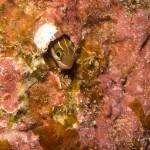
Transparent Nudibranch
As Sky kicked past me he stirred up a cloud of silt in the cave. A moment later he realized I was there and was taking a photo. He apologized with a sheepish shrug, understanding the dirty look I was giving him. The cave wall was host to a dozen or more nudibranch and I was busy with the camera. There were gold lace nudis everywhere I looked, a couple white margined nudibranch added for variety.
As the silt settled I noted a larger object kicked up in the cloud. Closer inspection revealed an odd looking nudibranch floating down and settling on the algae covered rock. This was a new species to me! I took more than a dozen photos as the little slug crawled along. On consulting the book I was unable to locate a good match for this species, always a surprise, Hoover covers all of the common species.
It took a little more work to finally properly ID the nudi. It is a transparent nudibranch (Plocamopherus maculatus). I found it listed on Keoiki Stenders site, but the photos were not convicing. Once I had a species name I found it on Sea Slugs of Hawaii and in the website additions to Hoover’s book, where the photos are much closer to the specimen I found.
Back on the surface I told Sky about the nudi, letting him know that he was somewhat redeemed in revealing an interesting find, despite the cloud of silt.

Postcard from Hawaiʻi – Palm & Pool

Postcard from the Summit – From the Top
The view from the top of the dome is dramatic. It has been a couple years since I had cause to climb to the top of the dome. In one week I ended up going top the top twice for different reasons. The ladders, stairways and full climbing gear do not prevent me from taking the full size DSLR…

Postcard from the Reef – Danielle’s Nudibranch

The Keck CloudCam
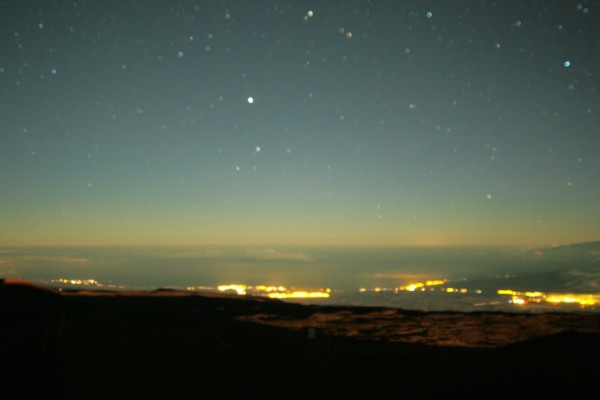
It works! We now have a CloudCam at Keck. It is not quite ready for full active service, but it is alive and taking images. I got the network connection running yesterday, after mounting the camera and running the various cables over the last couple weeks. A little time for commissioning and getting the software setup and the camera will be available to everyone.
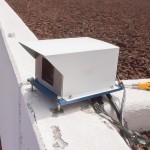
Our camera was built by Kanoa over at the Canada France Hawaii Telescope. Kanoa built the first CloudCam that has served CFHT so well. In service for a couple years now, the CFHT CloudCam gives our telescope operators an unparalleled view of the weather. This is critically important as heavy fog, rain or snow can damage the telescope optical coatings.
Post Update… The Keck CloudCam Link!
Video Archive
To secure and protect the enclosure Kanoa built I fabricated a solid mount. A heavy machined plate and an aluminum cover should shield the camera from the worst that Mauna Kea Weather can dish out. The camera electronics warm the box nicely and a heater is installed to warm and deice the window. We shall see how it fares, the summit weather can be amazing.
With the original CloudCam pointing east, over Hilo, our CloudCam points west, a complementary view of the weather approaching the summit from either direction. The imagery will be closely monitored by all of the telescope operators on the summit during marginal weather.
The imagery will be available to the public as well. Expect live images as well as compiled movies of each night. The first CloudCam has quite a following, quite a few people check the camera constantly. This includes quite a few UFO consipracists. If anything odd shows up on the camera the video quickly shows up on YouTube and linked to postings on the UFO sites.
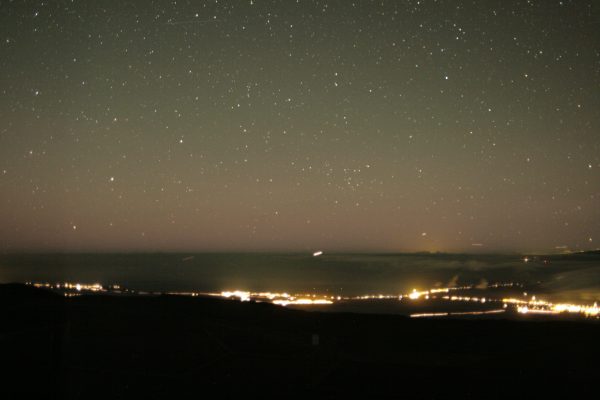
Yes, the focus needs to be adjusted (I expected that), but the scene covers a nice range from the Waikoloa resorts on the left, past Kawaihae, to Waimea on the right.
And after focus adjustment we get much nicer stars…
Postcard from the Summit – Open Dome

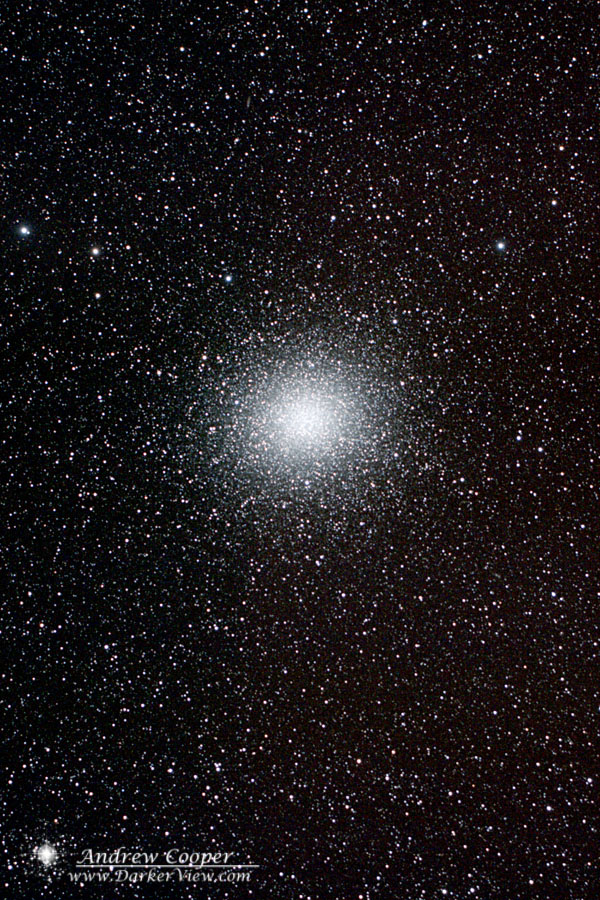
Omega Centauri